Category: Business

  • Audi Announces $4 Billion Georgia Factory, Plans 4,500 New Jobs

    Audi Announces $4 Billion Georgia Factory, Plans 4,500 New Jobs

    October 25, 2026 | Have You Heard? Newsroom

    German luxury automaker Audi has announced plans for its first U.S. manufacturing facility, a proposed $4 billion investment in Georgia expected to create approximately 4,500 jobs. The project could become a major addition to America’s automotive manufacturing industry, although final corporate approval remains outstanding.

    Audi Chooses Georgia for Its First American Factory

    On October 24, 2026, Georgia Governor Brian Kemp and Audi CEO Gernot Döllner announced plans for a new manufacturing facility at the Middle Georgia Megasite in Peach County, near Macon.

    Audi cited Georgia’s skilled workforce, automotive supplier network, transportation infrastructure and access to American consumers as important factors in selecting the location.

    $4 Billion Investment Could Create 4,500 Jobs

    The proposed investment is expected to create approximately 4,500 direct manufacturing jobs. Additional economic opportunities could emerge for suppliers, logistics providers and local businesses.

    Georgia Quick Start and the Technical College System of Georgia are expected to help develop specialized workforce training programs. Specific hiring dates and individual job openings have not yet been announced.

    Watch: Audi’s Georgia Factory Announcement

    Watch Fox Business coverage of the October 24 announcement, including the proposed investment and its potential impact on American manufacturing.

    Video: Fox Business, October 24, 2026. Opens on the publisher’s website.

    When Will Audi’s Georgia Factory Open?

    Georgia officials have outlined the following preliminary development schedule:

    • 2027: Site grading is expected to begin.
    • 2028: Construction of the manufacturing facility is planned.
    • 2031: Full production is targeted.

    Audi describes production as beginning in the early 2030s. These dates are projections and may change as the project advances.

    What Vehicles Will Audi Manufacture?

    The planned factory would focus on premium sport utility vehicles designed for North American customers. Its projected annual manufacturing capacity is up to 200,000 vehicles.

    Reuters reports that the Audi Q7, Q8 and Q9 are expected to be among the models assembled at the facility, citing a U.S. official. Audi has not confirmed the complete production lineup in its official announcement.

    Why Audi Wants to Manufacture Vehicles in America

    Audi views the United States as an important market for its future growth. Establishing a domestic production facility could help the automaker manufacture vehicles closer to American customers, strengthen its supply chain and reduce exposure to currency fluctuations and international trade risks.

    The announcement also arrives during a national debate over automotive tariffs. President Donald Trump highlighted the investment during an October 24 campaign rally in Georgia and credited his trade policies. Critics of tariffs argue that import duties can increase costs for manufacturers and consumers. The relative influence of tariffs on Audi’s investment decision has not been independently established.

    Is Audi’s $4 Billion Factory Officially Approved?

    Not yet. On October 25, Volkswagen Group, Audi’s parent company, confirmed that the decision to build the new American factory remains subject to approval by the relevant corporate committees.

    That means the investment, construction schedule, employment projections and production targets should be understood as announced plans rather than completed commitments.

    What Happens Next?

    The next major milestones include final corporate approval, site preparation, construction planning, workforce recruitment and confirmation of the vehicles to be manufactured in Georgia.

    If completed as proposed, the factory could bring thousands of new jobs to Middle Georgia while expanding Audi’s manufacturing presence in the United States.

    Have You Heard? will continue following this developing story as additional details become available.

    Sources

    Source: Audi — Official Factory Announcement, October 25, 2026

    Source: Georgia Governor’s Office — October 24, 2026

    Source: Georgia Department of Economic Development

    Source: Volkswagen Group — Factory Approval Status

    Source: Reuters — Audi Manufacturing Investment Coverage

  • Untitled post 1601

    SHIFT AI Is Coming to Northeast Ohio: What Creators Should Know

    A November gathering in Independence is putting a new AI platform on the radar of digital creators, entrepreneurs, and people exploring the future of online content.

    Artificial intelligence is changing the way people create videos, images, music, marketing materials, and written content. But a growing question is whether the next wave of AI platforms will change not only how content is made, but also how creators receive credit when their work helps generate business.

    That question is at the center of SHIFT AI, a platform combining AI-powered creative tools with a system designed to attribute certain sales and rewards to participating members.

    According to the event flyer, SHIFT AI is scheduled to hold a conference on Saturday, November 14, 2026, at the Holiday Inn in Independence, Ohio, bringing the conversation to Northeast Ohio.

    What Is SHIFT AI?

    SHIFT AI operates through an online platform that brings multiple AI-powered creative capabilities into one workspace. Its official materials describe tools for generating text, images, video, music, voice content, and avatars.

    For independent publishers, social media creators, and small businesses, platforms like this offer a potential way to streamline production. Instead of moving between multiple applications, users can explore different creative functions within one service.

    The practical question, however, is what the tools can produce, how well they work for real projects, and whether they offer enough value to fit a creator’s workflow.

    Explore SHIFT AI’s official platform.

    Beyond Content Creation: A Different Rewards Model

    One feature that distinguishes SHIFT AI from a conventional creative software subscription is its EcoPay attribution system.

    According to the company’s published terms, its rewards model includes ContentPay, CoachPay, CompetePay, CreditPay, and ClubPay. These mechanisms have different rules and are not interchangeable.

    ContentPay is particularly relevant to online publishers. The company says it can attribute a completed AI-credit purchase to tagged content that helped drive the sale. That is different from a platform paying a creator simply for views, likes, or uploading a video.

    The distinction matters. Publishing content does not automatically guarantee a commission, and the company’s terms state that earnings vary and are not guaranteed.

    For creators, the central question is whether the attribution system can reliably connect useful content with actual customer purchases—and what requirements apply before a participant can receive a payout.

    Read SHIFT AI’s published terms and reward rules.

    Why Creators Are Paying Attention

    The creator economy has traditionally rewarded attention in several ways: advertising revenue, sponsorships, affiliate commissions, subscriptions, and direct sales.

    SHIFT AI’s approach adds another variation to that landscape by combining AI content production with purchase attribution and other reward mechanisms.

    For a publisher, this raises an interesting possibility. Content may serve more than one purpose: informing an audience, attracting visitors, building a recognizable brand, and—in programs with the appropriate rules and tracking—helping connect interested readers with a product.

    But each revenue model must be evaluated on its actual terms. Creators should understand how attribution works, which activities qualify, whether a paid membership is required, and how rewards can change.

    What the November Conference Could Bring

    The scheduled Independence event gives Northeast Ohio creators and business owners a reason to take a closer look at the platform.

    Questions worth asking include which creative tools will be demonstrated, how the attribution system works in practice, what the membership requirements are, and what information the company can provide about actual platform usage and rewards.

    Those details will help attendees distinguish the platform’s creative capabilities from the additional conditions attached to its rewards system.

    The event may also provide a chance to hear directly from people involved with the platform and learn more about its direction as AI tools become increasingly accessible to independent creators.

    The Bigger Question: What Comes Next for Digital Creators?

    The emergence of platforms like SHIFT AI reflects a broader change in online publishing. AI tools are lowering some production barriers, while businesses continue experimenting with ways to connect digital content to measurable commercial activity.

    That combination could create new options for some creators, but the value will depend on the quality of the tools, the transparency of the rules, the audience a creator reaches, and the results that can actually be demonstrated.

    The important distinction is between the opportunity a platform describes and the results an individual creator can realistically achieve.

    As the November gathering approaches, SHIFT AI offers a timely case study in how AI creation tools and content-based rewards are being brought together.

    Have You Heard? The way people create content is changing. The next question is how those changes will reshape the business behind it.


    Sources and Further Reading

    Editorial note: Event details are based on the event flyer provided for this story. Descriptions of the platform and rewards model are based on the company’s published materials. Have You Heard? has not independently verified individual earnings or guaranteed outcomes.

  • The Side Hustle Economy Is Booming — But Is Gig Work Really Worth It?

    The Side Hustle Economy Is Booming — But Is Gig Work Really Worth It?

    For millions of Americans, earning extra money no longer requires getting a traditional second job. A smartphone, a vehicle and a few available hours can open the door to rideshare driving, food delivery, grocery shopping and other forms of gig work.

    The appeal is easy to understand. Gig workers can often decide when they want to work, which platforms they want to use and how many hours they are willing to put in. But behind that flexibility is an important question: after expenses are counted, is gig work really worth it?

    Millions of Americans Are Earning Money Independently

    Independent work has become a significant part of the American labor market. According to the U.S. Bureau of Labor Statistics, 11.9 million people were working as independent contractors on their main job in July 2023, representing 7.4 percent of total employment.

    That figure does not tell the entire side-hustle story because many people use gig platforms in addition to a regular job. Federal Reserve research found that 9 percent of adults performed short-term tasks during 2024, including activities such as making deliveries, giving rides and completing other jobs for pay.

    Flexibility Is One of Gig Work’s Biggest Attractions

    For someone trying to earn money around another job, family responsibilities or an unpredictable schedule, flexibility can be a major advantage. A traditional part-time employer may require specific shifts. Many gig platforms instead allow workers to choose when they log in and when they stop.

    The Federal Reserve found that among adults who used an app or website for short-term work, 78 percent said the work allowed them to have flexible hours. That helps explain why app-based work can be attractive to people looking for an additional source of income rather than another fixed schedule.

    The Money Coming In Is Only Half the Story

    A driver might look at the amount earned during a shift and consider that the day’s income. But gross earnings and actual profit are not the same thing.

    For vehicle-based gig workers, gasoline is only one expense. Oil changes, tires, brakes, repairs, insurance, depreciation and additional mileage can all affect how much money is ultimately left. Workers may also need to account for taxes and other business-related expenses that a traditional employer would handle differently.

    Those costs can vary considerably depending on the vehicle, location, type of work and number of miles driven. That makes tracking both earnings and expenses especially important for anyone trying to determine whether a particular gig is profitable.

    Flexible Work Does Not Always Mean Predictable Pay

    Another challenge is that demand can change from one day to another. A busy weekend, major event or dinner rush may produce plenty of opportunities, while slower periods can leave workers waiting for worthwhile offers.

    That uncertainty shows up in worker attitudes as well. The Federal Reserve reported that 61 percent of adults doing app- or website-based short-term work said they wished the pay were more consistent.

    So, Is Gig Work Worth It?

    There is no single answer. For someone who already owns an economical vehicle, works during high-demand periods and carefully tracks expenses, gig work can provide a flexible way to bring in additional money. For someone driving long distances for low-paying offers or facing frequent vehicle repairs, the numbers can look very different.

    The real value of the gig economy may be choice. Workers can experiment with different platforms, schedules and strategies without necessarily committing to a conventional second job. But flexibility does not eliminate the costs of doing the work.

    Before judging a side hustle by the amount appearing on an app, it is worth asking a better question: how much money is actually left after the work is finished?

    What about you? Would you try gig work for extra money?

    Sources

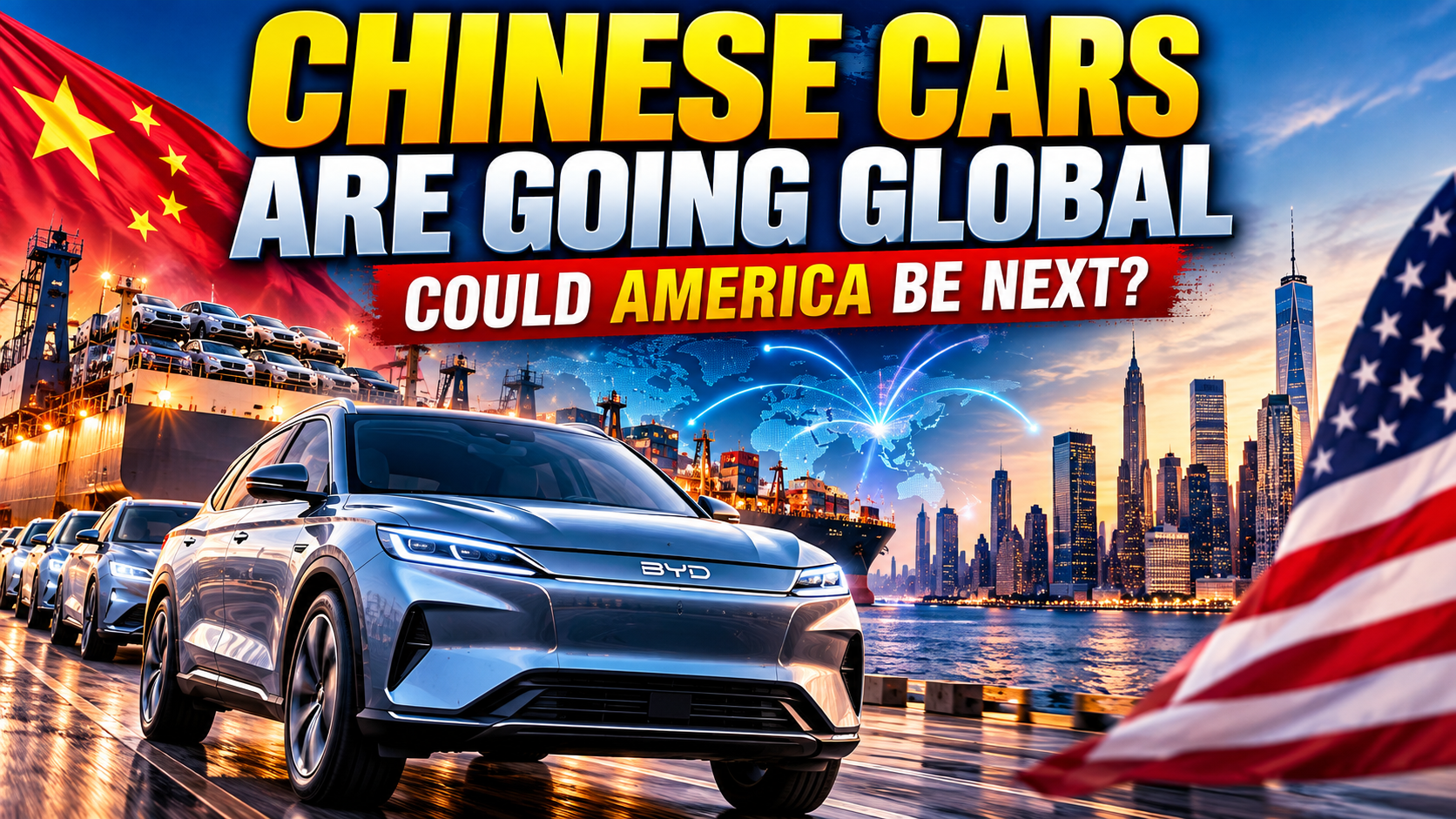
  • Chinese Cars Are Taking Over Global Markets — Could America Be Next?

    Chinese Cars Are Taking Over Global Markets — Could America Be Next?

    Chinese automakers were once easy for many American drivers to overlook. Most of their vehicles were sold thousands of miles away, and familiar names such as Ford, General Motors and Toyota continued to dominate the roads closer to home.

    That picture is changing fast.

    China has become the center of the global electric-vehicle industry, producing cars at enormous scale while its homegrown brands expand into markets across Europe, Southeast Asia, Latin America and beyond.

    The question is no longer whether Chinese automakers can build competitive vehicles.

    The bigger question may be: What happens if they eventually compete for American drivers?

    China Has Become an EV Manufacturing Powerhouse

    The scale of China’s electric-car industry is difficult to ignore.

    According to the International Energy Agency’s Global EV Outlook 2026, nearly 22 million electric cars were produced worldwide in 2025. China accounted for nearly three-quarters of that production.

    Chinese automakers also supplied about 60% of global electric-car sales in 2025. More than 13 million electric cars were sold inside China alone, where EVs represented nearly 55% of new-car sales.

    That enormous domestic market has given Chinese manufacturers something extremely valuable: scale.

    Companies can manufacture huge numbers of vehicles, introduce new models rapidly and compete aggressively on price, technology and features.

    Chinese Cars Are Moving Beyond China

    China’s automotive ambitions are no longer confined to its home market.

    The IEA reports that Chinese electric-car exports doubled in 2025 to more than 2.5 million vehicles. In the first quarter of 2026, exports more than doubled again compared with the same period a year earlier.

    Chinese brands are increasingly visible in markets that were traditionally dominated by European, Japanese, Korean and American manufacturers.

    BYD, Geely, Chery, SAIC and other Chinese automakers have expanded internationally, while some are also investing in factories outside China rather than relying entirely on exports.

    That strategy could make their global presence much harder to dismiss as a temporary trend.

    Batteries Are a Major Part of China’s Advantage

    The competition goes deeper than the vehicles themselves.

    China accounted for more than 80% of global battery-cell production in 2025, according to the IEA. It also held an even larger share of production for some of the active materials used inside EV batteries.

    That matters because the battery is one of the most important and expensive components in an electric vehicle.

    A massive domestic supply chain — stretching from battery materials and cells to vehicle assembly — can help manufacturers reduce costs, accelerate production and bring new technology to market quickly.

    It is one reason the rise of China’s auto industry is not simply a story about inexpensive cars. It is also a story about manufacturing capacity and control of critical parts of the EV supply chain.

    Why Aren’t These Cars Everywhere in America?

    Despite their rapid expansion elsewhere, Chinese automotive brands remain largely absent from U.S. showrooms.

    Trade barriers, tariffs and U.S. restrictions involving connected-vehicle technology create substantial obstacles to direct entry into the American market.

    Those barriers mean the competition Americans see today is very different from what consumers are experiencing in parts of Europe, Asia and Latin America.

    But American automakers are watching closely.

    Ford CEO Jim Farley has repeatedly warned about the competitive strength of China’s automotive industry. In September 2026, he again urged caution over allowing Chinese automakers into the U.S. market, pointing to the pressure they have already placed on manufacturers elsewhere.

    Could Chinese Cars Eventually Compete in America?

    There is no guarantee that today’s restrictions will disappear, and predicting exactly when — or whether — Chinese brands will enter the United States in large numbers would be speculation.

    But their international growth makes the question increasingly relevant.

    If Chinese manufacturers eventually gain broader access to the U.S. market, they would enter one of the world’s most competitive automotive arenas.

    They would face Ford and General Motors, Japanese and Korean manufacturers with decades of American brand recognition, European luxury brands and Tesla’s established position in electric vehicles.

    Chinese manufacturers would also need to earn something that cannot simply be shipped overseas: American consumer trust.

    Drivers would judge them on safety, reliability, service networks, resale value, technology and price — the same factors that have determined which foreign automotive brands succeeded in America before them.

    A Global Auto Industry Is Being Rewritten

    Whatever happens in the United States, one thing is already clear: China’s automotive industry has become a global force.

    Its manufacturers are producing electric vehicles at extraordinary scale, controlling a large portion of the battery supply chain and expanding into markets around the world.

    The companies that dominated the automobile business for generations now have another group of competitors to watch.

    And if Chinese cars eventually begin arriving in American showrooms in significant numbers, the biggest question won’t simply be whether they can compete with Ford, GM and Tesla.

    It will be whether American drivers are willing to buy them.

    Sources

  • McDonald’s PlayPlace Is Making a Comeback — But It Won’t Look Exactly Like You Remember

    McDonald’s PlayPlace Is Making a Comeback — But It Won’t Look Exactly Like You Remember

    Have you heard? One of the most recognizable parts of the classic McDonald’s experience could be getting a modern makeover.

    For generations of families, a trip to McDonald’s wasn’t always just about burgers, fries and a Happy Meal. At restaurants with a PlayPlace, kids could climb, crawl and slide through colorful indoor playgrounds while parents took a seat nearby.

    Now McDonald’s is putting upgraded PlayPlaces back into the conversation as part of a much larger plan to modernize its restaurants.

    McDonald’s Is Planning a Major Restaurant Makeover

    On September 23, 2026, McDonald’s detailed a new growth and modernization strategy called McDonald’s > NEXT.

    The plan goes far beyond playgrounds. McDonald’s says it intends to modernize restaurant designs, improve operations, deploy new technology and create a more consistent customer experience across its massive global restaurant system.

    The company plans to provide approximately $8.5 billion in partnering support through 2036, including about $5 billion through 2030, to help accelerate restaurant modernization, technology deployment and operational improvements.

    That makes the PlayPlace story part of something much bigger: McDonald’s is reconsidering what visiting one of its restaurants should feel like in the years ahead.

    Yes, Upgraded PlayPlaces Are Part of the Plan

    During its 2026 Investor Day presentation, McDonald’s described new restaurant designs that include upgraded PlayPlaces, along with improved dining rooms and more open kitchens where customers may be able to see McCafé beverages being prepared.

    That is significant because restaurant design has changed dramatically during the digital ordering era. Mobile apps, kiosks, delivery orders and drive-thru traffic have become increasingly important, while many dining rooms have moved toward cleaner and more streamlined designs.

    The latest strategy suggests McDonald’s sees room for both ideas: a more technologically advanced restaurant and physical spaces that give families another reason to spend time inside.

    But the PlayPlace Never Completely Disappeared

    There is an important distinction behind the comeback headlines.

    McDonald’s PlayPlaces did not disappear from every restaurant. Some locations still have indoor or outdoor play areas today. McDonald’s even provides a PlayPlace filter through its official restaurant locator so customers can search for participating locations.

    What changed over the years was their visibility and availability. Many customers saw play areas close or disappear, particularly as restaurants were remodeled and as the COVID-19 pandemic disrupted indoor dining and shared recreational spaces.

    So the more accurate description of what is happening now isn’t that McDonald’s is suddenly resurrecting something that vanished everywhere. Instead, the company is making upgraded PlayPlaces part of its next generation of restaurant design.

    Don’t Expect Every McDonald’s to Get One

    This is also where expectations need to be kept realistic.

    McDonald’s has not announced that every restaurant will receive a new PlayPlace. The company has said that markets will determine how NEXT is implemented based on local needs, franchisee capacity and investment considerations.

    That means the experience could vary considerably from one restaurant to another.

    A suburban restaurant with enough property for a larger dining room and play area has different needs and physical limitations than a compact urban restaurant or a location designed primarily around drive-thru traffic.

    Customers looking for a PlayPlace can already use McDonald’s restaurant locator and select the PlayPlace option under its service filters. Individual restaurant listings can indicate whether an indoor or outdoor PlayPlace is available.

    Why Bring More Attention Back to the PlayPlace?

    The business logic is interesting.

    Fast-food companies compete on price, menu choices, convenience and speed. But a playground offers something that can’t be delivered through an app: an experience.

    For a family with young children, a restaurant with a play area can become more than a place to grab food. It can become somewhere to sit down, let children play and spend additional time together.

    That potentially gives McDonald’s another way to distinguish a physical restaurant at a time when ordering food has become increasingly digital.

    McDonald’s says its broader NEXT strategy is intended to increase customer visits while making restaurants easier and more efficient to operate. Restaurant modernization is one of four major parts of that strategy, alongside changes involving the menu, consumers and employees.

    The Restaurant of the Future Is About More Than Playgrounds

    The new strategy shows how dramatically McDonald’s itself is changing.

    Beyond upgraded PlayPlaces and dining rooms, McDonald’s has discussed redesigned kitchens, delivery lockers, improved drive-thru operations and greater use of artificial intelligence and automation.

    The company is deploying an AI-enabled technology platform called ArchIQ as part of its effort to improve restaurant productivity. The goal is to use technology for tasks such as improving operations while allowing restaurant crews to concentrate more attention on food and customer service.

    That creates an unusual combination: some McDonald’s restaurants of the future could be more automated behind the scenes while simultaneously putting renewed emphasis on human hospitality and family-oriented spaces out front.

    Nostalgia Could Be One of McDonald’s Strongest Advantages

    There is another reason the PlayPlace announcement is attracting attention: nostalgia.

    Adults who remember climbing through McDonald’s playgrounds decades ago are now parents—and in some cases grandparents.

    That gives McDonald’s something many newer restaurant concepts cannot easily recreate: a childhood experience that spans generations.

    The challenge will be modernizing that experience without eliminating the personality that made it memorable in the first place.

    The old PlayPlace was loud, colorful and unmistakably designed for children. If the new generation of play areas can capture some of that energy while fitting modern expectations for restaurant design, cleanliness and safety, McDonald’s may have found a way to make nostalgia useful rather than simply sentimental.

    What Happens Next?

    The transformation won’t happen overnight.

    McDonald’s says its NEXT investments will be phased in, and individual markets and franchisees will determine how and when various changes are introduced. With more than 46,000 restaurants in the company’s global system, a modernization effort of this scale will take years.

    That means your neighborhood McDonald’s may not suddenly have a brand-new playground next month—or ever. But upgraded PlayPlaces are officially part of the company’s vision for its next generation of restaurants.

    And for anyone who remembers finishing a Happy Meal and immediately heading toward the slides and climbing tubes, that may be one of the most noticeable parts of the entire makeover.

    Would You Go Back?

    McDonald’s is investing billions of dollars in technology, kitchens, restaurant design and operations. Yet one of the changes generating the most nostalgia is also one of the simplest: giving kids somewhere to play again.

    The new PlayPlace won’t necessarily look exactly like the one people remember from childhood. And it won’t appear at every restaurant. But the idea behind it remains familiar—turning a quick meal into an experience families may remember long after the fries are gone.

    Would you take your kids—or grandkids—to a new McDonald’s PlayPlace?


    Sources