Category: Health

  • America’s Protein Boom Is Exploding — But Are Shoppers Paying More for the Hype?

    America’s Protein Boom Is Exploding — But Are Shoppers Paying More for the Hype?

    Have you heard? America’s grocery aisles are filling with protein-packed foods, from shakes and yogurt to coffee, snacks and even desserts. But as food companies rush to satisfy growing demand, a new question is emerging: Are shoppers getting meaningful nutrition, or simply paying extra for a popular label?

    A Reuters report published October 23, 2026, highlighted how weight-loss medications and changing eating habits are accelerating the protein trend, while consumers are becoming more skeptical of products marketed as high in protein.

    Why Protein Is Suddenly Everywhere

    Protein has long been associated with muscle growth and recovery. Now it is increasingly becoming a selling point across the supermarket. Food manufacturers are developing protein-enriched versions of familiar products as consumers seek convenient ways to increase their intake.

    The rise of GLP-1 medications, including drugs used for weight management, is one factor behind the trend. Some people taking these medications are paying closer attention to protein as they seek to preserve muscle while losing weight. But the interest extends well beyond medication users.

    The Price Question: Are Consumers Paying for the Label?

    A product labeled “high protein” is not necessarily a better purchase. Shoppers may find themselves comparing a premium protein snack with ordinary foods that already provide substantial protein, such as eggs, beans, dairy products or fish.

    Reuters reported that consumers are increasingly examining serving sizes, ingredients and nutritional value instead of relying on prominent package claims. Some products also contain added sugars or other ingredients that deserve attention.

    What the FDA Says About Nutrition Labels

    The U.S. Food and Drug Administration recommends using Nutrition Facts labels to compare foods. Protein is generally listed in grams, while shoppers can also review calories, serving size, saturated fat, sodium, added sugars and fiber.

    That means a large protein number on the front of a package should be the beginning of a comparison, not the end of it. Two products may advertise similar protein amounts while differing considerably in price, calories and other nutrients.

    How Weight-Loss Drugs Are Changing the Food Business

    The changes are also creating opportunities for food companies. As some consumers eat smaller portions and prioritize nutrient-dense foods, manufacturers are responding with new formulations and product lines. Industry coverage this month has highlighted growing interest in protein, fiber and portion-controlled foods.

    However, protein requirements vary with age, activity level and individual health circumstances. More protein is not automatically better for everyone, and consumers with specific medical needs should seek individualized guidance from a qualified healthcare professional.

    The HYH Bottom Line

    America’s protein boom is real, but so is the need to shop carefully. Before paying a premium, compare the protein grams per serving, total nutrition and price against less expensive alternatives.

    Have You Heard? The smartest grocery purchase may not be the product with the biggest protein claim. It may be the one that delivers the nutrition you need at a price that makes sense.

    Sources

  • Lab-Grown Meat: How It Works, What’s Legal, and What It Costs

    Lab-Grown Meat: How It Works, What’s Legal, and What It Costs

    Lab-grown meat is real animal meat made from cells grown in a controlled facility instead of from a raised and slaughtered animal. The industry prefers the terms cultivated meat or cell-cultured meat. In the US, a handful of products have cleared federal review, a growing list of states have banned sales, and nothing is yet sold at true supermarket scale. Below: how it’s made, who regulates it, why costs are the central problem, and how to read the headlines.

    Haveyouheardtoday

    Stay Informed on Emerging Food Tech
    Have You Heard? curates significant stories and fresh perspectives across technology, current events, and other topics.

    Explore the latest stories

    TL;DR

    • Lab-grown meat is made by taking a small sample of animal cells and feeding them in a bioreactor until they multiply into edible tissue. It is animal meat at the cellular level, not a plant-based substitute.
    • In the US, the FDA and USDA share oversight under a formal agreement: the FDA covers cell collection, banks and growth, and USDA-FSIS takes over at harvest.
    • Several states have passed bans on selling it, and some of those are being fought in court.
    • Cost and scale are the biggest obstacles. Cells double roughly once a day, contamination can ruin a batch, and price parity depends on huge bioreactors that mostly don’t exist yet.
    • The environmental case is still unsettled. It depends heavily on the energy source and the growth medium.

    Table of Contents

    What lab-grown meat actually is

    Cultivated meat is a form of cellular agriculture. Producers isolate cells from an animal, such as muscle or fat cells, and grow them in vitro in a nutrient-rich liquid called growth medium. A Nature Food review of production economics frames the goal plainly: finding a way for industrial-scale production to reach price parity with conventional meat.

    That makes it different from three things people often mix it up with:

    • Plant-based meat. Made from soy, pea or other plant proteins. No animal cells involved.
    • Fermentation-derived protein. Uses microbes such as fungi to make protein or ingredients.
    • Hybrid products. Some cultivated products blend a small share of animal cells with plant proteins, oils and starches. That is how several of the first products reaching the market are built.

    The UK’s Food Standards Agency describes cell-cultivated products as foods made without slaughter or traditional farming, using cells isolated from animals or plants. In the UK, that also means they do not meet the legal definition of “meat”, a quirk of how hygiene law is written, which shows how new the category is for lawmakers.

    How cultivated meat is made

    The process looks less like a farm and more like a brewery or a pharmaceutical plant.

    1. Cell sourcing. A small biopsy, or a cell line already established, provides starting cells. Producers can bank these cells and reuse them, which is why regulators pay attention to the cell line itself.
    2. Growth in a bioreactor. The cells sit in a tank with growth medium: amino acids, sugars, salts, vitamins and growth factors. They multiply.
    3. Structure and differentiation. Cells are coaxed into muscle, fat or connective tissue. Some products use an edible scaffold to give texture. Ground-style products are far easier than a whole steak.
    4. Harvest and finishing. The cell mass is collected, then shaped, blended with other ingredients, cooked and packaged.

    Why speed is limited

    Popular coverage often implies a burger in days. Biology says otherwise. According to a 2025 critical review in Critical Reviews in Food Science and Nutrition, mammalian and avian cells have a natural doubling time of around 24 hours. You can’t push that much faster, so the way to increase output is bigger tanks and longer, cleaner runs.

    Why sterility is a big deal

    The same review points out a common misconception: that this food would be made in looser conditions than medicines. In biotech, antibiotics are routinely used to hold bacteria back, but they can’t be used in human food production. So producers need cleanroom standards and environmental controls similar to, or tighter than, those used in pharmaceutical manufacturing, because any microbial contamination can quickly ruin an entire batch.

    Who regulates it in the US

    The US approach is a two-agency handoff. Under a formal agreement established in March 2019, the FDA oversees cell collection, cell banks and cell growth and differentiation. The USDA’s Food Safety and Inspection Service takes over at harvest for livestock and poultry products, covering safety and labeling.

    FDA and USDA cultivated meat oversight handoff

    Before a product can reach shoppers, the company goes through an FDA pre-market consultation. The FDA’s page on human food made with cultured animal cells explains the pathway, and an inventory of completed consultations lists each food that has finished it. One recent example: in March 2025 the agency completed a consultation on food made with cultured pork fat cells from Mission Barns, stating it had no questions at that time about the company’s safety conclusion.

    A “no questions” letter is not a blanket endorsement. It means the agency reviewed the company’s data and did not object. The FDA’s role in food safety is broad, reaching well beyond novel foods; even FDA warnings about dog food show how the agency’s reach extends across what animals and people eat.

    What regulators expect from producers

    The UK’s FSA offers a useful look at how a regulator thinks about this. Under its classification and HACCP guidance, producers should build Hazard Analysis and Critical Control Point principles into the design from the beginning. Because the products are novel, the burden sits with the producer to show that its specific process, including cell line, medium and harvest method, is as safe as conventional food. The UK is also running a sandbox programme from February 2025 to February 2027 to develop specific safety and labeling guidance. That is a UK scheme, not a US rule, but US producers face the same logic.

    Where you can legally buy it in the US

    Federal clearance and local legality are two different things. According to an industry roundup, five products have cleared the joint FDA and USDA process: chicken from Upside Foods and Good Meat, Wildtype salmon, Mission Barns pork fat, and Believer Meats poultry, though Believer Meats closed not long after clearance. The same piece concludes that nothing is yet selling at commercial scale anywhere.

    On top of that sits a patchwork of state laws. One recent summary reports that Alabama, Florida, Indiana, Mississippi, Montana, Nebraska and Texas have passed laws banning the sale, manufacture or distribution of cultivated meat. Florida was first in 2024. The Indiana and Texas bans are temporary and set to expire in 2027 unless renewed. The same report says a federal appeals court upheld Florida’s ban in March 2026 after a company argued it conflicts with federal food law.

    If you want to know whether you can eat it where you live, check your state’s current law and the restaurant’s own announcements. Bans and court rulings are moving targets, and this is a general overview rather than legal advice for a business that wants to sell the product.

    Why it’s still expensive

    Why it's still expensive — overview diagram

    Cost is the hard part, and the numbers explain why.

    A techno-economic model of cultivated beef, published through the NSF Public Access Repository, estimated a cost of goods sold of $35 per kg in a 42,000 L stirred tank reactor. At 211,000 L it fell to $25 per kg, and in a 262,000 L airlift reactor to $17 per kg. The models assume annual production of 100,000,000 kg, about 0.14% of global beef output.

    Bioreactor (modeled) Modeled cost of goods sold
    42,000 L stirred tank $35/kg
    211,000 L $25/kg
    262,000 L airlift $17/kg

    Two cautions apply. These are models, not prices on a shelf, and cost of goods is not retail price. And the same paper reminds us of the “scaling gap”: most academic work uses small-scale tissue engineering methods, whereas commercial competitiveness needs bioreactors from 20,000 L to more than 200,000 L. Getting there requires breakthroughs in reactor design, cell lines that tolerate suspension, and animal-free growth media, not just bigger versions of lab methods.

    The pharma lesson

    Researchers writing in Nature Food argue that many companies are trying to scale lab-bench techniques never designed for continuous, high-volume food manufacturing, and that success may depend on methods borrowed from mature pharmaceutical bioprocessing. Some work is already pointing that way. A study with supplementary data on continuous manufacturing of cultivated chicken with an animal-free medium examines the economics of that approach in detail.

    Is it better for the environment?

    The pitch has long been lower land use, water use and emissions than livestock farming. The evidence is less tidy. A 2025 critical review by Tavan and colleagues calls for more robust, standardized life cycle assessments. Early projections were optimistic, but the real footprint depends heavily on the energy source for big bioreactors and on what’s in the growth medium, factors that simplified popular reporting often skips.

    The same review notes that more than 170 companies work in cultured meat and have attracted over US$3 billion in investment since 2019. That money was raised partly on environmental claims, which is why the claims deserve scrutiny.

    In plain terms: running a cultivation plant on clean power could look quite different from running it on a fossil-heavy grid. Anyone giving you a single percentage for “how much greener” is simplifying.

    Is it safe to eat?

    For the products that have cleared review, US regulators have looked at the cell line, the production process and the harvested product. The FDA’s consultation process is built around exactly those questions. The unknowns are less about a single bite and more about long-term, large-scale production and about allergen and nutrition questions that regulators are still writing guidance on. The UK FSA, for example, has published supplementary guidance on allergenicity and nutrition for cell-cultivated products regulated as novel foods in Great Britain.

    If you have a food allergy, a medical diet or are pregnant, ask your doctor or a registered dietitian how a new product fits your situation, and read the label for the ingredient list, which will show any plant proteins or other additions.

    Our take: separate the demo from the supply chain

    We cover a lot of technology stories at Have You Heard?, and lab-grown meat is a textbook case of a story where the demo outruns the supply chain. A tasting event, an approval letter and a funding round are all real news. None of them tells you whether a product will be on your plate at a price you’d pay.

    When a new headline lands, we’d suggest three questions. First, what exactly was approved: a hybrid product, a single ingredient like cultured fat, or a pure cell-based cut? Second, at what scale is it actually being made, in liters, not in press-release adjectives? Third, who checked the environmental claim, and which energy source were they assuming?

    We also think the ban-versus-hype framing misses the middle. The documents show a field that is technically real, regulated at the federal level, politically contested at the state level, and economically unproven. All of those can be true at once. Our job is to give you the context so you can hold that complexity without sifting through noise.

    Keep following the story

    This topic changes by the month: new approvals, new state laws, new funding, and the occasional shutdown. If you want clear explanations of fast-moving stories in tech, science, food and current events, with sources you can follow up on, browse Have You Heard? or read more about how we pick our stories.

    FAQ

    Is lab-grown meat real meat?

    Yes, in the sense that it is made of real animal cells, such as muscle or fat. It is grown in a bioreactor instead of inside an animal. It is not a plant-based substitute, though some products blend cultivated cells with plant ingredients. Legal definitions vary by country; the UK, for example, does not treat these products as “meat” for hygiene law purposes.

    Is lab-grown meat approved in the US?

    Some products are. They go through an FDA pre-market consultation and then USDA-FSIS oversight for livestock and poultry products. The FDA keeps a public inventory of completed consultations. Federal clearance does not override state bans, so availability depends on where you live.

    Why is lab-grown meat so expensive?

    Cells double only about once every 24 hours, sterile conditions must be held for long stretches, and the growth medium is costly. Models suggest that very large bioreactors are needed to approach competitive costs, as the NSF-hosted techno-economic study shows, and such plants are still rare.

    Is lab-grown meat better for the planet?

    Not automatically. Researchers say the answer depends on the energy used to run bioreactors and the makeup of the growth medium, and they call for standardized life cycle assessments before anyone leans on the sustainability claim.

    Sources

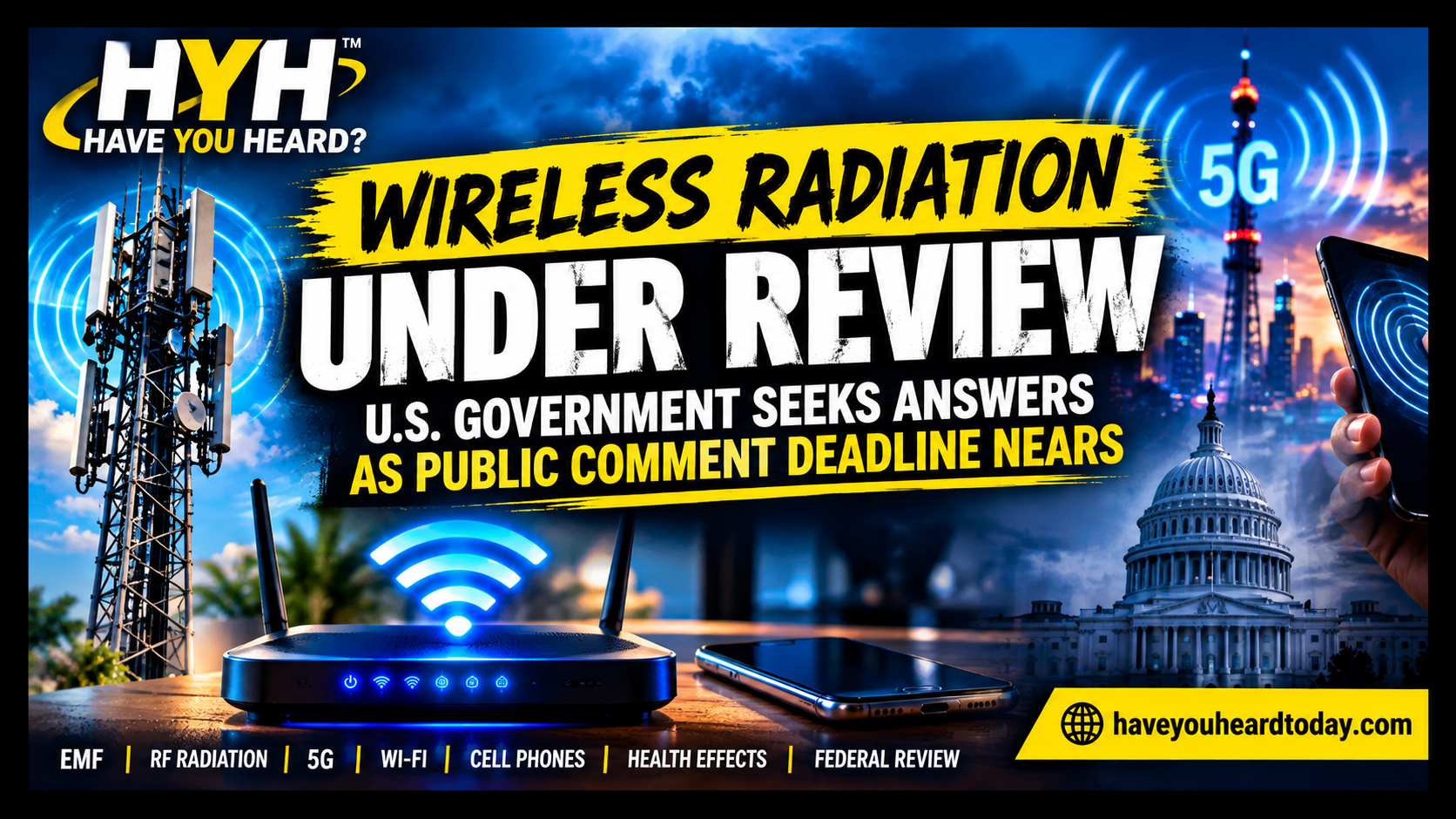
  • Wireless Radiation Under Review: U.S. Government Seeks Answers as Public Comment Deadline Nears

    Wireless Radiation Under Review: U.S. Government Seeks Answers as Public Comment Deadline Nears

    Wireless technology is woven into everyday life. Smartphones, Wi-Fi routers, cellular antennas and connected devices keep people communicating around the clock. But a renewed federal review is putting a familiar question back in the spotlight: what does the scientific evidence say about the potential health effects of wireless radiation?

    In September 2026, the U.S. Department of Health and Human Services (HHS) formally asked researchers, medical professionals, industry representatives and members of the public to submit information about electromagnetic fields (EMFs), radiofrequency (RF) radiation and wireless exposure. The request is intended to help officials assess existing evidence, identify research gaps and consider whether changes to public guidance or regulatory approaches may be warranted.

    The immediate development is the approaching deadline: comments on the HHS request are due October 21, 2026. The Federal Communications Commission (FCC) has also opened a separate, related comment process with a deadline of October 22.

    What Exactly Is the Government Reviewing?

    On September 17, HHS announced a Request for Information covering EMF exposure and human health, with particular attention to radiofrequency energy associated with wireless technologies.

    The department is seeking scientific studies, technical data, clinical observations and other evidence that can help officials evaluate the current state of knowledge. Its questions include potential effects associated with long-term exposure, how exposure is measured in real-world settings, and whether existing U.S. and international safety standards should be reassessed.

    HHS is also asking about potential research priorities involving children, pregnant people, older adults, people with implanted medical devices and workers who may experience higher occupational exposure.

    This is a request for evidence, not an announcement that officials have concluded wireless radiation causes illness. The purpose is to gather information before drawing policy conclusions.

    Why Is This Happening Now?

    Wireless technologies continue to evolve, from widespread 5G deployment to emerging 6G research, satellite connectivity, wearable devices and increasingly connected homes.

    HHS says it wants to evaluate the scientific evidence, identify areas where research remains incomplete and compare the approaches used to establish exposure standards in the United States and internationally.

    The review follows a broader federal effort to examine environmental factors that may affect public health. It also creates a formal opportunity for researchers and members of the public to submit evidence directly to the department.

    The FCC Has a Separate Deadline

    There is another important part of the story. In September, the FCC sought additional comments on specific radiofrequency exposure issues following a federal appeals court’s 2021 decision in Environmental Health Trust v. FCC.

    The court required the commission to provide further consideration and explanation concerning particular issues raised in its earlier review. These included questions involving children, long-term exposure, environmental effects and evidence cited in challenges to the agency’s conclusions.

    The FCC’s notice does not mean the court ruled that wireless radiation causes cancer or other illnesses. The court did not decide the scientific debate; it directed the agency to address specified issues more fully.

    The FCC’s separate comment deadline is October 22, 2026. The HHS and FCC processes address related subject matter, but they are different proceedings with different purposes.

    Does This Mean Wi-Fi or 5G Has Been Proven Dangerous?

    No. A government review is not proof that a hazard has been established.

    Radiofrequency energy used by cellphones, Wi-Fi and cellular networks is classified as non-ionizing radiation. It differs from ionizing radiation, such as X-rays, which has enough energy to remove electrons from atoms.

    According to the U.S. Food and Drug Administration, the weight of scientific evidence has not linked radiofrequency radiation from cellphones with health problems. The World Health Organization’s published overview of wireless technologies likewise says convincing evidence of adverse health effects from the low-level radiofrequency signals produced by base stations and wireless networks has not been established.

    Those assessments do not mean every scientific question has been permanently settled. They do mean that the new federal information requests should not be presented as proof of harm. The evidence, the limits of existing research and any future conclusions need to be evaluated separately.

    What Questions Still Need Answers?

    The federal requests raise several areas for further examination:

    • How well do current exposure measurements reflect people’s everyday use of wireless devices?
    • What additional research would help clarify questions about long-term exposure?
    • Are certain populations or occupational settings in need of more targeted study?
    • How should scientists evaluate evidence from different study designs and distinguish association from causation?
    • Do current exposure standards adequately account for the evidence and the technologies now in use?

    These are questions for scientific evaluation, not conclusions that a particular device or network has been shown to cause harm.

    What Happens Next?

    The next immediate milestone is the close of the public-comment periods: October 21 for the HHS request and October 22 for the FCC proceeding.

    After gathering submissions, officials can review the evidence and determine what further analysis, research or policy work may be appropriate. The requests themselves do not announce a new exposure limit, a ban on wireless devices or a final determination that current standards are unsafe.

    The important development to watch is what the agencies conclude after reviewing the material—not simply the fact that they have asked for it.

    The Bottom Line

    Wireless radiation is back in the federal spotlight. HHS is seeking evidence about radiofrequency exposure and human health, while the FCC is separately revisiting specific questions concerning its exposure rules. Both processes have deadlines this week.

    That makes this a significant public-policy development, but not proof that Wi-Fi, cellphones or 5G have been found dangerous. The real story is the government’s renewed examination of the evidence, the questions researchers are being asked to address and what the agencies may do next.

    Have You Heard? will continue to follow the developments and distinguish verified announcements from speculation as new information becomes available.

    Sources and Further Reading

    Have You Heard? reports on developing stories using official announcements and published evidence. An agency’s request for information should not be interpreted as a finding that wireless radiation has caused a particular health effect.

  • Mental Health Crisis: Warning Signs, What to Do and Where to Get Help

    Mental Health Crisis: Warning Signs, What to Do and Where to Get Help

    If you or someone near you is in a mental health crisis right now, call or text 988 in the United States, or chat at 988lifeline.org. If there is immediate danger or a medical emergency, call 911 or go to the nearest emergency room. SAMHSA’s crisis page lists both options. Everything below this paragraph can wait until you are safe.

    This guide is for the moment after, and the moment before. It explains what a mental health crisis is, how to recognize one, what helps and what makes things worse, how to use 988, 911 and the emergency room, and how to plan so the next crisis is less chaotic. It also covers the question many readers bring alongside this one: what social media does to mental health.

    Haveyouheardtoday
    Stay informed without the noise
    Have You Heard? curates significant stories and fresh perspectives across technology, current events and more, helping readers navigate information overload.

    TL;DR

    • A mental health crisis is a situation where someone’s behavior puts them or others at risk, or where they cannot meet basic needs like eating, drinking or managing their health.
    • In the U.S., call or text 988 for crisis support, and call 911 for immediate danger. When you call 911, say it is a mental health emergency and ask for Crisis Intervention Team (CIT) trained officers.
    • In the moment, stay calm, keep your voice low, offer options, and do not argue or try to reason the person out of what they feel.
    • Learn your local resources, such as mobile crisis teams and psychiatric urgent care, before you need them.
    • Heavy social media use is linked to more anxiety and depression symptoms in young people, but it is one factor among many, not a single cause.

    Table of Contents

    What a mental health crisis actually is

    The word “crisis” gets used loosely. A bad week, a panic attack at work and a psychotic episode are not the same thing, though all of them deserve care.

    The National Alliance on Mental Illness (NAMI) uses a practical definition. In its 2025 crisis guide, a crisis is any situation where a person’s behavior puts them at risk of harming themselves or others, or keeps them from meeting basic survival needs such as eating, drinking or managing their health. The test is safety and function, not how loud or dramatic things look.

    That definition has two useful consequences:

    1. A crisis can be quiet. Someone who has stopped eating, stopped taking essential medication or gone silent in a dark room may be in crisis even if no one is shouting.
    2. A diagnosis is not required. Crises happen to people with long-standing conditions and to people who have never sought care.

    NAMI’s guidance for parents uses the same logic for children. The Minnesota chapter’s planning guide describes a crisis as a situation where a child’s behaviors put them at risk of hurting themselves or others and the parent cannot manage them with the skills and resources available. That second clause matters. You do not have to prove a child is in extreme danger before asking for help. Needing backup is a legitimate reason.

    Warning signs worth taking seriously

    Crises often have triggers and early signals, but they can also arrive without warning. The Georgia Department of Behavioral Health and Developmental Disabilities makes that point in its crisis planning guide: a crisis can happen even when a person is following their treatment plan. Nobody failed if one happens.

    Common signs, as health organizations describe them, include:

    • Intense anxiety or panic that does not ease
    • Depression that is getting rapidly worse
    • Agitation, or frightening or confused thoughts
    • Talk of suicide, hopelessness or being a burden
    • Withdrawing from everyone, or sudden changes in sleep, eating or hygiene
    • Losing touch with reality, such as hearing voices or strong paranoia
    • Increased drinking or drug use alongside any of the above

    NAMI’s guide goes into more detail on what contributes to a crisis and which signs suggest one is building. Read it before you need it.

    No single sign proves anything. What you are looking for is a change from the person’s normal, especially one that is getting worse over days. If you are unsure, asking directly is better than waiting. Asking someone about suicide does not plant the idea, and a counselor at 988 can walk you through how to have that conversation.

    What to do in the first few minutes

    The first minutes set the tone. The research behind NAMI’s de-escalation advice, summarized in the Georgia crisis planning guide, points to a few consistent habits.

    Do

    • Stay calm and keep your voice low. Your nervous system is contagious in both directions.
    • Offer simple options instead of trying to take control. “Would you like to sit here or go outside?” gives back a little agency.
    • Use short sentences. A person in crisis may be struggling to process information.
    • Make the space safer. Reduce noise, lights and the number of people in the room.

    Avoid

    • Arguing, or trying to reason someone out of what they believe or feel
    • Judgmental comments like “you’re overreacting”
    • Crowding the person, grabbing them or blocking the door unless there is immediate physical danger
    • Promising secrecy you cannot keep if someone’s life is at risk

    If you are the person in crisis, the same logic applies in reverse. Tell someone you trust, move somewhere quieter, and contact 988. You do not have to be sure you are “bad enough” to call.

    Who to call: 988, 911 or the emergency room

    The right door depends on how urgent the situation is.

    Situation Best first step
    Distress, suicidal thoughts, panic, or worry about someone else Call or text 988, or chat at 988lifeline.org
    Immediate danger, weapon, overdose, serious injury Call 911 or go to the nearest emergency room
    Not in immediate danger but needs same-day evaluation Local mobile crisis team or psychiatric urgent care, if your area has one
    Stable but struggling, no safety concerns right now Your clinician, a therapist or a primary care doctor

    988

    The 988 Suicide & Crisis Lifeline connects you to a trained crisis counselor. Washington State’s health department notes that it is free, confidential and open 24/7/365, that you can call, text or chat, and that interpretation is offered in more than 240 languages and dialects. Anyone can use it from a cell phone, landline or internet voice device. You can call about yourself or about someone else.

    988 access methods and service details

    SAMHSA’s page also covers help for substance use and mental health problems beyond suicide, so you do not need to be thinking about suicide to reach out.

    911

    911 is for immediate danger. If you call about a mental health emergency, NAMI’s guide says to state clearly that it is a mental health emergency and to request Crisis Intervention Team (CIT) trained officers. Be brief, objective and calm. Give specifics, such as the person’s diagnosis if there is one, what they are doing right now, and whether weapons are present. That information helps the dispatcher send the most appropriate responders.

    CIT availability varies by community, so asking does not guarantee a CIT officer will arrive. It does raise the odds that the responders understand what they are walking into.

    The emergency room

    The emergency room is the right place for medical danger, and sometimes the only place open at 3 a.m. Go in with realistic expectations. NAMI warns that the process often takes several hours, and that psychiatric admission depends on medical necessity, not simply on the fact that a person is in crisis. Its practical tips: bring books, music or games to stay calm during a long wait, and bring a list of medications and a clear account of what led up to the visit.

    Helping a family member get psychiatric care

    People often ask how to get psychiatric help for a relative who does not think anything is wrong. There is no single answer, because rules differ by state, but the groundwork is the same everywhere.

    1. Document what you see. Practitioners often recommend that caregivers keep a journal or calendar of behavior leading up to a crisis. It helps spot triggers and gives clinicians a clearer picture during an assessment, as the Georgia guide explains.
    2. Call 988 for guidance. Counselors can talk through options for your situation and area.
    3. Find your local crisis resources. NAMI says families should prepare ahead of time, because unpredictability is part of mental illness, and that knowing local options such as mobile crisis teams or psychiatric urgent care before a crisis improves the odds of a good outcome.
    4. Be specific when you speak to professionals. Concrete behaviors (“has not slept in three days, stopped eating, said he wants to die”) carry more weight than labels.
    5. Care for yourself. Caregivers burn out. Lean on a support group, a friend or your own clinician.

    If the person is a child, the NAMI Minnesota guide above is a good template for what to write down and which questions to ask a provider.

    Build a crisis plan before you need one

    A plan is the single most useful thing you can make on a calm day. It does not have to be fancy. A page on the fridge and a copy in your phone will do.

    Include:

    • Warning signs and triggers, in the person’s own words if possible
    • What helps and what does not (a quiet room, a walk, a particular person, no touching)
    • Contacts: clinician, trusted friends or family, and 988
    • Medications and allergies, plus the prescriber’s name
    • Preferred hospital or crisis service, and what to do if that one is full
    • Practical matters: who will care for children or pets, who will take time off work

    Share it with the people named in it. The goal is that nobody has to improvise while frightened.

    Free online peer support between crises

    Peer support is not crisis care, and it does not replace a clinician or 988. But some people find it a useful bridge on hard days. A few options exist: Koko offers free, anonymous peer support for young people and reports that 88% of users find it helpful, a self-reported figure from the service itself. 7 Cups offers anonymous online chat with trained volunteer listeners, available 24/7.

    If you find yourself thinking about harming yourself, skip the peer chat and contact 988 or 911 instead.

    Mental health and social media: what the evidence says

    Many readers arrive at this topic through a different door: is social media making us sicker? The honest answer is that it is complicated, and that young people are where the concern is strongest.

    The U.S. Surgeon General’s advisory on social media and youth mental health, published by HHS, reports that use among young people is close to universal, with up to 95% of those aged 13 to 17 on these platforms. It cites research that adolescents spending more than three hours a day on social media face double the risk of anxiety and depression symptoms. The advisory also states that we cannot conclude social media is sufficiently safe for children and adolescents.

    A review in the journal literature on PubMed Central adds nuance. Social media can help people with mental illness find information and peer support, which matters when professional care is hard to reach. Heavy, prolonged use, particularly when it involves comparing yourself with others, is consistently linked to more depressive and anxiety symptoms. The pattern points toward purposeful, active use being better than passive scrolling.

    A caution about reading these findings: they show associations and risk, not that a feed causes a crisis. People who are already struggling may also scroll more. So treat the numbers as a reason for attention, not alarm.

    Practical steps that follow from the evidence:

    • Notice how you feel after you scroll. If the answer is consistently worse, that is data.
    • Favor active use. Messaging a friend or posting something you made differs from watching strangers’ highlights for an hour.
    • Set a daily ceiling. The three-hour mark in the research is a useful reference point for teens, and many families choose to go lower.
    • Keep phones out of the bedroom if sleep is slipping, since poor sleep often goes with worsening mood.
    • Talk, do not just police. For parents, curiosity about what a teen does online usually gets further than surveillance.
    • Treat a sudden change as a signal. If a young person withdraws, stops eating or talks about not wanting to live, move from screen-time rules to the crisis steps above.

    Our perspective

    We publish stories about technology, science, culture and current events, and mental health keeps showing up in all of them. It sits under headlines about screens, work, money, news cycles and loneliness. That is why we think the most useful thing a general-interest site can do with a topic like this is slow down and be practical.

    Here is how we see it. First, the information overload we try to cut through is itself part of the problem for many readers. A constant stream of alarming stories does not help anyone in distress. What helps is a short list of clear steps and a reliable number to call, which is why we put those at the top and built the rest on sources you can check.

    Second, “mental health crisis” is used in two senses: a national, public-health problem that appears in the news, and a personal emergency in someone’s living room. Both are real, and mixing them up leads to bad advice. Statistics about teens and screens are worth knowing, but they should not stop you from acting on what is in front of you today.

    Third, we are a media site, not a clinic. We do not diagnose, and we do not replace a counselor, a doctor or emergency services. What we can do is point you to organizations that do this work, such as NAMI, SAMHSA and the 988 Lifeline, and explain what they say in plain language. If something here helps you make one phone call sooner, that is the point.

    More from Have You Heard?

    If you want more clear, sourced explainers on technology, science and culture without the noise, start at the Have You Heard? homepage or read about how we choose and report our stories.

    FAQ

    What does it mean to be in crisis?

    It means the situation has become unsafe or unmanageable. NAMI describes it as behavior that puts a person at risk of harming themselves or others, or that stops them from meeting basic needs like eating or managing their health. You do not need a diagnosis, and you do not have to be certain it is serious before you ask for help.

    What should I say to someone who is not doing well emotionally?

    Stay calm, speak softly and keep it simple. Offer options rather than orders, and avoid arguing or passing judgment. Ask directly whether they are thinking about hurting themselves, and if they are, or you are unsure, contact 988 together or call 911 if there is immediate danger.

    Are there free online support groups for anxiety?

    Yes, free anonymous options exist, including online chat with trained volunteer listeners and peer communities for young people. They can help on hard days, but they are not crisis services. For anxiety that is worsening or that comes with thoughts of self-harm, talk to a clinician or reach 988.

    How do I get psychiatric help for a family member?

    Start by writing down specific behaviors and when they happen, then call 988 or your local crisis line for guidance on options in your area. Know your nearest mobile crisis team or psychiatric urgent care in advance. If there is immediate danger, call 911, say it is a mental health emergency and ask for CIT-trained officers.

    Does social media cause mental health problems?

    The evidence shows a link between heavy use and more anxiety and depression symptoms in young people, with a doubled risk reported above three hours a day. It does not prove that social media alone causes a crisis. Active, purposeful use appears less harmful than long stretches of passive scrolling.

    Sources

  • Urban Heat Island: What It Is, Why Cities Run Hotter

    Urban Heat Island: What It Is, Why Cities Run Hotter

    An urban heat island is a city, or part of one, that stays noticeably warmer than the rural land around it. Buildings, pavement and other hard surfaces soak up the sun’s energy and release it slowly, while there are too few trees, too little open soil and too little water to cool things down. The gap is usually biggest after dark, which is why a hot city night can feel so hard to sleep through.

    This guide explains how the effect works, how large it really gets, who it hurts most, how it differs from a heat dome, and which fixes cities are using.

    Haveyouheardtoday

    Stay Informed on Stories That Matter
    Explore Have You Heard? for trending stories, fresh insights, and captivating facts across technology, current events, and more.

    Explore the latest stories

    TL;DR

    • An urban heat island forms when dense buildings, roads and roofs absorb and re-emit heat, and a lack of vegetation limits natural cooling (EPA).
    • The effect is usually stronger at night. Under ideal calm, clear conditions, nighttime differences can reach about 12°C (22°F) (Wikipedia).
    • Older adults, young children, pregnant women and lower-income residents in dense or poorly insulated housing carry the heaviest burden (WHO).
    • A heat dome is a different thing: a weather pattern that traps hot air over a large region. A heat island makes its effects worse in cities.
    • Trees, green roofs, cool roofs and cool pavements all help, but they work best as part of integrated city planning.

    Table of Contents

    What an urban heat island is

    The textbook definition is simple. An urban heat island (UHI) is a built-up area that is significantly warmer than the surrounding rural landscape. Geography classes often phrase it as a “dome” or “island” of warm air sitting over a city, and if you plotted temperatures on a map, the city would show up as a raised area, like an island on a contour chart.

    Two kinds are worth separating:

    • Surface heat islands. These describe how hot the ground, roofs and walls themselves are. A black asphalt parking lot at 3 p.m. in July is a surface heat island in miniature. It is the kind satellites measure.
    • Atmospheric heat islands. These describe the temperature of the air, the number on your phone’s weather app. It is usually the difference between a city air thermometer and one in nearby farmland or forest.

    The EPA’s explanation of heat islands notes that structures like buildings and roads absorb and re-emit the sun’s heat more than natural landscapes such as forests and water bodies. Where those structures are concentrated and greenery is scarce, the area becomes hotter than its surroundings.

    Why cities get hotter than the countryside

    No single culprit explains it. Several effects stack up.

    Dark, dry, hard surfaces

    As cities grow, open land and vegetation are replaced by buildings, roads and other infrastructure. Surfaces that were once permeable and moist become impermeable and dry, according to the EPA’s compendium on heat island basics. Moist soil and leaves cool the air as water evaporates. Pavement and roofs can’t do that, so more of the sun’s energy goes straight into heat.

    Urban canyons

    Tall buildings on both sides of a street make a canyon. Researchers at NOAA describe how this geometry physically traps heat and cuts radiative cooling compared with open rural land (NOAA study on New York City and a regional heat wave). Heat that would otherwise radiate to the night sky bounces between walls and pavement instead.

    Stored heat released at night

    The same NOAA work points to heat conduction from the urban fabric, meaning buildings, roads and concrete, back into the environment after sunset as a main driver of the nocturnal heat island. Concrete and asphalt act like a battery. They charge all day and discharge all night.

    Waste heat and local weather

    Air conditioners, vehicles and industrial facilities add heat directly. Weather matters too: clear, calm conditions favor a strong heat island, while clouds and wind weaken it. A mechanistic assessment across climates found that heat island intensity depends heavily on background climate and the properties of the urban area, so two cities of similar size can behave quite differently.

    Urban heat sources and weather factors

    How much hotter is a city?

    The honest answer is a range, and it depends on the time of day, the weather and how you measure.

    Measure Typical figure Source
    Annual mean air temperature in large cities About 1–3°C (1.8–5.4°F) warmer than surroundings Wikipedia
    Nighttime difference under ideal conditions Up to 12°C (22°F) Wikipedia
    Poor urban design, including sunlight reflected off paved surfaces Can raise city temperatures by 5–12°C WHO

    So you will see headlines claiming 5°C or 10°C, and others claiming 1°C. They are not contradicting each other. The small number is an annual average. The big one is a peak, on a still, clear night, in the densest block.

    Why the heat island is worse at night

    People often assume the hottest part of the day is when a city is most different from the countryside. It is usually the reverse.

    During the day, sun on the ground dominates everywhere, in town and country alike, so the contrast is modest. After sunset, rural land cools quickly. Cities don’t. Stored heat flows out of concrete and asphalt, and tall buildings block the sky view that surfaces need to shed heat as infrared radiation. The result is a temperature gap that peaks in the hours after dark and into early morning.

    This matters for health because the body recovers from daytime heat during a cool night. When the night stays hot, that recovery doesn’t happen.

    Is New York an urban heat island?

    Yes, and it is one of the best-studied. A mesoscale analysis from Rutgers used a network of weather stations around the city to map its heat island. The effect is real in every season, but it is not constant.

    Weather shifts it. In a coastal city, sea breezes can temporarily reduce or displace the heat island. That cooling has a cost: the same research notes that such breezes can also pin pollutants like nitrogen dioxide against the skyline.

    Heat waves amplify it. NOAA’s study of a regional heat wave in the city looked at how an extreme event interacts with the urban surface. A NOAA-hosted analysis reports that a 2018 morning heat island in New York peaked at 8.3°C (about 14.9°F), and that during peak heat wave events, urban flux contributions alone can add more than 5°C to nighttime temperatures in dense areas like Midtown Manhattan.

    New York is not special in kind. Any dense U.S. city, from Phoenix to Chicago to Atlanta, has the same ingredients. What differs is climate, geography and how much tree canopy each neighborhood has.

    Is New York an urban heat island? — overview diagram

    Urban heat islands and health

    Heat is a quiet hazard. It rarely makes the dramatic footage that hurricanes or floods do, but the WHO links urban heat islands to serious health risks, including heat stroke, heat exhaustion and cardiovascular failure, with the greatest impact on older adults, young children, pregnant women and low-income residents. The WHO’s page on health risks in urban planning is a good place to start for the details.

    Two things make the city version of heat especially risky:

    1. Hot nights. As above, there is less overnight relief, so the body is stressed for longer.
    2. Unequal exposure. Neighborhoods with less tree canopy, denser buildings and lower-quality housing run hotter. A WHO background paper on climate and health describes a cycle of energy poverty: the people who can least afford air conditioning are the ones who need it most, and its use adds waste heat to the street.

    The same paper notes that temperatures across the WHO European Region are rising at twice the global average, with urban heat islands amplifying extreme heat exposure. The region is not the U.S., but the pattern of warming plus dense cities is shared.

    If you or someone you live with is at higher risk, meaning an older adult, an infant, someone pregnant or someone with heart or lung disease, talk to a doctor or pharmacist before the next heat wave about how your medications and conditions interact with heat. During a heat alert, check on neighbors who live alone. If someone has a very high body temperature, confusion or has fainted, call 911: that can be heatstroke, which is an emergency.

    Heat island vs. heat dome

    The two terms get mixed up, and the search data shows readers asking about both. They describe different scales.

    Urban heat island Heat dome
    What it is A local temperature difference between city and countryside A large-scale weather pattern
    Scale A neighborhood to a metro area Often a big part of a country
    Cause Surfaces, buildings, lack of vegetation, waste heat A high-pressure system that traps hot air
    Lasts Every day, strongest at night Days to more than a week

    NPR’s explainer on how a heat dome works quotes a National Weather Service official comparing it to a lid on a pot, which keeps heat from escaping. When one settles over a region, the entire area gets hotter. A city under a heat dome then gets the heat island on top of that. The dome sets the baseline, and the island adds the extra degrees in downtown blocks, especially at night.

    That combination is why heat waves are a particular problem for cities. The same broader warming trend raises the odds of long, intense events. NOAA’s research notes that heat waves are projected to increase in magnitude and frequency throughout this century because of rising global temperatures.

    What cities can do about it

    There is a standard toolbox, and the EPA’s heat island reduction guidance is the usual starting point for U.S. cities. The main tools:

    • Trees and vegetation. Shade blocks the sun before it hits surfaces, and plants cool the air by releasing water.
    • Green roofs. Planted roofs replace a heat-absorbing surface with a living one.
    • Cool roofs. Reflective roofing sends more sunlight back instead of absorbing it.
    • Cool pavements. Lighter or more permeable street and parking surfaces store less heat.
    • Adaptation. Cooling centers, heat alerts and outreach to vulnerable residents reduce harm while the physical fixes catch up.

    A Columbia University study of Con Edison’s roofs in New York, a comparison of green, white and black roofs, is a useful local example of why this matters: it begins from the point that dark, impervious surfaces generate excess urban heat and stormwater runoff, and it tested alternatives.

    The catch: density

    There is a real tension here. Compact cities reduce driving and carbon emissions. But the WHO paper cited above warns that compact design can reduce green space and ventilation, potentially intensifying heat islands in dense corridors. Effective mitigation, the paper says, combines approaches such as green and blue infrastructure with changes to surface reflectivity, instead of leaning on one fix.

    Academic reviewers say the same. An Annual Reviews article on urban climate stresses that real thermal resilience needs integrated planning: managing building density, keeping ventilation corridors open, and balancing compact housing with vegetation and reflective materials.

    Nightlife and activity also matter

    Heat islands are not only about materials. A 2026 study in Scientific Reports on nocturnal heat in Changsha’s music districts looked at how dense human activity, intense lighting and round-the-clock operations can create nighttime thermal anomalies. It is a reminder that what happens in a place, not only what it is built from, shapes how it heats.

    Our perspective

    We run a site built around one idea: most readers don’t need more headlines, they need the right few stories with the context to understand them. The urban heat island is a perfect example of a topic that gets flattened. You will see “cities are 10 degrees hotter” in one place and “barely a degree” in another, and both are technically defensible.

    The useful questions are the ones underneath. Hotter when? Hotter where, block by block? Hotter for whom? The answers point to nights, to dense and treeless neighborhoods, and to residents with the fewest resources. That is why we treat heat as a story that sits at the crossroads of science, public health, technology and everyday life, not as a weather curiosity.

    We would also resist the single-fix story. Planting trees is great. So are reflective roofs. But the research says the cities that do best plan density, airflow and surfaces together. If a headline promises one thing that will cool a city, be skeptical.

    Keep reading on Have You Heard?

    If you like your science and city stories explained clearly, with sources you can follow up on, browse the Have You Heard? homepage for trending stories across technology, science, environment and more. You can also read how we pick what to cover on the About page. For a look at how a post-industrial waterfront is being reimagined, see our piece on industrial riverfront redevelopment in winter.

    FAQ

    What is the definition of an urban heat island in geography?

    It is an urban area that is significantly warmer than the rural land surrounding it, because buildings and pavement absorb and re-emit heat and there is little vegetation to cool the air. The difference is usually larger at night than during the day. Geographers measure it as the temperature gap between city and countryside.

    Why is the urban heat island worse at night?

    Concrete and asphalt store heat all day and release it after sunset. Tall buildings also trap heat and reduce the cooling that surfaces get by radiating to the sky. Rural areas lose heat faster, so the gap widens after dark.

    What are the health impacts of urban heat islands?

    They raise the risk of heat stroke, heat exhaustion and cardiovascular failure, according to the WHO. Older adults, young children, pregnant women and low-income residents in dense or poorly insulated housing are most affected. Hot nights are a big part of the risk, since the body gets less time to recover.

    Is New York an urban heat island?

    Yes. Weather-station studies show a clear heat island in all seasons, and NOAA-hosted research reports a morning peak of 8.3°C (about 14.9°F) in 2018. Sea breezes can temporarily reduce it, and heat waves can intensify it.

    What is a heat dome, and is it the same thing?

    No. A heat dome is a large weather pattern in which high pressure traps hot air over a region for days. An urban heat island is a local effect caused by the city itself. In a heat wave, the two combine, so cities feel the dome’s heat plus the island’s extra warmth.

    Sources

    Created using BabyLoveGrowth

  • Seven Years After Historic Ear Surgery Restored Hearing, South African Surgeon Eyes New Breakthrough

    Seven Years After Historic Ear Surgery Restored Hearing, South African Surgeon Eyes New Breakthrough

    A pioneering operation using 3D-printed titanium bones helped a man hear again. Now, Professor Mashudu Tshifularo hopes clinical trials will bring the technology to more patients.

    In 2019, a South African surgeon accomplished something extraordinary: he helped restore a patient’s hearing using tiny, specially manufactured titanium bones.

    Seven years later, that achievement is entering another important chapter.

    Professor Mashudu Tshifularo, an ear, nose and throat specialist at the University of Pretoria, announced plans in May 2026 for clinical trials involving 45 people with severe conductive hearing loss.

    The development raises a remarkable possibility: Could a surgical innovation pioneered in South Africa eventually help many more people regain the sounds they have lost?

    A Historic Operation in Pretoria

    On March 13, 2019, Tshifularo and his medical team at Steve Biko Academic Hospital performed a pioneering middle-ear reconstruction using 3D-printed titanium implants.

    The procedure replaced damaged structures known as the ossicles — three of the smallest bones in the human body.

    These tiny bones play an essential role in hearing. They transmit vibrations from the eardrum toward the inner ear, allowing sound to be processed by the auditory system.

    When the ossicles become damaged through injury, infection or certain birth defects, sound may no longer travel efficiently through the middle ear. This condition is called conductive hearing loss.

    By replacing damaged bones with specially designed implants, surgeons may be able to restore the pathway through which sound travels.

    The Patient Behind the Breakthrough

    The first widely reported patient was Thabo Molishiwa, who had experienced serious ear injuries and significant hearing loss.

    In a 2019 interview published by the University of Pretoria, Molishiwa described years of pain and uncertainty before agreeing to the experimental procedure.

    He initially hesitated because he feared the risks of undergoing an unfamiliar operation. Eventually, he decided to proceed.

    The results changed his life.

    In that interview, Molishiwa estimated that he had recovered approximately 75% of his hearing.

    But the story did not end there.

    At a University of Pretoria event in April 2026, the patient appeared in a video confirming that his hearing had remained excellent in the years following surgery, according to the university.

    That long-term account provides an encouraging sign, although a successful individual case does not establish how reliably the procedure will work for other patients.

    How Can 3D-Printed Bones Restore Hearing?

    The technology combines modern manufacturing with delicate reconstructive surgery.

    Rather than relying entirely on conventional replacement structures, the team developed titanium implants intended to reproduce the anatomy of damaged middle-ear bones.

    Titanium is widely used in medical implants because it is generally compatible with human tissue.

    The approach is designed to address the specific structures preventing sound from traveling properly through the ear.

    The 2026 version of the procedure also incorporates robotic-assisted surgical technology, intended to improve precision during delicate operations.

    According to the University of Pretoria, the procedure takes approximately three hours.

    The goal is to restore hearing while limiting damage to surrounding structures. However, these potential advantages still require careful evaluation through formal clinical research.

    Why the 2026 Clinical Trials Matter

    In May 2026, the University of Pretoria announced that 45 patients with conductive hearing loss were awaiting clinical trials at Steve Biko Academic Hospital.

    The university reported that the project had obtained the regulatory, ethical and licensing clearances needed to move forward.

    Several South African organizations are involved in developing and producing the technology, including the Council for Scientific and Industrial Research, HH Industries and Marcus Medical.

    The trials are intended to help researchers evaluate the procedure’s effectiveness, safety and suitability for wider medical use.

    If the results are favorable, the research could support future training, scientific publications and broader access to the technology.

    As of the university’s May announcement, the clinical trials were planned rather than completed. Their eventual results should not be assumed.

    Does This Surgery Cure Deafness?

    This is one of the most important distinctions in the story.

    The operation is intended for certain types of conductive hearing loss, particularly when damage to the middle-ear bones interferes with sound transmission.

    It is not a universal cure for deafness.

    Other forms of hearing loss may involve damage to the inner ear, auditory nerve or other parts of the hearing system. Replacing middle-ear bones would not necessarily correct those conditions.

    Even among patients with conductive hearing loss, suitability depends on the specific medical cause and an evaluation by a qualified specialist.

    That makes the planned clinical trials particularly important: researchers must establish which patients are most likely to benefit and what risks may be involved.

    An Innovation Years in the Making

    Tshifularo’s achievement was not an overnight success.

    In a 2019 interview, he described spending approximately a decade pursuing his research and encountering skepticism from organizations that were unwilling to support his ideas.

    His determination eventually brought together medicine, engineering and 3D-printing technology.

    The result became a milestone for South African medical innovation.

    And the surgeon’s ambitions extend beyond a single successful operation.

    He hopes the technology can be developed, tested and taught to other medical teams, potentially expanding treatment options for people whose hearing loss is caused by damaged middle-ear structures.

    What Happens Next?

    The next major milestone will be evidence from the planned clinical trials.

    Researchers will need to examine hearing outcomes, complications, durability and the procedure’s performance across a larger group of patients.

    Until those findings are available, the 2019 success remains a promising early achievement rather than proof of a widely established cure.

    Still, the larger story is remarkable.

    A patient who struggled to hear became part of a pioneering medical operation. Years later, his reported recovery continues to inspire efforts to help others.

    For Professor Tshifularo, the ultimate goal is bigger than one surgical breakthrough.

    It is a future in which more people with treatable hearing loss have a chance to hear again.

    Have You Heard? Sometimes the most extraordinary medical discoveries aren’t just about what surgeons accomplished years ago — they’re about what those achievements might make possible tomorrow.

    Sources and Further Reading

  • Why You May See People Wearing Blue and Orange This October

    Why You May See People Wearing Blue and Orange This October

    Have you heard? There’s a reason you may see more people wearing blue — and later orange — during October.

    October is National Bullying Prevention Month, a time when schools, families, students and communities across the country draw attention to bullying and encourage kindness, acceptance and inclusion.

    But if you’ve seen different organizations promoting different colors, you may have wondered: Is blue the color for bullying prevention, or is it orange?

    The answer is both — but for two different campaigns.

    Why People Are Wearing Blue on October 5

    On Monday, October 5, 2026, STOMP Out Bullying is holding its 20th annual World Day of Bullying Prevention.

    The organization is asking students, educators, businesses and communities to #BlueUp by wearing blue. The campaign also encourages supporters to continue wearing blue and promoting bullying prevention throughout October.

    According to STOMP Out Bullying, blue was selected because the color represents peace in many cultures while also conveying importance and confidence.

    The idea is simple: when large numbers of people wear the same color, something as ordinary as a blue shirt can become a visible conversation starter.

    Someone sees the blue, asks what it represents, and a conversation about bullying prevention begins.

    Then Why Is Orange Associated With Bullying Prevention?

    Blue isn’t the only color you’ll see during National Bullying Prevention Month.

    On Wednesday, October 21, 2026, PACER’s National Bullying Prevention Center will hold Unity Day, when participants are encouraged to wear and share orange.

    Unity Day began in 2011 and has become the signature event of PACER’s National Bullying Prevention Month campaign.

    Its message centers on kindness, acceptance and inclusion and showing support for students who have experienced bullying.

    PACER explains that orange was selected for several reasons. It is closely associated with October and autumn, but it is also a highly visible color associated with safety. Its bright appearance makes it particularly effective for creating a noticeable public statement.

    Blue and Orange Aren’t Competing Messages

    Seeing two colors connected with bullying prevention can initially seem confusing.

    But World Day of Bullying Prevention and Unity Day are separate initiatives organized by different organizations. They simply take place during the same awareness month.

    Blue on October 5 represents STOMP Out Bullying’s #BlueUp campaign. Orange on October 21 represents PACER’s Unity Day.

    The colors are different, but the broader goal is closely connected: creating safer environments and making it clear that bullying should not simply be accepted as a normal part of growing up.

    What Actually Counts as Bullying?

    Bullying is sometimes used as a catch-all term for any disagreement between young people, but the federal government’s StopBullying.gov provides a more specific definition.

    It describes bullying as unwanted aggressive behavior among school-aged children involving a real or perceived imbalance of power. The behavior is repeated, or has the potential to be repeated, over time.

    Bullying can take several forms. It can be physical, such as hitting or damaging someone’s belongings. It can be verbal, including threats and name-calling. It can also be social, such as deliberately excluding someone, spreading rumors or publicly embarrassing another student.

    That distinction matters because effective prevention starts with understanding what behavior people are trying to prevent.

    Bullying Doesn’t Stop When School Ends

    Bullying can also follow students home through phones, social media, messaging apps and online gaming.

    Cyberbullying can occur through phones, social media, messaging apps, online forums and gaming communities. Harmful posts, messages, rumors, photographs or other digital content can potentially reach audiences far beyond a classroom or school hallway.

    That means bullying prevention increasingly involves both the physical and digital worlds.

    Parents and educators can pay attention to changes in a young person’s online behavior and create an environment where students feel comfortable discussing what is happening on their devices rather than assuming they have to handle the situation alone.

    What Can People Do Beyond Wearing a Color?

    Blue and orange shirts create visibility, but awareness campaigns ultimately depend on what happens after people notice them.

    Students can make an effort to include classmates who appear isolated, refuse to participate in humiliating posts or rumors, and speak with a trusted adult when they see behavior that may be bullying.

    Parents can keep communication open about both school and online experiences. Educators can establish clear expectations for respectful behavior and make sure students know where they can go for help.

    Schools and community organizations can also use October as an opportunity for classroom discussions, awareness activities and projects centered on kindness and inclusion rather than treating bullying prevention as something confined to a single day.

    Two Colors, One Larger Message

    So if you notice blue shirts early in October and orange shirts a few weeks later, there isn’t a contradiction.

    You’re seeing two different awareness campaigns using two highly visible colors to start conversations about the same broader problem.

    Blue on October 5. Orange on October 21. But the message behind both colors lasts much longer than a day: bullying should never be accepted as a normal part of growing up.

    And perhaps the most important part of an awareness month isn’t what color someone wears. It’s what happens when that awareness turns into everyday action.

    Have you ever worn blue or orange to support bullying prevention?


    Sources & Further Reading