Category: History

  • Why Was Daylight Saving Time Invented? The Wartime History Behind Changing Our Clocks

    Why Was Daylight Saving Time Invented? The Wartime History Behind Changing Our Clocks

    Have You Heard? | History & Evergreen

    Twice a year, millions of Americans adjust their clocks, moving one hour forward in spring and one hour backward in fall. But have you ever wondered who started this tradition, why it was introduced, and how it became part of American life?

    The surprising answer involves a world war, efforts to conserve fuel, and more than a century of disagreement over how people should organize their days.

    Did Benjamin Franklin Invent Daylight Saving Time?

    Benjamin Franklin is often credited with inventing daylight saving time, but that description is misleading.

    In 1784, Franklin wrote a humorous essay suggesting that people could save money on candles by waking earlier and taking advantage of morning sunlight.

    However, Franklin did not propose the modern system of changing clocks twice a year.

    More recognizable proposals came later. New Zealand entomologist George Vernon Hudson advocated seasonal clock changes in 1895, while British builder William Willett promoted a similar idea in the early 1900s.

    World War I Changed Everything

    The modern history of daylight saving time took a major turn during World War I.

    On April 30, 1916, Germany and Austria-Hungary introduced daylight saving time as part of wartime efforts to conserve resources, particularly fuel used for artificial lighting.

    By moving clocks forward, governments hoped people would make greater use of evening sunlight and reduce energy consumption.

    Other European nations soon introduced similar measures.

    America Adopted Daylight Saving Time in 1918

    The United States officially adopted daylight saving time through the Standard Time Act, signed into law on March 19, 1918.

    The legislation also established federal standard time zones, helping coordinate transportation and commerce across the country.

    Daylight saving time was promoted as a wartime conservation measure, but it quickly became controversial.

    Many farmers objected because agricultural work followed sunlight and seasonal conditions rather than the clock. Changing official time did not change when animals needed feeding or crops needed tending.

    Congress repealed the national daylight saving requirement in 1919, although some cities and communities continued using it independently.

    World War II Brought Back Nationwide Clock Changes

    During World War II, the United States once again adopted a nationwide clock adjustment.

    Beginning in February 1942, clocks were advanced one hour under a policy commonly known as War Time.

    The measure remained in effect until September 1945.

    After the war, states and local governments resumed following different schedules, creating confusion for transportation companies, broadcasters, and businesses operating across multiple communities.

    The Uniform Time Act of 1966

    To reduce confusion, Congress passed the Uniform Time Act of 1966.

    The law established a national framework for the beginning and ending dates of daylight saving time while allowing states to exempt themselves from the practice.

    It did not require every state to observe daylight saving time.

    Today, Hawaii and most of Arizona remain on standard time throughout the year, along with several U.S. territories.

    America Tried Year-Round Daylight Saving Time in the 1970s

    During the energy crisis of the 1970s, the United States experimented with extended daylight saving time in hopes of reducing energy consumption.

    A temporary year-round daylight saving policy began in January 1974.

    However, dark winter mornings generated public concern, especially regarding children traveling to school before sunrise.

    Congress shortened the experiment, and seasonal clock changes eventually returned.

    Why Do Americans Still Change Their Clocks?

    The Energy Policy Act of 2005 extended the daylight saving period, with the updated schedule taking effect in 2007.

    Under current federal rules, daylight saving time begins on the second Sunday in March and ends on the first Sunday in November.

    Supporters argue that additional evening daylight can benefit recreation, shopping, and other activities.

    Critics point to sleep disruption, darker winter mornings under permanent daylight saving time, and mixed evidence about energy savings.

    Sleep and medical organizations have also raised concerns about the effects of seasonal time changes on human circadian rhythms.

    The Debate Continues More Than 100 Years Later

    What began as an effort to conserve wartime resources has evolved into a national discussion about health, convenience, economics, and the best use of daylight.

    Some Americans favor permanent daylight saving time. Others prefer permanent standard time. Still others support keeping the seasonal system.

    One thing is clear: changing the clocks has never been universally popular.

    More than a century after the United States first adopted daylight saving time, the country is still debating whether the practice should continue.

    Have You Heard? Sometimes the most familiar parts of everyday life have the most surprising histories.


    Sources & Further Reading

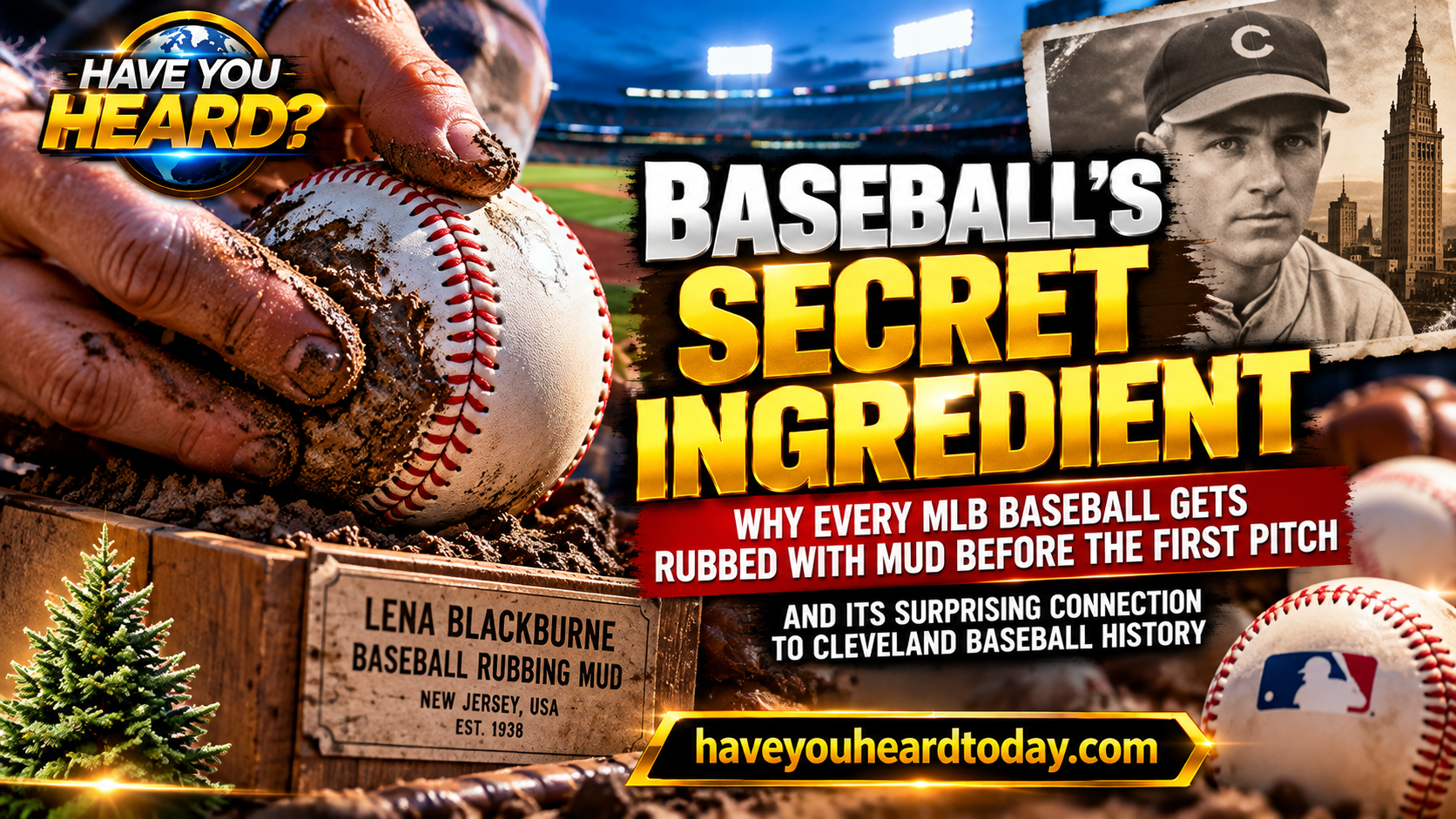
  • Why Every MLB Baseball Gets Rubbed With Secret Mud Before the First Pitch

    Why Every MLB Baseball Gets Rubbed With Secret Mud Before the First Pitch

    Every Major League Baseball game begins with a secret most fans never notice. Before the first pitch is thrown, the baseballs have already undergone an unusual preparation process involving a special mud collected from a closely guarded location in New Jersey.

    It’s called Lena Blackburne Baseball Rubbing Mud, and this remarkable baseball tradition has survived for generations.

    But why does a professional sport that relies on advanced technology still depend on something as ordinary as mud?

    The answer involves slippery baseballs, an innovative former player, and a tragic chapter of Cleveland baseball history.

    Why Are MLB Baseballs Rubbed With Mud?

    Brand-new baseballs have a smooth, glossy leather surface. Although they look perfect coming out of the box, that finish can make them difficult for pitchers to grip.

    To prepare the balls for professional play, clubhouse personnel rub them with a specially processed mud that reduces the shine and improves the feel of the leather.

    The objective is to make the baseball easier to handle without excessively staining, scratching or damaging its surface.

    Major League Baseball’s rules require game balls to be properly rubbed so their gloss is removed.

    The Secret Mud Comes From New Jersey

    For decades, MLB teams have relied on Lena Blackburne Baseball Rubbing Mud, a substance harvested from a carefully protected location in southern New Jersey.

    Its unusually fine texture makes it suitable for preparing baseballs without the problems associated with ordinary dirt.

    Although the general region is known, the precise harvesting location and preparation methods have traditionally been closely guarded by the people responsible for the product.

    That secrecy has become part of baseball folklore.

    Who Was Lena Blackburne?

    Russell Aubrey “Lena” Blackburne was a former Major League player, manager and coach who helped transform how baseballs were prepared.

    In 1938, while coaching for the Philadelphia Athletics, Blackburne learned that umpires were frustrated with existing methods of removing the gloss from new baseballs.

    Some methods involved ordinary dirt, water, tobacco juice or other substances that could stain or damage the leather.

    Blackburne remembered a particularly fine mud he had encountered during his youth near the Delaware River in New Jersey.

    He experimented with that material and developed a preparation that proved effective for baseballs.

    His product spread through professional baseball, eventually becoming a familiar part of Major League game preparation.

    The Tragic Cleveland Connection

    One of the most important chapters in baseball safety history involves Cleveland shortstop Ray Chapman.

    On August 16, 1920, Chapman was struck in the head by a pitch thrown by New York Yankees pitcher Carl Mays. Chapman died the following day.

    His death intensified concerns about player safety and the condition and visibility of baseballs used during games.

    In the years that followed, baseball introduced changes intended to improve how balls were handled, including efforts to ensure that clean, properly prepared baseballs were available.

    Blackburne’s rubbing mud was introduced nearly two decades later, in 1938.

    Although Chapman’s death did not directly create the mud product, both stories belong to the larger history of baseball’s efforts to improve the safety and handling of game balls.

    Does Every MLB Team Use the Same Mud?

    According to Major League Baseball, teams use Lena Blackburne Baseball Rubbing Mud as part of their standard preparation process.

    Before games, clubhouse personnel prepare numerous baseballs, rubbing the surface to reduce its factory gloss.

    This happens before fans see those baseballs delivered to the field.

    While pitchers are subject to strict rules regarding unauthorized foreign substances, the approved pregame preparation of baseballs is a separate, established procedure.

    Why Hasn’t Technology Replaced the Mud?

    Baseball equipment has evolved considerably, yet the mud tradition has endured.

    The challenge is straightforward: a baseball must offer an appropriate grip while preserving the characteristics required for professional competition.

    MLB has explored alternative baseball surfaces and preparation methods, but Lena Blackburne’s mud remains a longstanding part of the sport.

    It is an unusual reminder that sometimes a simple material can continue serving a specialized purpose even as the surrounding sport becomes more technologically advanced.

    The HYH Bottom Line

    The next time you watch a Major League Baseball game, remember that the baseball leaving a pitcher’s hand has a story of its own.

    Before it reaches the mound, it has been carefully prepared using a substance with roots in a New Jersey mud bank and a tradition dating to 1938.

    And the larger history of baseball safety includes a lasting connection to Cleveland’s Ray Chapman.

    Have You Heard? One of baseball’s most enduring secrets isn’t hidden inside the ball. It’s rubbed onto the outside.

    Sources and Further Reading