Category: Science

  • Cleveland Clinic, IBM and RIKEN Explore Quantum Computing’s Potential for Medical Research

    Cleveland Clinic, IBM and RIKEN Explore Quantum Computing’s Potential for Medical Research

    CLEVELAND, Ohio — A collaboration between Cleveland Clinic, IBM and Japan’s RIKEN research institute is exploring how quantum computing could help scientists better understand complex molecules, potentially opening new possibilities for future medical research and drug discovery.

    The research team has demonstrated a hybrid quantum-classical approach to simulating a molecular system containing 12,635 atoms. The work, announced in May 2026, received further recognition when the collaboration was named a finalist for the 2026 ACM Gordon Bell Prize.

    The achievement highlights the growing role of advanced computing in biomedical research, although practical medical applications remain a longer-term goal.

    What Makes This Research Significant?

    Proteins play essential roles throughout the human body. Understanding their structure, behavior and interactions with other molecules is critical to studying disease and developing potential treatments.

    However, accurately modeling large molecular systems presents enormous computational challenges.

    Researchers are investigating whether quantum computers, working alongside traditional supercomputers, can eventually tackle certain molecular calculations more effectively.

    The Cleveland Clinic, IBM and RIKEN collaboration represents progress toward that objective.

    A Simulation Involving 12,635 Atoms

    Using IBM quantum technology and powerful classical computing resources, researchers simulated a protein-related molecular system containing 12,635 atoms.

    The team employed a hybrid approach, combining quantum processors with conventional supercomputers to perform different portions of the calculations.

    Rather than replacing traditional computers, the research explores how both technologies can work together to address complex scientific problems.

    The simulation’s scale represents an important technical achievement, but it does not mean quantum computers can already solve every challenge associated with molecular modeling.

    Why Cleveland Clinic Is Involved

    Cleveland Clinic has been expanding its involvement in quantum computing research as part of its broader effort to advance biomedical discovery.

    Through collaborations with IBM and international research institutions, scientists are investigating new computational methods that could eventually support research involving proteins, diseases and potential medicines.

    The partnership also demonstrates Cleveland’s growing participation in advanced scientific computing.

    Could Quantum Computing Transform Drug Discovery?

    One potential application involves improving scientists’ ability to model interactions between molecules.

    Drug discovery often requires researchers to examine how a potential medicine might interact with proteins associated with a disease.

    More powerful simulation methods could eventually help researchers investigate these interactions and identify promising candidates for further laboratory testing.

    However, important limitations remain. The latest achievement does not represent a newly developed drug, a clinical trial or an approved medical treatment.

    Researchers must continue improving the reliability, accuracy and practical usefulness of quantum-based calculations before these techniques can become routine tools in drug development.

    International Recognition for the Research

    In September 2026, the Cleveland Clinic, IBM and RIKEN collaboration was named a finalist for the ACM Gordon Bell Prize, an award recognizing major achievements in high-performance computing.

    The recognition reflects the scientific and technical significance of combining quantum computing with classical supercomputing for large-scale molecular simulations.

    IBM also released a research video in October 2026 explaining the collaboration and its potential implications for computational science.

    What Happens Next?

    Quantum computing remains an emerging technology, and many challenges must be overcome before it can routinely outperform established methods in biomedical research.

    Nevertheless, projects involving Cleveland Clinic, IBM and RIKEN demonstrate how researchers are moving beyond theoretical possibilities and testing these technologies on increasingly complex scientific problems.

    For scientists studying proteins and molecular interactions, the long-term promise is the development of better computational tools that could contribute to future medical discoveries.

    The HYH Bottom Line

    Cleveland Clinic’s collaboration with IBM and RIKEN is helping advance research at the intersection of quantum computing and molecular science.

    While the technology has not yet produced a new medical treatment, its continued development could influence how scientists study diseases and investigate future medicines.

    Have You Heard? The future of medical research may depend not only on breakthroughs in laboratories, but also on breakthroughs in computing.

    Sources and Further Reading

    HYH Editorial Note: This article reports on scientific computing research. The findings do not establish that quantum computing has produced an approved treatment or demonstrated improved patient outcomes.

  • Wireless Radiation Under Review: U.S. Government Seeks Answers as Public Comment Deadline Nears

    Wireless Radiation Under Review: U.S. Government Seeks Answers as Public Comment Deadline Nears

    Wireless technology is woven into everyday life. Smartphones, Wi-Fi routers, cellular antennas and connected devices keep people communicating around the clock. But a renewed federal review is putting a familiar question back in the spotlight: what does the scientific evidence say about the potential health effects of wireless radiation?

    In September 2026, the U.S. Department of Health and Human Services (HHS) formally asked researchers, medical professionals, industry representatives and members of the public to submit information about electromagnetic fields (EMFs), radiofrequency (RF) radiation and wireless exposure. The request is intended to help officials assess existing evidence, identify research gaps and consider whether changes to public guidance or regulatory approaches may be warranted.

    The immediate development is the approaching deadline: comments on the HHS request are due October 21, 2026. The Federal Communications Commission (FCC) has also opened a separate, related comment process with a deadline of October 22.

    What Exactly Is the Government Reviewing?

    On September 17, HHS announced a Request for Information covering EMF exposure and human health, with particular attention to radiofrequency energy associated with wireless technologies.

    The department is seeking scientific studies, technical data, clinical observations and other evidence that can help officials evaluate the current state of knowledge. Its questions include potential effects associated with long-term exposure, how exposure is measured in real-world settings, and whether existing U.S. and international safety standards should be reassessed.

    HHS is also asking about potential research priorities involving children, pregnant people, older adults, people with implanted medical devices and workers who may experience higher occupational exposure.

    This is a request for evidence, not an announcement that officials have concluded wireless radiation causes illness. The purpose is to gather information before drawing policy conclusions.

    Why Is This Happening Now?

    Wireless technologies continue to evolve, from widespread 5G deployment to emerging 6G research, satellite connectivity, wearable devices and increasingly connected homes.

    HHS says it wants to evaluate the scientific evidence, identify areas where research remains incomplete and compare the approaches used to establish exposure standards in the United States and internationally.

    The review follows a broader federal effort to examine environmental factors that may affect public health. It also creates a formal opportunity for researchers and members of the public to submit evidence directly to the department.

    The FCC Has a Separate Deadline

    There is another important part of the story. In September, the FCC sought additional comments on specific radiofrequency exposure issues following a federal appeals court’s 2021 decision in Environmental Health Trust v. FCC.

    The court required the commission to provide further consideration and explanation concerning particular issues raised in its earlier review. These included questions involving children, long-term exposure, environmental effects and evidence cited in challenges to the agency’s conclusions.

    The FCC’s notice does not mean the court ruled that wireless radiation causes cancer or other illnesses. The court did not decide the scientific debate; it directed the agency to address specified issues more fully.

    The FCC’s separate comment deadline is October 22, 2026. The HHS and FCC processes address related subject matter, but they are different proceedings with different purposes.

    Does This Mean Wi-Fi or 5G Has Been Proven Dangerous?

    No. A government review is not proof that a hazard has been established.

    Radiofrequency energy used by cellphones, Wi-Fi and cellular networks is classified as non-ionizing radiation. It differs from ionizing radiation, such as X-rays, which has enough energy to remove electrons from atoms.

    According to the U.S. Food and Drug Administration, the weight of scientific evidence has not linked radiofrequency radiation from cellphones with health problems. The World Health Organization’s published overview of wireless technologies likewise says convincing evidence of adverse health effects from the low-level radiofrequency signals produced by base stations and wireless networks has not been established.

    Those assessments do not mean every scientific question has been permanently settled. They do mean that the new federal information requests should not be presented as proof of harm. The evidence, the limits of existing research and any future conclusions need to be evaluated separately.

    What Questions Still Need Answers?

    The federal requests raise several areas for further examination:

    • How well do current exposure measurements reflect people’s everyday use of wireless devices?
    • What additional research would help clarify questions about long-term exposure?
    • Are certain populations or occupational settings in need of more targeted study?
    • How should scientists evaluate evidence from different study designs and distinguish association from causation?
    • Do current exposure standards adequately account for the evidence and the technologies now in use?

    These are questions for scientific evaluation, not conclusions that a particular device or network has been shown to cause harm.

    What Happens Next?

    The next immediate milestone is the close of the public-comment periods: October 21 for the HHS request and October 22 for the FCC proceeding.

    After gathering submissions, officials can review the evidence and determine what further analysis, research or policy work may be appropriate. The requests themselves do not announce a new exposure limit, a ban on wireless devices or a final determination that current standards are unsafe.

    The important development to watch is what the agencies conclude after reviewing the material—not simply the fact that they have asked for it.

    The Bottom Line

    Wireless radiation is back in the federal spotlight. HHS is seeking evidence about radiofrequency exposure and human health, while the FCC is separately revisiting specific questions concerning its exposure rules. Both processes have deadlines this week.

    That makes this a significant public-policy development, but not proof that Wi-Fi, cellphones or 5G have been found dangerous. The real story is the government’s renewed examination of the evidence, the questions researchers are being asked to address and what the agencies may do next.

    Have You Heard? will continue to follow the developments and distinguish verified announcements from speculation as new information becomes available.

    Sources and Further Reading

    Have You Heard? reports on developing stories using official announcements and published evidence. An agency’s request for information should not be interpreted as a finding that wireless radiation has caused a particular health effect.

  • Urban Heat Island: What It Is, Why Cities Run Hotter

    Urban Heat Island: What It Is, Why Cities Run Hotter

    An urban heat island is a city, or part of one, that stays noticeably warmer than the rural land around it. Buildings, pavement and other hard surfaces soak up the sun’s energy and release it slowly, while there are too few trees, too little open soil and too little water to cool things down. The gap is usually biggest after dark, which is why a hot city night can feel so hard to sleep through.

    This guide explains how the effect works, how large it really gets, who it hurts most, how it differs from a heat dome, and which fixes cities are using.

    Haveyouheardtoday

    Stay Informed on Stories That Matter
    Explore Have You Heard? for trending stories, fresh insights, and captivating facts across technology, current events, and more.

    Explore the latest stories

    TL;DR

    • An urban heat island forms when dense buildings, roads and roofs absorb and re-emit heat, and a lack of vegetation limits natural cooling (EPA).
    • The effect is usually stronger at night. Under ideal calm, clear conditions, nighttime differences can reach about 12°C (22°F) (Wikipedia).
    • Older adults, young children, pregnant women and lower-income residents in dense or poorly insulated housing carry the heaviest burden (WHO).
    • A heat dome is a different thing: a weather pattern that traps hot air over a large region. A heat island makes its effects worse in cities.
    • Trees, green roofs, cool roofs and cool pavements all help, but they work best as part of integrated city planning.

    Table of Contents

    What an urban heat island is

    The textbook definition is simple. An urban heat island (UHI) is a built-up area that is significantly warmer than the surrounding rural landscape. Geography classes often phrase it as a “dome” or “island” of warm air sitting over a city, and if you plotted temperatures on a map, the city would show up as a raised area, like an island on a contour chart.

    Two kinds are worth separating:

    • Surface heat islands. These describe how hot the ground, roofs and walls themselves are. A black asphalt parking lot at 3 p.m. in July is a surface heat island in miniature. It is the kind satellites measure.
    • Atmospheric heat islands. These describe the temperature of the air, the number on your phone’s weather app. It is usually the difference between a city air thermometer and one in nearby farmland or forest.

    The EPA’s explanation of heat islands notes that structures like buildings and roads absorb and re-emit the sun’s heat more than natural landscapes such as forests and water bodies. Where those structures are concentrated and greenery is scarce, the area becomes hotter than its surroundings.

    Why cities get hotter than the countryside

    No single culprit explains it. Several effects stack up.

    Dark, dry, hard surfaces

    As cities grow, open land and vegetation are replaced by buildings, roads and other infrastructure. Surfaces that were once permeable and moist become impermeable and dry, according to the EPA’s compendium on heat island basics. Moist soil and leaves cool the air as water evaporates. Pavement and roofs can’t do that, so more of the sun’s energy goes straight into heat.

    Urban canyons

    Tall buildings on both sides of a street make a canyon. Researchers at NOAA describe how this geometry physically traps heat and cuts radiative cooling compared with open rural land (NOAA study on New York City and a regional heat wave). Heat that would otherwise radiate to the night sky bounces between walls and pavement instead.

    Stored heat released at night

    The same NOAA work points to heat conduction from the urban fabric, meaning buildings, roads and concrete, back into the environment after sunset as a main driver of the nocturnal heat island. Concrete and asphalt act like a battery. They charge all day and discharge all night.

    Waste heat and local weather

    Air conditioners, vehicles and industrial facilities add heat directly. Weather matters too: clear, calm conditions favor a strong heat island, while clouds and wind weaken it. A mechanistic assessment across climates found that heat island intensity depends heavily on background climate and the properties of the urban area, so two cities of similar size can behave quite differently.

    Urban heat sources and weather factors

    How much hotter is a city?

    The honest answer is a range, and it depends on the time of day, the weather and how you measure.

    Measure Typical figure Source
    Annual mean air temperature in large cities About 1–3°C (1.8–5.4°F) warmer than surroundings Wikipedia
    Nighttime difference under ideal conditions Up to 12°C (22°F) Wikipedia
    Poor urban design, including sunlight reflected off paved surfaces Can raise city temperatures by 5–12°C WHO

    So you will see headlines claiming 5°C or 10°C, and others claiming 1°C. They are not contradicting each other. The small number is an annual average. The big one is a peak, on a still, clear night, in the densest block.

    Why the heat island is worse at night

    People often assume the hottest part of the day is when a city is most different from the countryside. It is usually the reverse.

    During the day, sun on the ground dominates everywhere, in town and country alike, so the contrast is modest. After sunset, rural land cools quickly. Cities don’t. Stored heat flows out of concrete and asphalt, and tall buildings block the sky view that surfaces need to shed heat as infrared radiation. The result is a temperature gap that peaks in the hours after dark and into early morning.

    This matters for health because the body recovers from daytime heat during a cool night. When the night stays hot, that recovery doesn’t happen.

    Is New York an urban heat island?

    Yes, and it is one of the best-studied. A mesoscale analysis from Rutgers used a network of weather stations around the city to map its heat island. The effect is real in every season, but it is not constant.

    Weather shifts it. In a coastal city, sea breezes can temporarily reduce or displace the heat island. That cooling has a cost: the same research notes that such breezes can also pin pollutants like nitrogen dioxide against the skyline.

    Heat waves amplify it. NOAA’s study of a regional heat wave in the city looked at how an extreme event interacts with the urban surface. A NOAA-hosted analysis reports that a 2018 morning heat island in New York peaked at 8.3°C (about 14.9°F), and that during peak heat wave events, urban flux contributions alone can add more than 5°C to nighttime temperatures in dense areas like Midtown Manhattan.

    New York is not special in kind. Any dense U.S. city, from Phoenix to Chicago to Atlanta, has the same ingredients. What differs is climate, geography and how much tree canopy each neighborhood has.

    Is New York an urban heat island? — overview diagram

    Urban heat islands and health

    Heat is a quiet hazard. It rarely makes the dramatic footage that hurricanes or floods do, but the WHO links urban heat islands to serious health risks, including heat stroke, heat exhaustion and cardiovascular failure, with the greatest impact on older adults, young children, pregnant women and low-income residents. The WHO’s page on health risks in urban planning is a good place to start for the details.

    Two things make the city version of heat especially risky:

    1. Hot nights. As above, there is less overnight relief, so the body is stressed for longer.
    2. Unequal exposure. Neighborhoods with less tree canopy, denser buildings and lower-quality housing run hotter. A WHO background paper on climate and health describes a cycle of energy poverty: the people who can least afford air conditioning are the ones who need it most, and its use adds waste heat to the street.

    The same paper notes that temperatures across the WHO European Region are rising at twice the global average, with urban heat islands amplifying extreme heat exposure. The region is not the U.S., but the pattern of warming plus dense cities is shared.

    If you or someone you live with is at higher risk, meaning an older adult, an infant, someone pregnant or someone with heart or lung disease, talk to a doctor or pharmacist before the next heat wave about how your medications and conditions interact with heat. During a heat alert, check on neighbors who live alone. If someone has a very high body temperature, confusion or has fainted, call 911: that can be heatstroke, which is an emergency.

    Heat island vs. heat dome

    The two terms get mixed up, and the search data shows readers asking about both. They describe different scales.

    Urban heat island Heat dome
    What it is A local temperature difference between city and countryside A large-scale weather pattern
    Scale A neighborhood to a metro area Often a big part of a country
    Cause Surfaces, buildings, lack of vegetation, waste heat A high-pressure system that traps hot air
    Lasts Every day, strongest at night Days to more than a week

    NPR’s explainer on how a heat dome works quotes a National Weather Service official comparing it to a lid on a pot, which keeps heat from escaping. When one settles over a region, the entire area gets hotter. A city under a heat dome then gets the heat island on top of that. The dome sets the baseline, and the island adds the extra degrees in downtown blocks, especially at night.

    That combination is why heat waves are a particular problem for cities. The same broader warming trend raises the odds of long, intense events. NOAA’s research notes that heat waves are projected to increase in magnitude and frequency throughout this century because of rising global temperatures.

    What cities can do about it

    There is a standard toolbox, and the EPA’s heat island reduction guidance is the usual starting point for U.S. cities. The main tools:

    • Trees and vegetation. Shade blocks the sun before it hits surfaces, and plants cool the air by releasing water.
    • Green roofs. Planted roofs replace a heat-absorbing surface with a living one.
    • Cool roofs. Reflective roofing sends more sunlight back instead of absorbing it.
    • Cool pavements. Lighter or more permeable street and parking surfaces store less heat.
    • Adaptation. Cooling centers, heat alerts and outreach to vulnerable residents reduce harm while the physical fixes catch up.

    A Columbia University study of Con Edison’s roofs in New York, a comparison of green, white and black roofs, is a useful local example of why this matters: it begins from the point that dark, impervious surfaces generate excess urban heat and stormwater runoff, and it tested alternatives.

    The catch: density

    There is a real tension here. Compact cities reduce driving and carbon emissions. But the WHO paper cited above warns that compact design can reduce green space and ventilation, potentially intensifying heat islands in dense corridors. Effective mitigation, the paper says, combines approaches such as green and blue infrastructure with changes to surface reflectivity, instead of leaning on one fix.

    Academic reviewers say the same. An Annual Reviews article on urban climate stresses that real thermal resilience needs integrated planning: managing building density, keeping ventilation corridors open, and balancing compact housing with vegetation and reflective materials.

    Nightlife and activity also matter

    Heat islands are not only about materials. A 2026 study in Scientific Reports on nocturnal heat in Changsha’s music districts looked at how dense human activity, intense lighting and round-the-clock operations can create nighttime thermal anomalies. It is a reminder that what happens in a place, not only what it is built from, shapes how it heats.

    Our perspective

    We run a site built around one idea: most readers don’t need more headlines, they need the right few stories with the context to understand them. The urban heat island is a perfect example of a topic that gets flattened. You will see “cities are 10 degrees hotter” in one place and “barely a degree” in another, and both are technically defensible.

    The useful questions are the ones underneath. Hotter when? Hotter where, block by block? Hotter for whom? The answers point to nights, to dense and treeless neighborhoods, and to residents with the fewest resources. That is why we treat heat as a story that sits at the crossroads of science, public health, technology and everyday life, not as a weather curiosity.

    We would also resist the single-fix story. Planting trees is great. So are reflective roofs. But the research says the cities that do best plan density, airflow and surfaces together. If a headline promises one thing that will cool a city, be skeptical.

    Keep reading on Have You Heard?

    If you like your science and city stories explained clearly, with sources you can follow up on, browse the Have You Heard? homepage for trending stories across technology, science, environment and more. You can also read how we pick what to cover on the About page. For a look at how a post-industrial waterfront is being reimagined, see our piece on industrial riverfront redevelopment in winter.

    FAQ

    What is the definition of an urban heat island in geography?

    It is an urban area that is significantly warmer than the rural land surrounding it, because buildings and pavement absorb and re-emit heat and there is little vegetation to cool the air. The difference is usually larger at night than during the day. Geographers measure it as the temperature gap between city and countryside.

    Why is the urban heat island worse at night?

    Concrete and asphalt store heat all day and release it after sunset. Tall buildings also trap heat and reduce the cooling that surfaces get by radiating to the sky. Rural areas lose heat faster, so the gap widens after dark.

    What are the health impacts of urban heat islands?

    They raise the risk of heat stroke, heat exhaustion and cardiovascular failure, according to the WHO. Older adults, young children, pregnant women and low-income residents in dense or poorly insulated housing are most affected. Hot nights are a big part of the risk, since the body gets less time to recover.

    Is New York an urban heat island?

    Yes. Weather-station studies show a clear heat island in all seasons, and NOAA-hosted research reports a morning peak of 8.3°C (about 14.9°F) in 2018. Sea breezes can temporarily reduce it, and heat waves can intensify it.

    What is a heat dome, and is it the same thing?

    No. A heat dome is a large weather pattern in which high pressure traps hot air over a region for days. An urban heat island is a local effect caused by the city itself. In a heat wave, the two combine, so cities feel the dome’s heat plus the island’s extra warmth.

    Sources

    Created using BabyLoveGrowth

  • How Can the James Webb Telescope See Stars Hidden Behind Cosmic Dust?

    How Can the James Webb Telescope See Stars Hidden Behind Cosmic Dust?

    Have you ever wondered how astronomers can photograph stars that are hidden behind enormous clouds of cosmic dust?

    From Earth, many regions of space appear dark, empty, or completely concealed. Yet inside some of those clouds, new stars are being born.

    NASA’s James Webb Space Telescope is helping scientists explore these hidden stellar nurseries. Its secret is not the ability to see through absolutely everything. Instead, Webb observes a kind of light that our eyes cannot detect: infrared light.

    Understanding how this works reveals why Webb has transformed the study of star formation.

    Why Does Cosmic Dust Hide Stars?

    Space may look empty, but enormous clouds of gas and microscopic dust particles exist throughout galaxies.

    Some of these clouds are called nebulae. They contain the raw materials needed to form stars and, eventually, planetary systems.

    When visible light travels through a dusty region, dust particles can absorb or scatter it. That makes objects behind the cloud difficult or impossible to see using ordinary visible-light observations.

    Imagine trying to see a distant streetlight through thick fog. The light is still there, but the material between you and the streetlight interferes with your view.

    Cosmic dust creates a similar challenge for astronomers, although the physics and scale are different.

    For decades, scientists have searched for ways to study what lies inside these clouds.

    What Is Infrared Light?

    Light comes in many wavelengths. The human eye detects only a small portion of the electromagnetic spectrum, known as visible light.

    Infrared light has longer wavelengths than visible light. Although we cannot see infrared radiation directly, specialized instruments can detect it.

    This matters because longer infrared wavelengths often pass through dusty regions more easily than visible light.

    As a result, a cloud that looks almost opaque in a visible-light image may reveal numerous stars when observed in infrared.

    Webb does not make dust disappear. It detects light that can travel through some of the dust that blocks our ordinary view.

    NASA explains this principle in its guide to infrared astronomy.

    What Makes the James Webb Telescope Different?

    The James Webb Space Telescope was specifically designed to study the universe using infrared light.

    Two of its important scientific instruments are:

    • NIRCam (Near-Infrared Camera): Captures detailed images at near-infrared wavelengths, helping reveal stars and structures within dusty regions.
    • MIRI (Mid-Infrared Instrument): Observes longer infrared wavelengths, allowing scientists to investigate warm dust and objects that may be difficult to detect in shorter-wavelength observations.

    Together with Webb’s other instruments, these capabilities help astronomers investigate the early stages of star and planet formation.

    Webb also has a large primary mirror, approximately 6.5 meters across, allowing it to collect faint light from distant objects.

    Its sensitive instruments can detect details that would otherwise remain hidden.

    Can Webb See Through Every Cloud of Dust?

    No — and that distinction is important.

    Infrared light can travel through many dusty regions more effectively than visible light, but sufficiently dense clouds can block infrared radiation too.

    Some of Webb’s observations contain dark patches where even its powerful instruments cannot see all the way through.

    Those dark regions are scientifically valuable. They can indicate particularly dense concentrations of material where stars may be forming.

    Webb gives scientists a clearer view of the universe, but it does not eliminate every observational obstacle.

    How Are Stars Born Inside Cosmic Clouds?

    Stars begin forming when sufficiently dense regions of cold gas and dust collapse under gravity.

    As material gathers, the center becomes increasingly dense and hot. A developing object called a protostar begins to take shape.

    Over time, the growing protostar may draw in more surrounding material.

    Eventually, if conditions allow, temperatures and pressures in its core become high enough for sustained hydrogen fusion. At that stage, it becomes a star.

    Much of this early development takes place inside dusty clouds.

    That is why infrared astronomy is so valuable: it allows researchers to study stages of stellar evolution that visible-light telescopes may struggle to observe.

    Webb can reveal young stars, surrounding dust structures, and jets of material associated with developing stellar systems.

    What Has Webb Actually Discovered?

    One remarkable example is the famous Pillars of Creation, part of the Eagle Nebula.

    Images from the Hubble Space Telescope show towering structures of gas and dust. Webb’s near-infrared observations reveal additional stars and details within and around those structures.

    Comparing the observations helps astronomers understand how different wavelengths expose different features of the same region.

    Another example is Herbig-Haro 46/47, a system containing actively forming young stars. Webb’s near-infrared image reveals material flowing away from the stars and provides a clearer view through surrounding clouds.

    These observations are more than spectacular photographs. They provide evidence scientists can use to investigate how stars grow and influence their environments.

    How Does This Connect to NGC 7129?

    Our recent Have You Heard? report explored Webb’s observations of NGC 7129, a star-forming region approximately 3,300 light-years from Earth.

    The beautiful cosmic landscape provides another opportunity to understand why infrared observations are important.

    The telescope’s ability to detect infrared light allows scientists to examine stars and dusty structures in regions that can be difficult to study using visible light alone.

    Related Story: James Webb Telescope Reveals Hidden Stars Inside a Spectacular Cosmic Nursery.

    The NGC 7129 story highlights a particular cosmic scene. The science behind Webb’s infrared vision explains why discoveries like these are possible.

    Why Does Studying Hidden Stars Matter?

    Understanding star formation helps scientists investigate some of astronomy’s biggest questions.

    How do stars acquire their mass? How do planets develop around young stars? What causes some clouds to produce stars while others remain relatively quiet?

    Our own Sun formed billions of years ago from a cloud of gas and dust.

    By observing younger stellar systems today, astronomers can investigate processes that may resemble events from the earliest history of our solar system.

    Each new observation adds another piece to that larger scientific puzzle.

    The Bigger Picture

    The James Webb Space Telescope is changing how humanity explores the universe — not because it can see through every obstacle, but because it allows scientists to observe wavelengths of light that reveal previously concealed details.

    What appears dark in one kind of light may contain extraordinary activity in another.

    And somewhere inside those distant clouds, stars are forming that may one day become the centers of planetary systems.

    The universe has always held these hidden wonders. Webb is giving us new ways to discover them.


    Sources and Further Reading

    Have You Heard? — Exploring the science behind the headlines.

  • Scientists Discover 45-Million-Year-Old Crocodile With a Strange Connection to Egypt’s Great Sphinx

    Scientists Discover 45-Million-Year-Old Crocodile With a Strange Connection to Egypt’s Great Sphinx

    A fossil discovered nearly a century ago has revealed a previously unrecognized crocodile species—and an extraordinary coincidence involving one of Egypt’s most famous monuments.

    What could a prehistoric crocodile possibly have in common with the Great Sphinx of Giza?

    According to newly published scientific research, the answer lies in ancient limestone, a missing piece of a skull, and a discovery that is helping scientists reconstruct Egypt’s prehistoric past.

    An international research team has identified an extinct crocodilian named Herugavialis cairensis, which lived approximately 45 million years ago in what is now Egypt.

    Its fossils came from the Mokattam Formation—the same geological formation from which the Great Sphinx was carved.

    And in a remarkable coincidence, both the fossil skull and the Great Sphinx are missing the tips of their noses.

    A Discovery Nearly 100 Years in the Making

    The story begins in the 1920s, when researchers recovered crocodilian fossils from Egypt’s Mokattam Formation, including a nearly complete skull.

    At the time, scientists classified the remains as belonging to Tomistoma, a group that includes the modern false gharial, a long-snouted crocodilian found in Southeast Asia.

    But advances in scientific technology gave researchers an opportunity to revisit that conclusion.

    Using computed tomography, commonly known as CT scanning, an international team examined the fossil’s internal structures and identified anatomical differences that distinguished it from the living false gharial.

    The findings led researchers to recognize a previously unknown genus and species: Herugavialis cairensis.

    The study was published in October 2026 in the peer-reviewed journal Royal Society Open Science.

    Why the Great Sphinx Connection Is So Unusual

    The Great Sphinx of Giza was carved from limestone more than 4,000 years ago.

    The newly identified crocodilian lived tens of millions of years before ancient Egyptian civilization existed. Yet its fossil was preserved in the same geological formation that later became part of Egypt’s monumental architectural history.

    Researchers also noticed an unusual resemblance: the fossil crocodilian’s skull is missing the end of its snout, just as the Great Sphinx famously lacks its nose.

    The scientists named the species Herugavialis cairensis partly in recognition of that coincidence. The name refers to Heru, an Egyptian deity associated with Horus.

    This connection does not suggest that the crocodile lived alongside the builders of the Sphinx or that the Egyptians used its fossil in constructing the monument.

    Instead, it illustrates how one landscape can preserve vastly different chapters of Earth’s history.

    Egypt Once Looked Very Different

    Today, the area around Cairo is associated with desert landscapes, ancient monuments, and the Nile River.

    But approximately 45 million years ago, much of northern Egypt was covered by warm, shallow marine waters.

    These environments supported prehistoric marine life, including fish and crocodilians adapted to hunting aquatic prey.

    Herugavialis cairensis belonged to a group known as gavials, distinguished by their long, narrow snouts.

    The researchers found evidence that several gavial species inhabited the region during this ancient period.

    That means the waters covering prehistoric Egypt supported a much more diverse crocodilian community than modern geography might suggest.

    Why This Discovery Matters Beyond the Fossil

    The discovery offers more than the identification of another extinct animal.

    It provides additional evidence that crocodilian evolution was closely connected to ancient marine environments, shifting coastlines, and changes in global climate.

    Today, only two living gavial species remain, inhabiting freshwater environments in parts of South and Southeast Asia.

    Their ancient relatives, however, occupied a much wider geographical range.

    The Egyptian fossils help scientists investigate how those animals spread across different regions and why their distribution changed over millions of years.

    The study also demonstrates the value of revisiting fossils already held in scientific collections.

    A specimen discovered almost a century ago can still produce important new information when researchers apply modern technology and ask new questions.

    A Landscape With Two Extraordinary Histories

    The most fascinating aspect of this discovery may be the contrast between geological time and human history.

    The Great Sphinx represents an achievement of ancient Egyptian civilization dating back thousands of years.

    The limestone beneath it preserves evidence of environments and animals that existed tens of millions of years earlier.

    One tells the story of human engineering, belief, and culture.

    The other reveals a prehistoric world of warm seas and crocodilians whose descendants survive far from Egypt today.

    Together, they remind us that even some of the world’s most familiar historical landmarks are part of a much older natural history.

    And sometimes, discovering that history requires taking another look at something scientists found nearly 100 years ago.

    Sources & References

  • Astronomers Discover the Youngest Known Planet — And It’s Still Growing

    Astronomers Discover the Youngest Known Planet — And It’s Still Growing

    Astronomers have caught something extraordinary happening about 450 light-years from Earth.

    A planet is still being born.

    Researchers have confirmed an exoplanet called Elias 2-24 b, which is now considered the youngest exoplanet detected so far.

    The planet is less than one million years old — incredibly young on a cosmic timescale — and it remains embedded within the enormous disk of gas and dust surrounding its young host star.

    Even more remarkable, Elias 2-24 b is still actively gathering material from that disk, giving astronomers a rare opportunity to observe a giant planet during the early stages of its formation.

    The discovery came from researchers analyzing archived observations from the W. M. Keck Observatory in Hawaii. The study also combined observations involving the Atacama Large Millimeter/submillimeter Array (ALMA) and the European Southern Observatory’s Very Large Telescope (VLT).

    Astronomers had previously noticed a prominent gap in the disk surrounding the young star — exactly the kind of structure that could indicate a developing planet.

    When researchers examined the observations more closely, they found Elias 2-24 b inside that gap.

    “The planets should be found within the gaps, since they are carving them,” lead researcher Andrea Bernardi said in NASA’s account of the discovery. “And that’s exactly where we found Elias 2-24 b.”

    The discovery is particularly important because previous record-holders for the youngest known planets were all more than five million years old.

    Elias 2-24 b is dramatically younger.

    Scientists say the discovery could help researchers better understand how giant planets form — and may reveal processes that current models of planetary formation don’t yet fully explain.

    Most planets astronomers observe are already millions or billions of years into their existence.

    This time, we’re seeing one near the beginning.

    Have you heard?

    Sources:

    NASA — Newfound “Baby” Planet Smashes Record for Youngest Known World

    W. M. Keck Observatory — Youngest Exoplanet Yet Discovered Found Hiding in Keck Observatory Data

  • Google Is Sending AI Chips Into Space — Here’s What Project Suncatcher Is Testing

    Google Is Sending AI Chips Into Space — Here’s What Project Suncatcher Is Testing

    Google is preparing to take artificial intelligence somewhere it has never operated quite like this before — into orbit.

    The company’s Project Suncatcher is preparing for its first in-orbit experiment, with a prototype satellite carrying Google Tensor Processing Units, or TPUs, scheduled to launch into low-Earth orbit.

    The mission isn’t an operational data center in space. Instead, Google wants to answer a fundamental question: Can powerful AI computing hardware reliably operate in the harsh environment of space?

    Getting there is only the first challenge. During launch, components can experience enormous vibration and acceleration. Once in orbit, the chips will encounter radiation and extreme thermal conditions that electronics on Earth don’t normally face.

    Cooling may be an even bigger challenge. AI processors generate substantial heat, but space has no air to carry that heat away. Google is experimenting with heat pipes and radiators designed to transfer heat from the processors and release it into space.

    So why put AI computing in orbit at all?

    One potential advantage is solar energy. Google says satellites in low-Earth orbit could receive near-continuous sunlight and potentially generate substantially more solar power than comparable systems on Earth.

    The company’s longer-term vision goes considerably further. Future satellites could carry multiple AI processors and communicate with neighboring satellites through high-bandwidth laser connections, potentially creating clusters of computing power in orbit.

    But that future remains experimental. This first mission is about discovering what works, what fails, and what engineers would need to change before orbital AI computing could ever operate at a meaningful scale.

    If the experiment succeeds, however, the places where humanity builds some of its most powerful computers may someday extend far beyond Earth.

    Have you heard?

  • Lake Powell Drops to Record-Low Levels as the West Faces a Growing Water Challenge

    Lake Powell Drops to Record-Low Levels as the West Faces a Growing Water Challenge

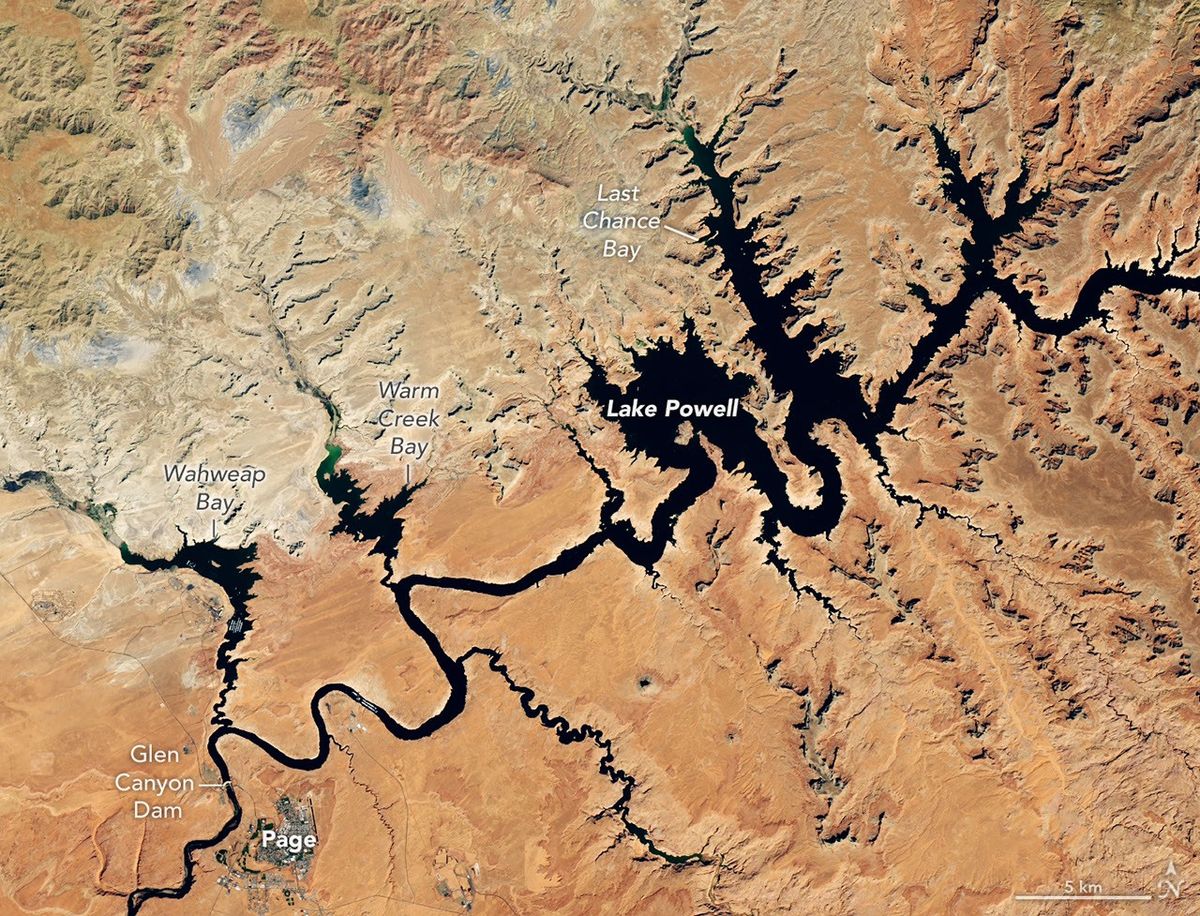
    Lake Powell, one of the largest reservoirs in the United States, has fallen to record-low water levels following an exceptionally dry and warm year across the Colorado River Basin.

    NASA Earth Observatory reported that unusually low mountain snowpack during the winter of 2025–2026, combined with stretches of record warmth, greatly reduced the amount of snowmelt available to replenish the reservoir during spring and summer.

    Satellite images captured by Landsat show the dramatic change. A comparison between September 2017 and September 2026 reveals significantly less water across portions of Lake Powell and more exposed landscape surrounding the reservoir.

    Despite the record low, Lake Powell remains above the 3,490-foot minimum power pool elevation, the level below which the turbines at Glen Canyon Dam can no longer effectively generate hydroelectric power.

    Bureau of Reclamation measurements show that Lake Powell stood at 3,517.21 feet on September 20, 2026. Federal water managers continue to monitor reservoir levels, inflows and releases as the Colorado River system faces ongoing pressure from dry conditions.

    The question now is what happens next—and how the Colorado River system adapts if extremely dry conditions persist.

  • This Tiny Organism Can Shrink in Less Than 5 Milliseconds

    This Tiny Organism Can Shrink in Less Than 5 Milliseconds

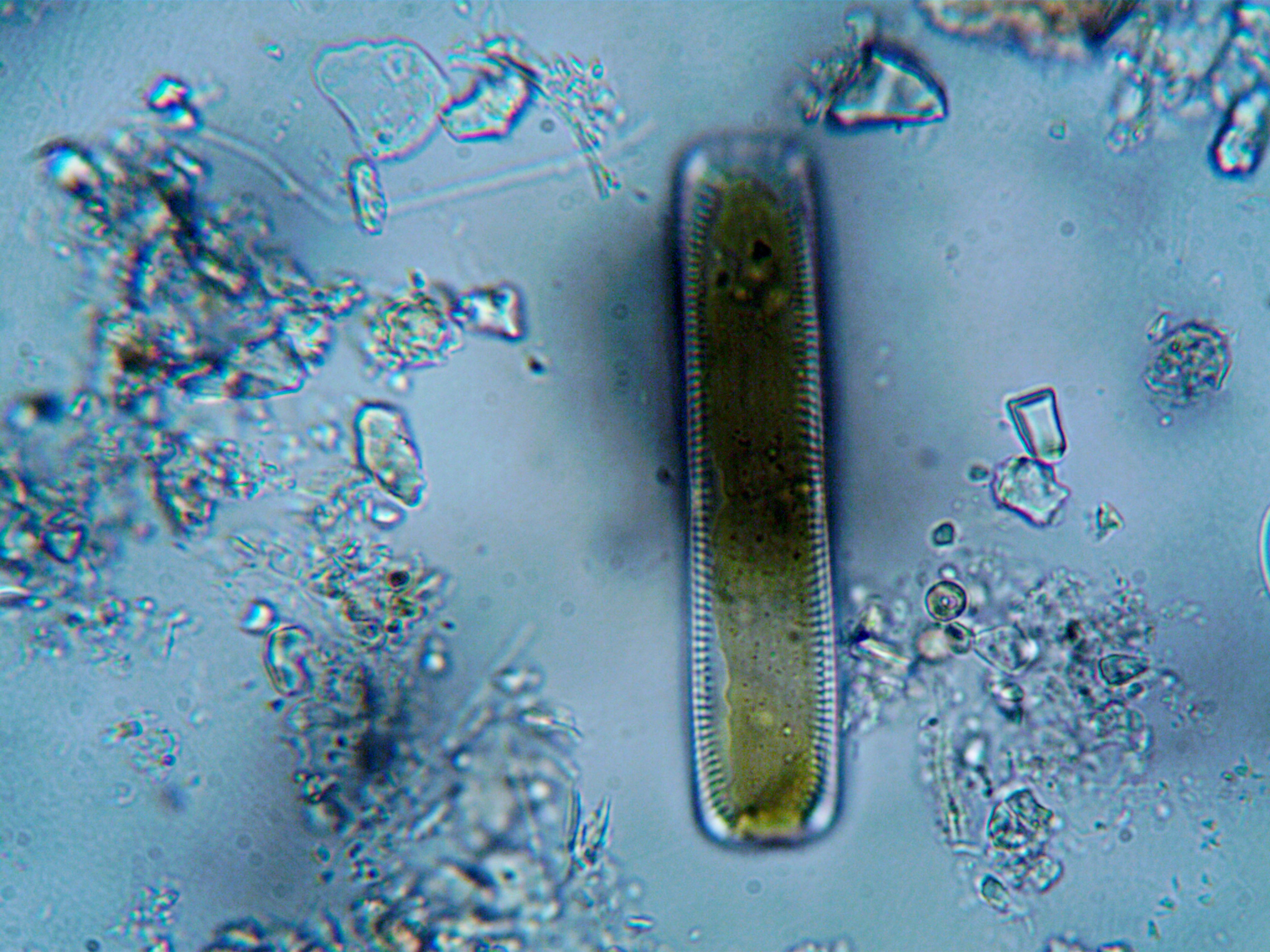
    Have you heard? Scientists have uncovered the remarkable mechanism behind one of nature’s fastest cellular movements. A tiny single-celled organism called Spirostomum ambiguum can contract to roughly one-quarter of its body length in less than 5 milliseconds.

    What makes this especially fascinating is how it happens. Researchers found that calcium triggers a network of proteins arranged somewhat like a fishnet inside the organism. When activated, that network rapidly changes shape, allowing the entire cell to contract almost instantly.

    The discovery could have uses far beyond understanding this tiny organism. Scientists say the mechanism may offer new design ideas for extremely fast artificial muscles and other microscopic machines inspired by living cells.

    For something too small to see with the naked eye, Spirostomum ambiguum may have a surprisingly big lesson to teach scientists about how to make machines move faster.

  • Have You Heard? NASA Discovered a Huge New Crater on the Moon

    Have You Heard? NASA Discovered a Huge New Crater on the Moon

    NASA has discovered a massive new crater on the Moon — and scientists say an impact this large may happen only about once every century.

    The crater was spotted using NASA’s Lunar Reconnaissance Orbiter, which has been photographing the Moon’s surface for years. Scientists identified the new crater by comparing images of the same area taken at different times.

    According to NASA, the crater measures about 728 feet (222 meters) across and reaches as much as 141 feet (43 meters) deep.

    The impact itself occurred in 2024, but researchers were able to identify the newly formed crater through later analysis of orbital imagery.

    Discoveries like this help scientists understand how often large objects strike the Moon and how impacts continue to reshape its surface. Because the Moon has virtually no atmosphere to burn up incoming space rocks, its surface preserves a dramatic record of collisions stretching back billions of years.

    NASA described an impact of this size as roughly a once-in-a-century event.

    And while the crater may be new, it is now part of the Moon’s permanent landscape — another reminder that our nearest celestial neighbor is still changing.

    Have you heard?