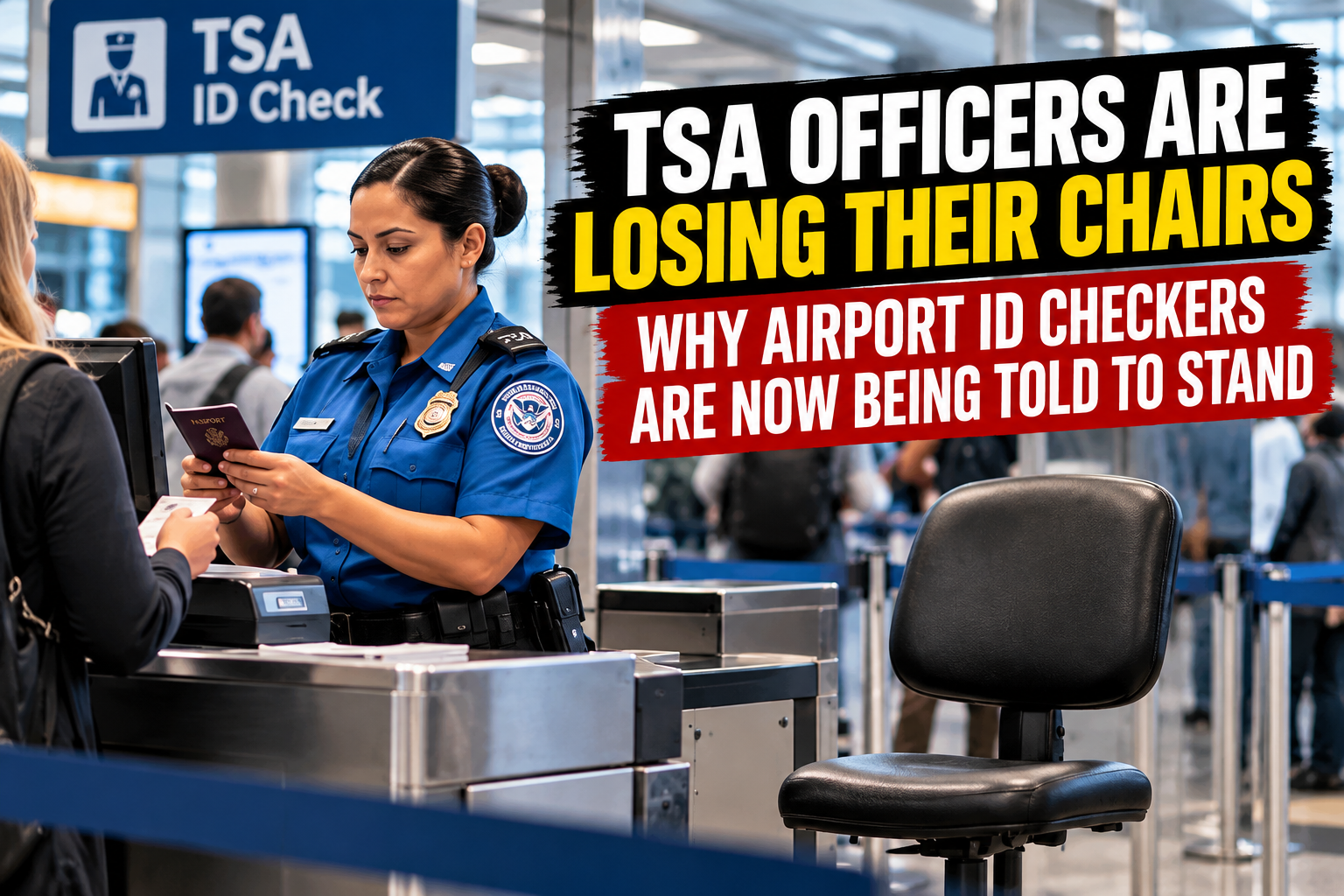
For millions of airline passengers, the first face they encounter at an airport security checkpoint is often a Transportation Security Administration officer checking identification and travel documents. Now, that familiar part of the security process is changing in a way travelers may notice.
TSA officers assigned to travel-document and ID-checking positions at airport checkpoint entrances are being required to stand rather than sit while performing that job. Chairs are being removed from those stations as the agency rolls out the policy nationwide.
TSA says the change is about security, alertness and creating a more professional and welcoming experience for passengers. But the union representing TSA officers is pushing back, arguing that removing the chairs creates unnecessary ergonomic concerns for employees who already spend much of their working day on their feet.
What Exactly Is Changing at TSA Checkpoints?
The change centers on the travel-document checker position near the entrance to airport security checkpoints. These are the officers who examine passengers’ identification and travel documents before travelers move farther into the screening process.
Under the new approach, officers performing that role will no longer have chairs available at those stations and will instead remain standing while carrying out the assignment.
That distinction is important. The policy should not be interpreted to mean that every TSA employee is prohibited from sitting for an entire work shift. The reported change specifically concerns officers working at the travel-document checking stations.
Why Does TSA Want Officers Standing?
TSA has defended the decision as a way to strengthen both its security posture and its interaction with travelers.
The agency says having officers on their feet helps reinforce alertness while also supporting its commitment to hospitality. TSA has also pointed to fitness-for-duty requirements for officers performing national security functions.
From the agency’s perspective, the officer checking identification is one of the first TSA employees a passenger encounters. Having that officer standing is intended to create a more attentive and engaged presence at the beginning of the checkpoint.
The Union Is Pushing Back
The American Federation of Government Employees TSA Council 100 has strongly criticized the removal of the chairs.
The union argues that seating at the document-checking stations is not simply a workplace convenience. It says the chairs provide ergonomic and safety support for officers who already spend long periods standing and walking on hard airport surfaces.
AFGE has also objected to how the change was implemented and has encouraged TSA employees to raise their concerns about the policy.
The Debate Goes Beyond a Chair
At first glance, removing a chair from an airport checkpoint might seem like a relatively small workplace change. But the disagreement raises a larger question about how employers balance operational goals with the physical demands placed on workers.
Airport security officers routinely work in environments that require standing, walking, interacting with large numbers of travelers and maintaining attention in busy surroundings. For employees performing repetitive duties over long periods, workplace ergonomics can become an important consideration.
That is where TSA and the union see the issue differently. TSA emphasizes alertness, security and the passenger experience. The union emphasizes the physical strain employees may experience and the value of having seating available when appropriate.
What Will Travelers Notice?
For passengers, the basic ID-checking process remains familiar. Travelers will still approach the checkpoint, present the required identification or travel documents and continue through the security screening process.
The most visible difference may simply be the person checking those documents. Instead of encountering an officer seated behind a checkpoint podium, travelers can expect to increasingly see officers standing at those positions.
Whether that produces a noticeable improvement in security or customer service — or simply makes the job harder on TSA employees — is now at the center of the debate.
A Small Change That Has Started a Bigger Conversation
The controversy demonstrates how even a seemingly simple workplace decision can become complicated when security, employee safety and customer service all intersect.
TSA believes standing officers will present a more alert and welcoming presence at the checkpoint. The union representing those workers believes removing the chairs takes away basic ergonomic support from employees performing physically demanding work.
For now, travelers passing through airport security may begin seeing the change for themselves.
What do you think? Is requiring TSA officers at ID checkpoints to stand a sensible security and customer-service policy, or is removing their chairs unnecessary?
Sources
- Reuters — TSA officers will not be allowed to sit during ID checks at U.S. airports
- American Federation of Government Employees — AFGE response to TSA chair removal