Category: Technology

  • Eyes on the Phone, Danger Ahead: The Deadly Cost of Smartphone Distractions

    Eyes on the Phone, Danger Ahead: The Deadly Cost of Smartphone Distractions

    October 30, 2026 | Have You Heard? Original Public Safety Feature

    Look around the next time you’re standing at an intersection, walking through a parking lot, or waiting at a traffic light.

    How many people are looking down at their phones?

    Some are reading messages. Others are watching videos, checking social media, following directions, or responding to notifications. Many continue walking without lifting their heads. Some do the same thing behind the steering wheel.

    Smartphones have become essential tools in everyday life. But the convenience of having the world in our hands has created a troubling question:

    Have we become so focused on what’s happening on our screens that we’re overlooking the dangers directly in front of us?

    A Man Crossing the Street. A Phone in His Hand. A Life Lost.

    On October 10, 2026, a 37-year-old man from Iowa was struck by a vehicle while crossing East University Avenue in Lafayette, Louisiana.

    Police identified the pedestrian as Cody Sanson, of New Market, Iowa.

    According to local reporting citing the Lafayette Police Department, preliminary investigators’ findings indicated Sanson was looking at his cellphone while crossing a poorly lit section of roadway without a designated crosswalk.

    He was transported to a hospital, where he died.

    Police said driver impairment was not a factor. The investigation was continuing, and the initial findings should not be treated as a final determination of every contributing circumstance.

    The tragedy illustrates an important safety concern: pedestrians need to recognize approaching vehicles, changing traffic signals, road conditions, and other hazards. Looking down at a screen can interfere with that awareness.

    A Father and Two Children Killed: A Truck Driver Sentenced

    Another devastating case reached a sentencing milestone this October in Pennsylvania.

    On October 13, 2026, a judge sentenced commercial truck driver Santos M. Valentin to a prison term of three years minus three days to 12 years following his conviction in a crash that killed a father and two children.

    The collision occurred in July 2024 along the Pennsylvania Turnpike.

    The victims were 43-year-old Donnell Hickson, his 18-year-old son Decir, and his 11-year-old daughter.

    According to the Lancaster County District Attorney’s Office, investigators recovered inward- and outward-facing camera footage from the tractor-trailer showing Valentin scrolling on his phone before the collision.

    The 47,000-pound tractor-trailer struck the family’s vehicle from behind.

    Valentin was convicted of three counts of homicide by vehicle and three counts of involuntary manslaughter, along with traffic offenses.

    The case demonstrates how distraction behind the wheel can devastate people who were simply sharing the roadway.

    Utah: A Fatal Collision and New Allegations About Phone Activity

    In a third case, a California woman was charged in October 2026 in connection with a fatal June 12 crash on Interstate 15 in Utah.

    Prosecutors allege that Christine Chao accessed an adult-content website on her phone less than two minutes before a multivehicle collision in traffic slowed by construction.

    The collision resulted in the death of 66-year-old Scott LaVar Lichfield, according to local reporting and court documents.

    Investigators reportedly obtained phone records through a warrant. Chao was charged with a felony automobile-homicide offense related to electronic-device use.

    These are allegations in an ongoing criminal case, not a conviction. The reported phone activity does not, by itself, establish exactly where the driver was looking at the moment of impact.

    Still, the case adds to the national conversation about electronic-device use and roadway safety.

    The National Numbers: Thousands of Lives Lost

    In an April 2026 research note, the National Highway Traffic Safety Administration reported that distracted drivers were involved in crashes that killed 3,208 people in 2024.

    The agency also estimated that another 315,167 people were injured in crashes involving distracted drivers that year.

    Approximately 8% of fatal crashes in 2024 were reported as distraction-affected.

    These figures include distractions beyond smartphones, such as adjusting controls, eating, talking to passengers, or looking away from the road. They should not be interpreted as a count of deaths caused exclusively by texting or cellphone use.

    And because distraction can be difficult for investigators to establish, the full extent of the problem may not always be captured in crash reports.

    Five Seconds: How Far Can a Car Travel?

    According to NHTSA, reading or sending a text can take a driver’s eyes away from the road for about five seconds.

    At 55 miles per hour, a vehicle travels roughly 403 feet in five seconds — longer than an American football field.

    During that time, traffic can stop, a pedestrian can step into a crosswalk, a cyclist can change position, or a vehicle ahead can brake suddenly.

    The danger is not limited to typing messages. Scrolling through social media, checking videos, interacting with apps, or reading notifications can also divert a driver’s attention.

    Distracted Walking Deserves Attention Too

    Drivers have a heightened responsibility because they operate heavy, fast-moving vehicles. But pedestrians also benefit from remaining aware of their surroundings.

    When someone walks with their head down, they may be slower to notice a turning vehicle, uneven pavement, a bicycle approaching, or an intersection signal changing.

    However, pedestrian distraction should not automatically be blamed whenever a person is struck. Road design, visibility, vehicle speed, driver behavior, and access to safe crossings all matter.

    The broader lesson is that attention is a shared safety resource. People walking and driving need to recognize the conditions around them.

    Why Is It So Hard to Put the Phone Down?

    Modern smartphones combine communication, navigation, work, entertainment, shopping, and social interaction into one device.

    Messages and notifications can create a powerful temptation to check what has arrived, even when the timing is unsafe.

    Some people also underestimate how much attention a quick glance requires. A message that feels as though it takes only a moment can consume critical seconds of visual and mental focus.

    Hands-free features may reduce the need to hold a device, but they do not eliminate every form of cognitive distraction.

    Seven Habits That Could Help Prevent a Tragedy

    • 1. Activate Driving Focus or Do Not Disturb. Silence nonessential notifications before starting the vehicle.
    • 2. Set navigation before departure. If directions need to change, stop in a safe location before adjusting the phone.
    • 3. Never text or scroll while driving. A red light or slow traffic does not make divided attention safe.
    • 4. Pull over for important messages. Park safely before reading or replying.
    • 5. Look up before crossing. Stop using your phone, follow crossing signals, and watch for turning vehicles.
    • 6. Stay aware in parking lots. Watch for reversing vehicles, moving traffic, and pedestrians.
    • 7. Speak up respectfully. If someone driving you is distracted, ask them to focus on the road.

    A Question Worth Asking Ourselves

    Smartphones connect us to the people we love, the news we follow, and the information we need. They are valuable tools.

    But no message, video, notification, or social media update is worth a human life.

    Behind every fatal crash statistic is a person who had plans, relationships, responsibilities, and people expecting them to come home.

    The families affected by the recent tragedies in Louisiana, Pennsylvania, and Utah are reminders that the consequences extend far beyond a damaged vehicle or a traffic citation.

    Have You Heard? Bottom Line: Our phones can wait. A moving vehicle cannot. And when we’re crossing a street, our eyes should be on the world around us — not just the screen in our hands.

    Before you look down at your phone, ask yourself: What might I miss while I’m looking away?

    Sources and Further Reading

    Have You Heard? prepared this original public-safety feature using verified news reports, prosecutorial information, and federal traffic-safety research. Allegations and preliminary investigative findings are identified as such.


  • Is Your Car Secretly Reporting on You? GM’s $220 Million Privacy Settlement Raises New Questions

    Is Your Car Secretly Reporting on You? GM’s $220 Million Privacy Settlement Raises New Questions

    October 29, 2026 | Have You Heard? Original Consumer Report

    Your car knows where you go. Depending on its technology and settings, it may also know when you drive, how quickly you accelerate, how sharply you brake, and whether you exceed the speed limit.

    But here’s the bigger question: Who else gets to see that information?

    That question took center stage Thursday after General Motors agreed to pay $220 million to resolve a multistate investigation into allegations that the automaker sold consumers’ driving behavior and location data to third parties without appropriate consent.

    What Happened With General Motors?

    On October 29, a bipartisan coalition of 36 state attorneys general announced a $220 million settlement with GM involving its former Smart Driver program.

    According to the Ohio Attorney General’s Office, millions of drivers were enrolled in Smart Driver between 2016 and 2024. The program was promoted as a way for motorists to better understand and improve their driving habits.

    State investigators alleged that GM sold driving information to data brokers, which then supplied it to insurance companies. Those insurers could use the information when determining premiums.

    GM discontinued Smart Driver in 2024. In a statement reported by Reuters, the company said the settlement reinforces improvements to its privacy practices and its commitment to clearer customer choices.

    Ohio Will Receive More Than $8 Million

    Ohio Attorney General Andy Wilson announced that Ohio will receive $8,076,105 through the agreement.

    The settlement also requires GM to obtain express consent before collecting or disclosing covered driving and location information, limit its data collection, and strengthen privacy protections and dealership oversight.

    The settlement payment goes to participating states; it should not be mistaken for an automatic refund to every GM owner.

    What Information Can a Connected Car Collect?

    Modern connected vehicles can generate a detailed digital record of everyday travel. Depending on the manufacturer, model, services, and privacy settings, information may include:

    • Trip starting and ending times
    • Vehicle location and travel routes
    • Speeding events
    • Sudden braking and rapid acceleration
    • Distance driven and vehicle usage
    • Vehicle diagnostics and connected-service activity

    Some of this information supports useful features, including navigation, maintenance alerts, emergency assistance, and voluntary insurance-discount programs. The privacy issue arises when drivers do not clearly understand what is being collected, who receives it, and how it may be used.

    Could Your Driving Data Affect Insurance Rates?

    Potentially, yes. Insurance companies sometimes use telematics information to evaluate driving behavior. In voluntary programs, drivers may agree to share information in exchange for a possible discount.

    But the GM investigation raised a different concern: regulators alleged that consumers’ information reached insurance-related data brokers without the meaningful permission drivers expected.

    Not every connected car shares information in the same way, and owning a connected vehicle does not automatically mean your insurer is monitoring you. The details depend on the services, agreements, and data-sharing practices involved.

    Five Things Drivers Can Do Right Now

    1. Review Your Vehicle’s Privacy Settings

    Open your manufacturer’s vehicle app or connected-services account. Look for options concerning driving behavior, analytics, location sharing, and third-party data sharing.

    2. Check What You Agreed To

    Review the permissions associated with connected-car services, including programs activated when you purchased the vehicle. Ask the manufacturer or dealership to clarify any unfamiliar enrollment.

    3. Ask About Access and Deletion

    Check whether your automaker offers a way to request a copy of your personal information, limit certain uses, or request deletion. Available rights vary by state and service.

    4. Examine Insurance Telematics Programs

    Before joining a driving-monitoring discount program, find out what data is collected, how long it is retained, and whether the information could affect your premium.

    5. Ask Questions Before Buying Your Next Car

    When shopping for a vehicle, ask which connected services are optional, which are necessary for safety features, and how to control data sharing. Turning off certain services may disable useful functions, so understand the tradeoffs before changing settings.

    The Bigger Question: Who Controls the Data?

    Connected-car technology can make driving more convenient and safer. But the GM settlement illustrates why transparency and meaningful consent matter as vehicles become increasingly software-driven.

    A driver may agree to receive maintenance reminders or emergency assistance without expecting detailed driving records to influence an insurance decision.

    The real issue isn’t whether vehicles should have advanced technology. It’s whether consumers understand and control how that technology uses their personal information.

    Have You Heard? Bottom Line: Your vehicle may be collecting more information than you realize. Review your connected-car privacy settings, understand what you’ve authorized, and ask who can access your driving history.

    Sources and Further Reading

    Have You Heard? independently prepared this consumer explainer using public enforcement announcements and reporting. It does not represent a firsthand investigation into individual vehicles or insurance records.

  • Is America Going Cashless? New 2026 Data Reveals What’s Happening to Paper Money

    Is America Going Cashless? New 2026 Data Reveals What’s Happening to Paper Money

    America is increasingly paying with cards, phones and digital wallets. But does that mean dollar bills and coins are heading for extinction? New research published in 2026 offers a more complicated answer: cashless payments are becoming common, yet physical money remains important to millions of Americans.

    New 2026 Research Shows Americans Are Using Less Cash

    An August 26, 2026, Pew Research Center analysis found that 42% of U.S. adults make no purchases with cash in a typical week, compared with 24% in 2015. The study surveyed 9,750 adults from May 26 to June 1, 2026.

    That does not mean 42% have abandoned cash permanently. The survey measures purchases during a typical week, not whether people own or ever use physical money.

    Read the Pew Research Center findings.

    What the Federal Reserve Says About Paper Money

    The Federal Reserve’s 2026 Diary of Consumer Payment Choice found that cash accounted for 14% of consumer payments in 2025. Four out of five consumers had used cash in the previous 30 days, and 90% said they planned to continue using it.

    These findings suggest that digital payment growth does not necessarily mean the disappearance of cash. Many Americans use both depending on the situation.

    See the Federal Reserve’s August 2026 report.

    Why Digital Payments Keep Growing

    Debit cards, credit cards, contactless payments, mobile wallets and online transfers make purchases convenient. Consumers can shop online, pay bills and send money without handling bills or coins.

    In July 2026, the Federal Reserve reported 236.6 billion noncash payments during 2024, more than triple the number recorded in 2000. That study measures noncash payment activity and does not, by itself, establish that physical currency is being eliminated.

    Who Could Be Affected by a Fully Cashless Economy?

    A fully cashless system could create difficulties for people without dependable bank accounts, smartphones or internet connections. Cash also helps some households control spending and make purchases privately.

    Pew’s 2026 findings show that people with lower incomes are more likely to rely on cash, while older adults are more likely than younger adults to carry it regularly.

    What Happens During Power Outages or Network Failures?

    Electronic payments depend on functioning networks, devices and payment processors. Cash can offer an alternative when those systems become unavailable, although merchants may still face other operational disruptions.

    The Congressional Research Service has identified financial inclusion, privacy and resilience as important considerations in the debate over declining cash use.

    Is the United States Eliminating Paper Currency?

    The research does not establish that the United States has announced a plan to eliminate physical dollars. A shift toward digital payments is different from a legal decision to withdraw cash from circulation.

    The evidence points toward a more digital economy in which cash continues to serve as a payment option, backup and store of value.

    The HYH Take

    America is becoming more cashless in everyday behavior, but that does not mean it is about to become completely cash-free. The real question may be whether people will retain the choice to pay with physical money as digital technology advances.

    Have You Heard? Would you support a completely cashless America, or should paper money always remain an option?

    Sources

  • The Hidden World of LEGO Lighting: Why Collectors Are Bringing Their Builds to Life

    The Hidden World of LEGO Lighting: Why Collectors Are Bringing Their Builds to Life

    What happens when a completed building-block creation becomes more than something sitting on a shelf? For collectors exploring miniature LED lighting, the answer can be surprisingly dramatic.

    Imagine a miniature city glowing after sunset, a spacecraft illuminated against a dark background, or a detailed architectural model transformed into a nighttime display.

    Lighting accessories are opening new creative possibilities for fans of LEGO and other compatible building systems. And with the holiday shopping season approaching, they also offer an interesting gift idea for people who already own their favorite building sets.

    Affiliate disclosure: Have You Heard? may earn a commission from qualifying purchases made through affiliate links in this article, at no additional cost to you.

    From Building Sets to Illuminated Displays

    For generations, building-block enthusiasts have enjoyed assembling everything from cars and castles to famous landmarks and fictional worlds.

    But finishing the model doesn’t necessarily mean finishing the creative process.

    Some collectors customize their displays with lighting, backgrounds, protective cases and specially designed shelves.

    Miniature LED lighting can help highlight windows, headlights, streetlamps and interior details that might otherwise be difficult to notice.

    The result can make a familiar model look dramatically different after dark.

    How Do LEGO-Compatible Lighting Kits Work?

    Aftermarket lighting kits typically use small LED components connected by thin wires and powered through a compatible electrical source.

    Depending on the design, lights may be positioned behind windows, beneath transparent pieces or inside specific sections of a model.

    Some kits are designed around particular building-set numbers, helping collectors identify products intended for the models they already own.

    However, lighting accessories are not universal. Buyers should verify compatibility, power requirements and installation instructions before ordering.

    Why Collectors Add Lighting to Their Models

    Lighting can change the way a completed model is presented.

    A miniature building might resemble an ordinary architectural display during daylight hours. After illumination, individual rooms and windows can become the focus.

    Vehicle collectors may highlight headlights and interior details, while space enthusiasts can use carefully positioned lighting to create dramatic effects.

    For many hobbyists, the appeal lies in personalization: making a familiar building set feel unique.

    A Creative Gift Idea for the Holiday Season

    As Christmas approaches, shoppers often look for gifts that connect with hobbies their friends and family already enjoy.

    For someone who owns an extensive collection of building sets, another model isn’t necessarily the only option.

    Display accessories, protective cases and lighting kits may offer ways to enhance a collection that is already complete.

    Holiday-themed models, miniature winter villages and decorative buildings can be especially interesting candidates for illuminated displays.

    Before purchasing, shoppers should confirm that an accessory matches the recipient’s exact set and consider whether installation requires additional time or assistance.

    Where Can Collectors Explore Lighting Accessories?

    Several aftermarket companies offer lighting accessories for compatible building sets.

    One example is BRKOX, which offers LED light kits, display frames and cases for a range of LEGO-compatible models, including buildings, vehicles and seasonal displays.

    Its online catalog allows shoppers to explore accessories associated with particular building-set numbers.

    Interested in exploring the options? Browse BRKOX lighting accessories and compare compatibility with the models you already own.

    Explore BRKOX:
    Browse BRKOX LED Lighting Kits and Display Accessories

    Affiliate link: Have You Heard? may receive a commission from qualifying purchases through this link, at no additional cost to you. We have not independently tested these products.

    What Should Buyers Check Before Ordering?

    Not every lighting kit works with every building set, even when the models appear similar.

    Start by checking the exact model number and the manufacturer’s compatibility information.

    Review the power source, installation requirements and whether the original building set is included. Many lighting products are accessories only, meaning the building model must be purchased separately.

    Shoppers should also examine shipping estimates, return policies and any age or electrical-safety guidance, especially when purchasing gifts.

    The Bigger Story: Technology Meets Creativity

    The appeal of detailed collectible displays reflects a broader relationship between technology and traditional hobbies.

    LED components make it possible to illuminate small spaces with compact lighting systems.

    Meanwhile, hobbyists continue finding new ways to combine electronics, model building and visual storytelling.

    For some, the finished display becomes a miniature scene. For others, installing the lighting becomes a second creative project after the original construction is complete.

    Why This Hobby Has Year-Round Appeal

    Although lighting accessories can make interesting holiday gifts, their usefulness is not limited to Christmas.

    Collectors display architectural models, vehicles, fictional spacecraft and miniature city scenes throughout the year.

    For enthusiasts who enjoy improving existing creations, lighting offers an additional opportunity for experimentation and customization.

    That makes illuminated building-block displays a subject worth exploring long after the holiday decorations come down.

    The HYH Bottom Line

    A building-block model may be complete when the final piece clicks into place, but collectors can continue exploring ways to personalize it.

    Miniature lighting accessories offer one way to turn familiar models into striking displays, especially for enthusiasts who enjoy showcasing their collections.

    Whether you’re exploring a holiday gift or looking for inspiration for your own creations, compatibility and thoughtful installation matter more than flashy product promises.

    Have You Heard? Sometimes the most surprising transformation happens after the building is finished—and the lights come on.

    Sources and Further Reading

    Editorial note: BRKOX is an affiliate advertising partner of Have You Heard? Product descriptions are based on publicly available information, not independent hands-on testing. LEGO is a trademark of the LEGO Group; references to LEGO-compatible accessories do not imply endorsement by the LEGO Group.

  • Cleveland Clinic, IBM and RIKEN Explore Quantum Computing’s Potential for Medical Research

    Cleveland Clinic, IBM and RIKEN Explore Quantum Computing’s Potential for Medical Research

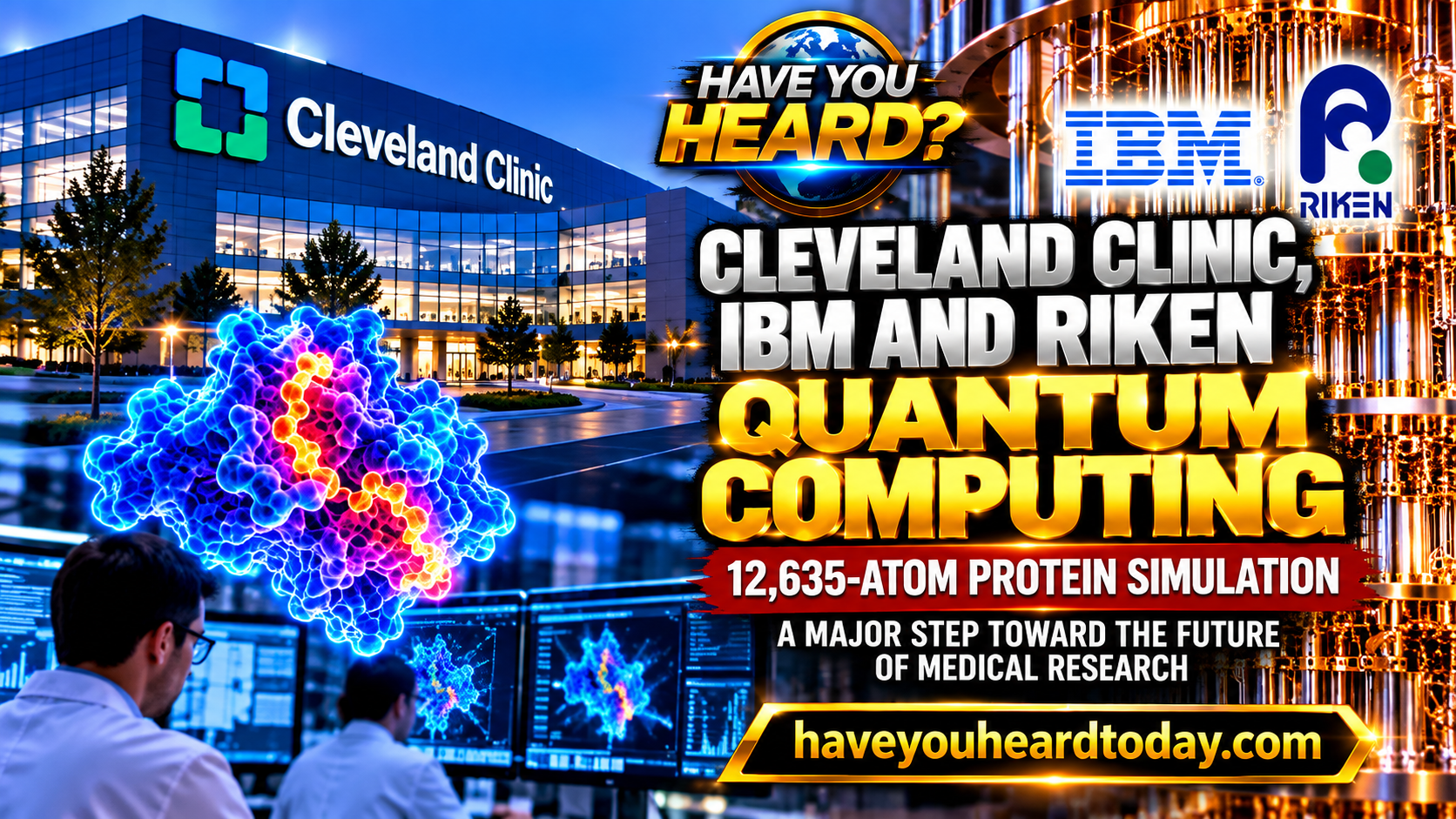
    CLEVELAND, Ohio — A collaboration between Cleveland Clinic, IBM and Japan’s RIKEN research institute is exploring how quantum computing could help scientists better understand complex molecules, potentially opening new possibilities for future medical research and drug discovery.

    The research team has demonstrated a hybrid quantum-classical approach to simulating a molecular system containing 12,635 atoms. The work, announced in May 2026, received further recognition when the collaboration was named a finalist for the 2026 ACM Gordon Bell Prize.

    The achievement highlights the growing role of advanced computing in biomedical research, although practical medical applications remain a longer-term goal.

    What Makes This Research Significant?

    Proteins play essential roles throughout the human body. Understanding their structure, behavior and interactions with other molecules is critical to studying disease and developing potential treatments.

    However, accurately modeling large molecular systems presents enormous computational challenges.

    Researchers are investigating whether quantum computers, working alongside traditional supercomputers, can eventually tackle certain molecular calculations more effectively.

    The Cleveland Clinic, IBM and RIKEN collaboration represents progress toward that objective.

    A Simulation Involving 12,635 Atoms

    Using IBM quantum technology and powerful classical computing resources, researchers simulated a protein-related molecular system containing 12,635 atoms.

    The team employed a hybrid approach, combining quantum processors with conventional supercomputers to perform different portions of the calculations.

    Rather than replacing traditional computers, the research explores how both technologies can work together to address complex scientific problems.

    The simulation’s scale represents an important technical achievement, but it does not mean quantum computers can already solve every challenge associated with molecular modeling.

    Why Cleveland Clinic Is Involved

    Cleveland Clinic has been expanding its involvement in quantum computing research as part of its broader effort to advance biomedical discovery.

    Through collaborations with IBM and international research institutions, scientists are investigating new computational methods that could eventually support research involving proteins, diseases and potential medicines.

    The partnership also demonstrates Cleveland’s growing participation in advanced scientific computing.

    Could Quantum Computing Transform Drug Discovery?

    One potential application involves improving scientists’ ability to model interactions between molecules.

    Drug discovery often requires researchers to examine how a potential medicine might interact with proteins associated with a disease.

    More powerful simulation methods could eventually help researchers investigate these interactions and identify promising candidates for further laboratory testing.

    However, important limitations remain. The latest achievement does not represent a newly developed drug, a clinical trial or an approved medical treatment.

    Researchers must continue improving the reliability, accuracy and practical usefulness of quantum-based calculations before these techniques can become routine tools in drug development.

    International Recognition for the Research

    In September 2026, the Cleveland Clinic, IBM and RIKEN collaboration was named a finalist for the ACM Gordon Bell Prize, an award recognizing major achievements in high-performance computing.

    The recognition reflects the scientific and technical significance of combining quantum computing with classical supercomputing for large-scale molecular simulations.

    IBM also released a research video in October 2026 explaining the collaboration and its potential implications for computational science.

    What Happens Next?

    Quantum computing remains an emerging technology, and many challenges must be overcome before it can routinely outperform established methods in biomedical research.

    Nevertheless, projects involving Cleveland Clinic, IBM and RIKEN demonstrate how researchers are moving beyond theoretical possibilities and testing these technologies on increasingly complex scientific problems.

    For scientists studying proteins and molecular interactions, the long-term promise is the development of better computational tools that could contribute to future medical discoveries.

    The HYH Bottom Line

    Cleveland Clinic’s collaboration with IBM and RIKEN is helping advance research at the intersection of quantum computing and molecular science.

    While the technology has not yet produced a new medical treatment, its continued development could influence how scientists study diseases and investigate future medicines.

    Have You Heard? The future of medical research may depend not only on breakthroughs in laboratories, but also on breakthroughs in computing.

    Sources and Further Reading

    HYH Editorial Note: This article reports on scientific computing research. The findings do not establish that quantum computing has produced an approved treatment or demonstrated improved patient outcomes.

  • Wireless Radiation Under Review: U.S. Government Seeks Answers as Public Comment Deadline Nears

    Wireless Radiation Under Review: U.S. Government Seeks Answers as Public Comment Deadline Nears

    Wireless technology is woven into everyday life. Smartphones, Wi-Fi routers, cellular antennas and connected devices keep people communicating around the clock. But a renewed federal review is putting a familiar question back in the spotlight: what does the scientific evidence say about the potential health effects of wireless radiation?

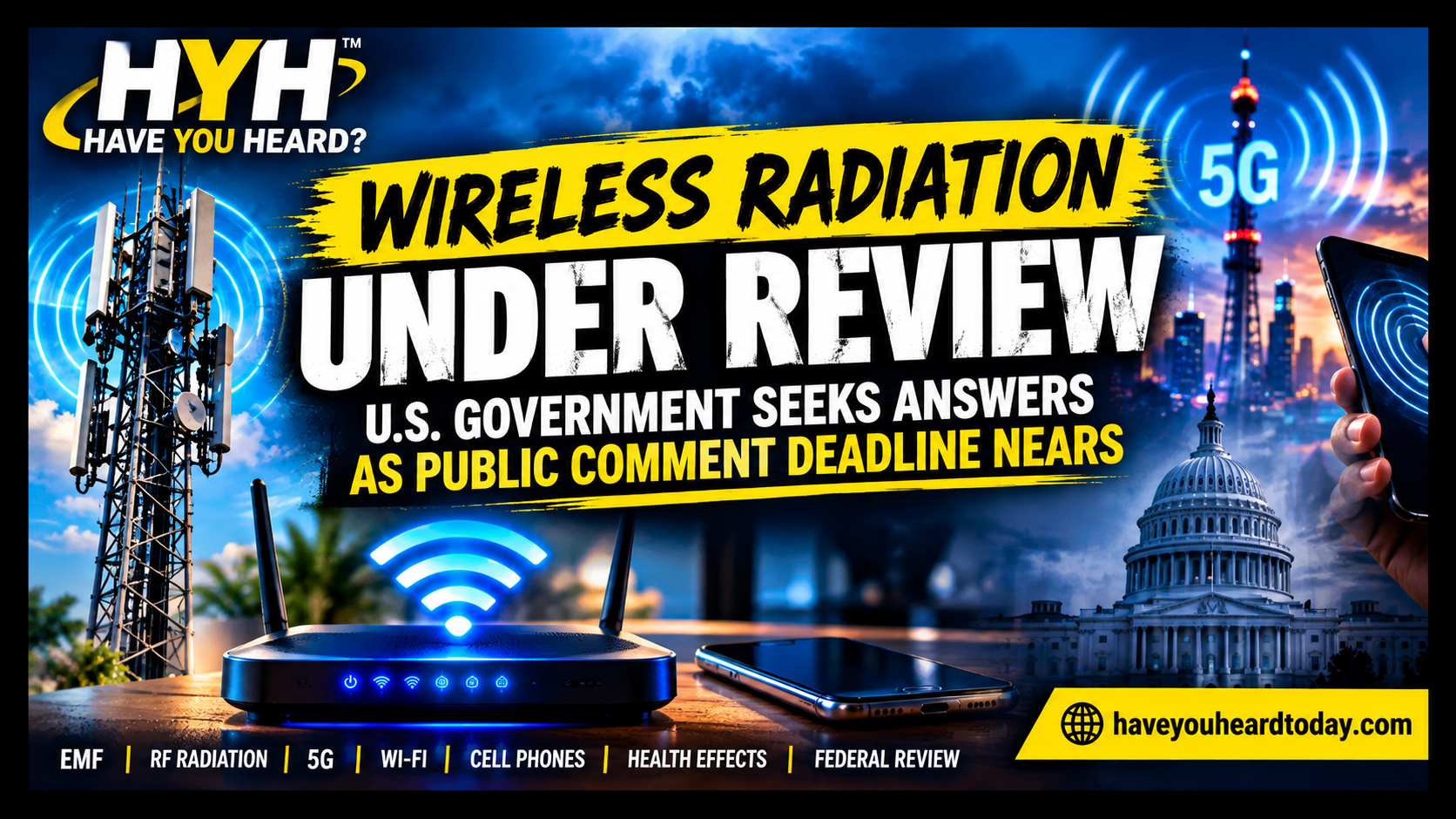
    In September 2026, the U.S. Department of Health and Human Services (HHS) formally asked researchers, medical professionals, industry representatives and members of the public to submit information about electromagnetic fields (EMFs), radiofrequency (RF) radiation and wireless exposure. The request is intended to help officials assess existing evidence, identify research gaps and consider whether changes to public guidance or regulatory approaches may be warranted.

    The immediate development is the approaching deadline: comments on the HHS request are due October 21, 2026. The Federal Communications Commission (FCC) has also opened a separate, related comment process with a deadline of October 22.

    What Exactly Is the Government Reviewing?

    On September 17, HHS announced a Request for Information covering EMF exposure and human health, with particular attention to radiofrequency energy associated with wireless technologies.

    The department is seeking scientific studies, technical data, clinical observations and other evidence that can help officials evaluate the current state of knowledge. Its questions include potential effects associated with long-term exposure, how exposure is measured in real-world settings, and whether existing U.S. and international safety standards should be reassessed.

    HHS is also asking about potential research priorities involving children, pregnant people, older adults, people with implanted medical devices and workers who may experience higher occupational exposure.

    This is a request for evidence, not an announcement that officials have concluded wireless radiation causes illness. The purpose is to gather information before drawing policy conclusions.

    Why Is This Happening Now?

    Wireless technologies continue to evolve, from widespread 5G deployment to emerging 6G research, satellite connectivity, wearable devices and increasingly connected homes.

    HHS says it wants to evaluate the scientific evidence, identify areas where research remains incomplete and compare the approaches used to establish exposure standards in the United States and internationally.

    The review follows a broader federal effort to examine environmental factors that may affect public health. It also creates a formal opportunity for researchers and members of the public to submit evidence directly to the department.

    The FCC Has a Separate Deadline

    There is another important part of the story. In September, the FCC sought additional comments on specific radiofrequency exposure issues following a federal appeals court’s 2021 decision in Environmental Health Trust v. FCC.

    The court required the commission to provide further consideration and explanation concerning particular issues raised in its earlier review. These included questions involving children, long-term exposure, environmental effects and evidence cited in challenges to the agency’s conclusions.

    The FCC’s notice does not mean the court ruled that wireless radiation causes cancer or other illnesses. The court did not decide the scientific debate; it directed the agency to address specified issues more fully.

    The FCC’s separate comment deadline is October 22, 2026. The HHS and FCC processes address related subject matter, but they are different proceedings with different purposes.

    Does This Mean Wi-Fi or 5G Has Been Proven Dangerous?

    No. A government review is not proof that a hazard has been established.

    Radiofrequency energy used by cellphones, Wi-Fi and cellular networks is classified as non-ionizing radiation. It differs from ionizing radiation, such as X-rays, which has enough energy to remove electrons from atoms.

    According to the U.S. Food and Drug Administration, the weight of scientific evidence has not linked radiofrequency radiation from cellphones with health problems. The World Health Organization’s published overview of wireless technologies likewise says convincing evidence of adverse health effects from the low-level radiofrequency signals produced by base stations and wireless networks has not been established.

    Those assessments do not mean every scientific question has been permanently settled. They do mean that the new federal information requests should not be presented as proof of harm. The evidence, the limits of existing research and any future conclusions need to be evaluated separately.

    What Questions Still Need Answers?

    The federal requests raise several areas for further examination:

    • How well do current exposure measurements reflect people’s everyday use of wireless devices?
    • What additional research would help clarify questions about long-term exposure?
    • Are certain populations or occupational settings in need of more targeted study?
    • How should scientists evaluate evidence from different study designs and distinguish association from causation?
    • Do current exposure standards adequately account for the evidence and the technologies now in use?

    These are questions for scientific evaluation, not conclusions that a particular device or network has been shown to cause harm.

    What Happens Next?

    The next immediate milestone is the close of the public-comment periods: October 21 for the HHS request and October 22 for the FCC proceeding.

    After gathering submissions, officials can review the evidence and determine what further analysis, research or policy work may be appropriate. The requests themselves do not announce a new exposure limit, a ban on wireless devices or a final determination that current standards are unsafe.

    The important development to watch is what the agencies conclude after reviewing the material—not simply the fact that they have asked for it.

    The Bottom Line

    Wireless radiation is back in the federal spotlight. HHS is seeking evidence about radiofrequency exposure and human health, while the FCC is separately revisiting specific questions concerning its exposure rules. Both processes have deadlines this week.

    That makes this a significant public-policy development, but not proof that Wi-Fi, cellphones or 5G have been found dangerous. The real story is the government’s renewed examination of the evidence, the questions researchers are being asked to address and what the agencies may do next.

    Have You Heard? will continue to follow the developments and distinguish verified announcements from speculation as new information becomes available.

    Sources and Further Reading

    Have You Heard? reports on developing stories using official announcements and published evidence. An agency’s request for information should not be interpreted as a finding that wireless radiation has caused a particular health effect.

  • CERN’s Giant Collider Goes Offline: Inside the Four-Year Upgrade Planned Through 2030

    CERN’s Giant Collider Goes Offline: Inside the Four-Year Upgrade Planned Through 2030

    The Large Hadron Collider (LHC), the enormous particle accelerator operated by CERN near the French-Swiss border, has entered a new chapter. After years of experiments and scientific discoveries, the machine is undergoing a major overhaul designed to prepare it for its next generation of particle physics research.

    For anyone wondering whether CERN turned the machine back on, the answer is straightforward: the LHC’s physics run ended in June 2026, and the collider is now in a multiyear upgrade period. CERN’s published schedule targets the upgraded machine’s return around 2030.

    But what does that shutdown actually mean, what is being changed, and why does it matter?

    When Did CERN Shut Down the Large Hadron Collider?

    CERN’s final physics collisions took place in June 2026. On June 27, operators stopped the LHC’s particle beams, marking the start of its third major long shutdown, known as Long Shutdown 3, or LS3.

    This was not an unexpected emergency shutdown. CERN had planned the pause to allow engineers to perform extensive maintenance, replace equipment and prepare the accelerator for a significant performance upgrade.

    The distinction matters: stopping particle collisions does not mean CERN itself has closed. Scientists, engineers and technicians continue working at the facility throughout the shutdown.

    Why Is the Collider Offline for So Long?

    The LHC is a 27-kilometre ring containing complex systems of superconducting magnets, cryogenic equipment, vacuum systems and other precision technology. Its magnets operate at temperatures close to absolute zero.

    Maintaining a machine of this scale requires more than a routine inspection. During LS3, teams are replacing and upgrading components that will allow the accelerator to operate in a more powerful configuration.

    This is a major engineering project, not a machine that can simply be switched back on with the press of a button.

    What Is the High-Luminosity LHC?

    The upgrade is intended to transform the existing collider into the High-Luminosity Large Hadron Collider, commonly called the HL-LHC.

    The primary objective is to increase the number of particle collisions scientists can study. More collisions mean researchers have more opportunities to observe rare events and investigate questions that existing data cannot fully answer.

    The upgraded system is expected to significantly increase the collider’s data-producing capability. That could help scientists study the Higgs boson in greater detail, test fundamental theories of particle physics and investigate unanswered questions about the universe.

    More collisions do not guarantee a particular discovery. The upgrade provides researchers with more data and improved opportunities to test their ideas.

    When Will CERN Turn It Back On?

    CERN’s published schedule places the return of the upgraded LHC around 2030.

    The current shutdown is expected to last several years. The exact timing of commissioning and the resumption of physics operations will depend on the progress of the upgrade and the steps needed to bring the new systems online safely.

    CERN’s broader accelerator complex includes other machines that supply particle beams to different experiments. Their shutdown and restart schedules are not necessarily identical to the LHC’s.

    Consequently, saying that all of CERN is shut down until 2030 would be misleading. The LHC is undergoing its major transformation, while different parts of CERN’s facilities have their own schedules.

    Does the Shutdown Mean CERN Is Being Defunded?

    Not on the evidence presented by CERN’s shutdown announcements.

    The documented reason for the LHC shutdown is the planned LS3 maintenance and upgrade programme. The engineering work, replacement components and preparation for the HL-LHC are part of that plan.

    Separate reports about funding decisions or contributions to particular projects should be evaluated on their own merits. A funding reduction affecting one project does not automatically establish that CERN’s entire operation is being cut back or that the collider was shut down because of a financial crisis.

    For now, the shutdown itself is best understood as a planned transition to a more capable machine.

    Why This Matters

    The LHC has helped scientists investigate the fundamental building blocks of matter and test our understanding of the universe. The discovery of the Higgs boson in 2012 was one of its most prominent achievements.

    The next phase is about gathering more data and expanding what experiments can investigate. The upgrade also illustrates the enormous time, engineering effort and international cooperation required to operate a scientific facility of this scale.

    While the collider is offline, researchers can continue analysing data already collected. The shutdown pauses new LHC collisions; it does not erase previous results or bring all particle physics research to a halt.

    The Bottom Line

    CERN’s Large Hadron Collider really did shut down in June 2026, and it has not simply restarted its regular physics operations. The machine is undergoing a planned, multiyear upgrade designed to prepare it for the High-Luminosity LHC era, with operations targeted to resume around 2030.

    The verified story is not that CERN has permanently closed or that a secret event forced the collider to stop. It is that one of the world’s most complex scientific machines is being substantially rebuilt for its next phase.

    As the work continues, the key questions are whether the upgrade remains on schedule, what capabilities the new collider delivers and what discoveries its next operating period may bring.

    Sources and Further Reading

    Have You Heard? reports on developing stories using available evidence and attributed sources. The planned return date is based on CERN’s published schedule and may change as work progresses.

  • Untitled post 1601

    SHIFT AI Is Coming to Northeast Ohio: What Creators Should Know

    A November gathering in Independence is putting a new AI platform on the radar of digital creators, entrepreneurs, and people exploring the future of online content.

    Artificial intelligence is changing the way people create videos, images, music, marketing materials, and written content. But a growing question is whether the next wave of AI platforms will change not only how content is made, but also how creators receive credit when their work helps generate business.

    That question is at the center of SHIFT AI, a platform combining AI-powered creative tools with a system designed to attribute certain sales and rewards to participating members.

    According to the event flyer, SHIFT AI is scheduled to hold a conference on Saturday, November 14, 2026, at the Holiday Inn in Independence, Ohio, bringing the conversation to Northeast Ohio.

    What Is SHIFT AI?

    SHIFT AI operates through an online platform that brings multiple AI-powered creative capabilities into one workspace. Its official materials describe tools for generating text, images, video, music, voice content, and avatars.

    For independent publishers, social media creators, and small businesses, platforms like this offer a potential way to streamline production. Instead of moving between multiple applications, users can explore different creative functions within one service.

    The practical question, however, is what the tools can produce, how well they work for real projects, and whether they offer enough value to fit a creator’s workflow.

    Explore SHIFT AI’s official platform.

    Beyond Content Creation: A Different Rewards Model

    One feature that distinguishes SHIFT AI from a conventional creative software subscription is its EcoPay attribution system.

    According to the company’s published terms, its rewards model includes ContentPay, CoachPay, CompetePay, CreditPay, and ClubPay. These mechanisms have different rules and are not interchangeable.

    ContentPay is particularly relevant to online publishers. The company says it can attribute a completed AI-credit purchase to tagged content that helped drive the sale. That is different from a platform paying a creator simply for views, likes, or uploading a video.

    The distinction matters. Publishing content does not automatically guarantee a commission, and the company’s terms state that earnings vary and are not guaranteed.

    For creators, the central question is whether the attribution system can reliably connect useful content with actual customer purchases—and what requirements apply before a participant can receive a payout.

    Read SHIFT AI’s published terms and reward rules.

    Why Creators Are Paying Attention

    The creator economy has traditionally rewarded attention in several ways: advertising revenue, sponsorships, affiliate commissions, subscriptions, and direct sales.

    SHIFT AI’s approach adds another variation to that landscape by combining AI content production with purchase attribution and other reward mechanisms.

    For a publisher, this raises an interesting possibility. Content may serve more than one purpose: informing an audience, attracting visitors, building a recognizable brand, and—in programs with the appropriate rules and tracking—helping connect interested readers with a product.

    But each revenue model must be evaluated on its actual terms. Creators should understand how attribution works, which activities qualify, whether a paid membership is required, and how rewards can change.

    What the November Conference Could Bring

    The scheduled Independence event gives Northeast Ohio creators and business owners a reason to take a closer look at the platform.

    Questions worth asking include which creative tools will be demonstrated, how the attribution system works in practice, what the membership requirements are, and what information the company can provide about actual platform usage and rewards.

    Those details will help attendees distinguish the platform’s creative capabilities from the additional conditions attached to its rewards system.

    The event may also provide a chance to hear directly from people involved with the platform and learn more about its direction as AI tools become increasingly accessible to independent creators.

    The Bigger Question: What Comes Next for Digital Creators?

    The emergence of platforms like SHIFT AI reflects a broader change in online publishing. AI tools are lowering some production barriers, while businesses continue experimenting with ways to connect digital content to measurable commercial activity.

    That combination could create new options for some creators, but the value will depend on the quality of the tools, the transparency of the rules, the audience a creator reaches, and the results that can actually be demonstrated.

    The important distinction is between the opportunity a platform describes and the results an individual creator can realistically achieve.

    As the November gathering approaches, SHIFT AI offers a timely case study in how AI creation tools and content-based rewards are being brought together.

    Have You Heard? The way people create content is changing. The next question is how those changes will reshape the business behind it.


    Sources and Further Reading

    Editorial note: Event details are based on the event flyer provided for this story. Descriptions of the platform and rewards model are based on the company’s published materials. Have You Heard? has not independently verified individual earnings or guaranteed outcomes.

  • Untitled post 1591

    Tesla’s Flying Roadster Debut: What Actually Happened—and What Comes Next?

    Published October 17, 2026

    The idea of a car that can leave the road and take to the sky has fascinated people for generations. On October 15, Tesla demonstrated its long-awaited next-generation Roadster at a SpaceX testing facility in Texas.

    The demonstration was extraordinary. But beneath the excitement is a more important question: Did Tesla unveil a practical flying car, or demonstrate a high-performance electric sports car capable of brief, rocket-assisted airborne maneuvers?

    What Happened at Tesla’s Roadster Debut?

    Tesla CEO Elon Musk presented the new Roadster during a demonstration livestreamed to the public. The vehicle climbed a curved ramp, traveled upside down, launched into the air, performed a midair maneuver, and landed on its wheels. It also demonstrated a jump over a line of parked Tesla vehicles.

    According to Associated Press reporting, the Roadster uses cold-gas thrusters and a suction system to perform its unusual maneuvers.

    The event offered a glimpse of technology that would have seemed more at home in science fiction only a few decades ago. However, a dramatic demonstration is not the same as proving that a vehicle can safely fly between destinations.

    How Does the Flying Roadster Work?

    Unlike conventional electric vehicles, which depend on tires for movement and traction, the rocket-equipped Roadster is designed to use cold-gas thrusters to generate additional force.

    During the demonstration, the thrusters helped propel the vehicle through brief airborne maneuvers. A suction-based system also helped the car maintain contact with a specially designed curved surface.

    These technologies serve different purposes. Suction can help maintain contact with a surface, while thrusters can provide force to move the vehicle away from it.

    Although the demonstration was striking, it did not establish that the vehicle can sustain controlled flight over meaningful distances or operate like a conventional aircraft.

    Is It Really a Flying Car?

    The answer depends on what qualifies as flying.

    The demonstration showed the prototype becoming airborne and performing brief maneuvers. That is not the same as demonstrating a vehicle that can take off, travel through the air, navigate obstacles, and land safely at an intended destination.

    A practical flying vehicle would need to address challenges including stability, energy or propellant requirements, emergency procedures, airspace rules, and the safety of people on the ground. It would also need to meet applicable regulatory requirements before being operated in public.

    For now, the fairest conclusion is that Tesla has demonstrated a prototype capable of brief airborne maneuvers—not a proven replacement for conventional transportation.

    When Could Consumers Get One?

    Musk has indicated that Tesla is targeting production in 2028. That remains a future target rather than a completed milestone.

    The rocket-equipped version has been presented as an exclusive offering. Its eventual availability, final specifications, pricing, and regulatory status remain important considerations for potential buyers.

    The production timeline is worth watching, particularly because the next-generation Roadster program has experienced years of delays since it was originally announced.

    Until production vehicles are delivered and independently evaluated, consumers should distinguish between the capabilities shown in a demonstration and the specifications of a finished product.

    What This Debut Could Mean for the Future of Transportation

    Tesla’s demonstration raises a larger question about how far electric vehicles and aerospace technology might eventually converge.

    Advances in propulsion, materials, vehicle control, and energy storage could contribute to new forms of transportation. Companies developing electric vertical takeoff and landing aircraft are also pursuing ways to move people through the air without relying on traditional runways.

    But combining a road vehicle and an aircraft creates difficult engineering trade-offs. A car must withstand road impacts and protect passengers, while an aircraft must meet demanding requirements for lift, stability, and efficient flight.

    The Roadster demonstration is a reason to pay attention to the technology. It is not, by itself, proof that everyday flying cars are ready for consumers.

    The HYH Perspective: The Spectacle Is Only the Beginning

    Tesla’s Roadster debut delivered the kind of demonstration that captures public attention. The more consequential test, however, comes after the cameras stop rolling.

    Can the technology be produced reliably? Can the vehicle perform safely outside a controlled demonstration? Will regulators permit the intended uses? And will the final product deliver the capabilities being promoted at a price consumers can justify?

    Those questions will determine whether this is a turning point in transportation or an ambitious engineering showcase.

    For now, Tesla has given the public a dramatic preview of what rocket-assisted automotive technology might achieve. Whether that preview becomes a practical transportation option remains to be seen.

    Have You Heard? The next major milestone will not simply be another airborne stunt. It will be evidence that the technology can move from demonstration to a safe, usable, and commercially available vehicle.

    Sources and Further Reading

    Have You Heard? reports on the latest developments in technology, business, science, and the stories shaping everyday life.

  • How Can the James Webb Telescope See Stars Hidden Behind Cosmic Dust?

    How Can the James Webb Telescope See Stars Hidden Behind Cosmic Dust?

    Have you ever wondered how astronomers can photograph stars that are hidden behind enormous clouds of cosmic dust?

    From Earth, many regions of space appear dark, empty, or completely concealed. Yet inside some of those clouds, new stars are being born.

    NASA’s James Webb Space Telescope is helping scientists explore these hidden stellar nurseries. Its secret is not the ability to see through absolutely everything. Instead, Webb observes a kind of light that our eyes cannot detect: infrared light.

    Understanding how this works reveals why Webb has transformed the study of star formation.

    Why Does Cosmic Dust Hide Stars?

    Space may look empty, but enormous clouds of gas and microscopic dust particles exist throughout galaxies.

    Some of these clouds are called nebulae. They contain the raw materials needed to form stars and, eventually, planetary systems.

    When visible light travels through a dusty region, dust particles can absorb or scatter it. That makes objects behind the cloud difficult or impossible to see using ordinary visible-light observations.

    Imagine trying to see a distant streetlight through thick fog. The light is still there, but the material between you and the streetlight interferes with your view.

    Cosmic dust creates a similar challenge for astronomers, although the physics and scale are different.

    For decades, scientists have searched for ways to study what lies inside these clouds.

    What Is Infrared Light?

    Light comes in many wavelengths. The human eye detects only a small portion of the electromagnetic spectrum, known as visible light.

    Infrared light has longer wavelengths than visible light. Although we cannot see infrared radiation directly, specialized instruments can detect it.

    This matters because longer infrared wavelengths often pass through dusty regions more easily than visible light.

    As a result, a cloud that looks almost opaque in a visible-light image may reveal numerous stars when observed in infrared.

    Webb does not make dust disappear. It detects light that can travel through some of the dust that blocks our ordinary view.

    NASA explains this principle in its guide to infrared astronomy.

    What Makes the James Webb Telescope Different?

    The James Webb Space Telescope was specifically designed to study the universe using infrared light.

    Two of its important scientific instruments are:

    • NIRCam (Near-Infrared Camera): Captures detailed images at near-infrared wavelengths, helping reveal stars and structures within dusty regions.
    • MIRI (Mid-Infrared Instrument): Observes longer infrared wavelengths, allowing scientists to investigate warm dust and objects that may be difficult to detect in shorter-wavelength observations.

    Together with Webb’s other instruments, these capabilities help astronomers investigate the early stages of star and planet formation.

    Webb also has a large primary mirror, approximately 6.5 meters across, allowing it to collect faint light from distant objects.

    Its sensitive instruments can detect details that would otherwise remain hidden.

    Can Webb See Through Every Cloud of Dust?

    No — and that distinction is important.

    Infrared light can travel through many dusty regions more effectively than visible light, but sufficiently dense clouds can block infrared radiation too.

    Some of Webb’s observations contain dark patches where even its powerful instruments cannot see all the way through.

    Those dark regions are scientifically valuable. They can indicate particularly dense concentrations of material where stars may be forming.

    Webb gives scientists a clearer view of the universe, but it does not eliminate every observational obstacle.

    How Are Stars Born Inside Cosmic Clouds?

    Stars begin forming when sufficiently dense regions of cold gas and dust collapse under gravity.

    As material gathers, the center becomes increasingly dense and hot. A developing object called a protostar begins to take shape.

    Over time, the growing protostar may draw in more surrounding material.

    Eventually, if conditions allow, temperatures and pressures in its core become high enough for sustained hydrogen fusion. At that stage, it becomes a star.

    Much of this early development takes place inside dusty clouds.

    That is why infrared astronomy is so valuable: it allows researchers to study stages of stellar evolution that visible-light telescopes may struggle to observe.

    Webb can reveal young stars, surrounding dust structures, and jets of material associated with developing stellar systems.

    What Has Webb Actually Discovered?

    One remarkable example is the famous Pillars of Creation, part of the Eagle Nebula.

    Images from the Hubble Space Telescope show towering structures of gas and dust. Webb’s near-infrared observations reveal additional stars and details within and around those structures.

    Comparing the observations helps astronomers understand how different wavelengths expose different features of the same region.

    Another example is Herbig-Haro 46/47, a system containing actively forming young stars. Webb’s near-infrared image reveals material flowing away from the stars and provides a clearer view through surrounding clouds.

    These observations are more than spectacular photographs. They provide evidence scientists can use to investigate how stars grow and influence their environments.

    How Does This Connect to NGC 7129?

    Our recent Have You Heard? report explored Webb’s observations of NGC 7129, a star-forming region approximately 3,300 light-years from Earth.

    The beautiful cosmic landscape provides another opportunity to understand why infrared observations are important.

    The telescope’s ability to detect infrared light allows scientists to examine stars and dusty structures in regions that can be difficult to study using visible light alone.

    Related Story: James Webb Telescope Reveals Hidden Stars Inside a Spectacular Cosmic Nursery.

    The NGC 7129 story highlights a particular cosmic scene. The science behind Webb’s infrared vision explains why discoveries like these are possible.

    Why Does Studying Hidden Stars Matter?

    Understanding star formation helps scientists investigate some of astronomy’s biggest questions.

    How do stars acquire their mass? How do planets develop around young stars? What causes some clouds to produce stars while others remain relatively quiet?

    Our own Sun formed billions of years ago from a cloud of gas and dust.

    By observing younger stellar systems today, astronomers can investigate processes that may resemble events from the earliest history of our solar system.

    Each new observation adds another piece to that larger scientific puzzle.

    The Bigger Picture

    The James Webb Space Telescope is changing how humanity explores the universe — not because it can see through every obstacle, but because it allows scientists to observe wavelengths of light that reveal previously concealed details.

    What appears dark in one kind of light may contain extraordinary activity in another.

    And somewhere inside those distant clouds, stars are forming that may one day become the centers of planetary systems.

    The universe has always held these hidden wonders. Webb is giving us new ways to discover them.


    Sources and Further Reading

    Have You Heard? — Exploring the science behind the headlines.