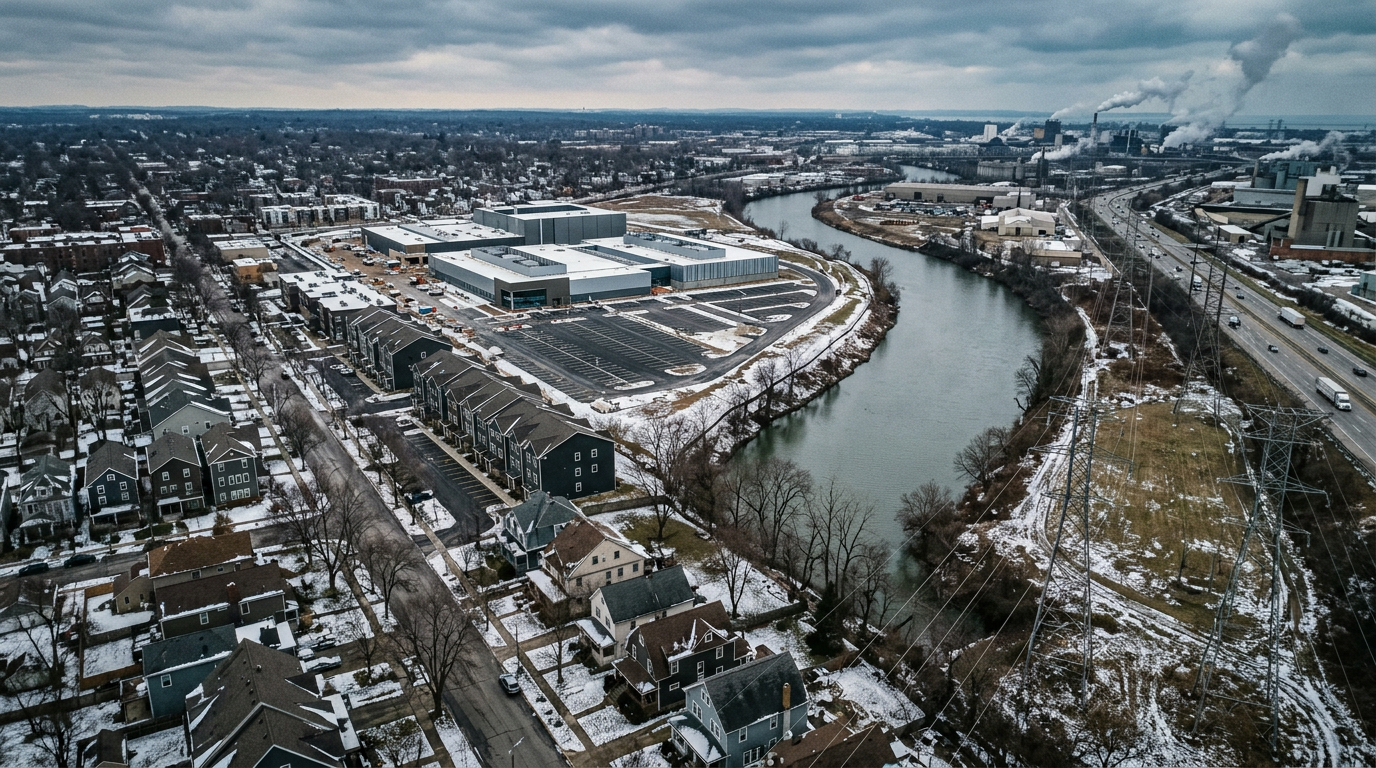
Artificial intelligence may feel like something that exists entirely in the cloud, but behind every AI-generated answer, image and video sits very real physical infrastructure — enormous data centers packed with high-powered computer chips.
And those facilities need electricity. A lot of it.
The International Energy Agency estimates that data centers consumed about 485 terawatt-hours of electricity worldwide in 2025. By 2030, that figure is projected to rise to roughly 950 terawatt-hours, nearly doubling in just five years. AI-focused data centers are expected to grow even faster, with their electricity consumption roughly tripling over that period.
What Does 950 Terawatt-Hours Actually Mean?
A terawatt-hour is an enormous amount of electricity. The projected 950 terawatt-hours of global data-center electricity use in 2030 would represent a major increase from today’s levels and helps show why AI is becoming an energy story as much as a technology story.
AI-focused data centers can be especially demanding because they rely on large numbers of specialized processors running intensive workloads. As AI use expands, the challenge is not only building more computing capacity, but also supplying the electricity and cooling needed to keep those systems running.
Why AI Requires So Much Power
Traditional data centers already run thousands of servers around the clock. Artificial intelligence adds another layer of demand because advanced AI systems rely heavily on specialized processors capable of performing enormous numbers of calculations.
Training large AI models can require substantial computing power, but the electricity demand does not stop after training. Every time millions of people interact with AI systems, servers must continue processing those requests.
Cooling those machines also consumes electricity, because powerful processors generate significant amounts of heat.
The IEA projects overall global data-center electricity demand to reach about 950 TWh by 2030, representing roughly 3% of worldwide electricity consumption.
America Is Feeling the Increase
The United States is expected to be particularly affected.
The IEA forecasts that data-center expansion could account for roughly half of U.S. electricity-demand growth through 2030.
The U.S. Energy Information Administration is also forecasting record electricity consumption. Its September outlook projected total U.S. electricity demand rising from about 4.195 trillion kilowatt-hours in 2025 to 4.270 trillion in 2026 and 4.349 trillion in 2027, with AI-intensive data centers among the major contributors to growth.
That means the AI boom is increasingly becoming an energy story as well as a technology story.
Where Will All That Electricity Come From?
There probably will not be one single answer.
The IEA expects renewable energy to supply a large portion of new electricity needed by data centers, while natural gas, nuclear power and other sources are also expected to play significant roles.
Technology companies are already looking at everything from expanded renewable projects to nuclear generation as they search for large quantities of reliable electricity.
The challenge is that computer infrastructure can sometimes be built faster than power plants, transmission lines and other major pieces of the electrical grid.
Why This Matters Beyond the Data Center
The impact does not stop at the walls of a data center. New facilities may require additional substations, transmission capacity and other grid upgrades before they can operate at full scale.
That means communities considering large data-center projects may face broader questions about electricity supply, infrastructure expansion and how quickly local power systems can keep up with demand.
AI May Live in the Cloud — But Its Power Demand Is Very Real
Artificial intelligence is often discussed in terms of software, algorithms and computer chips.
But the next phase of the AI revolution may depend just as much on something much older:
electricity.
As AI data centers continue expanding, one of the biggest questions may no longer be simply how powerful artificial intelligence can become.
It may be how we power it.