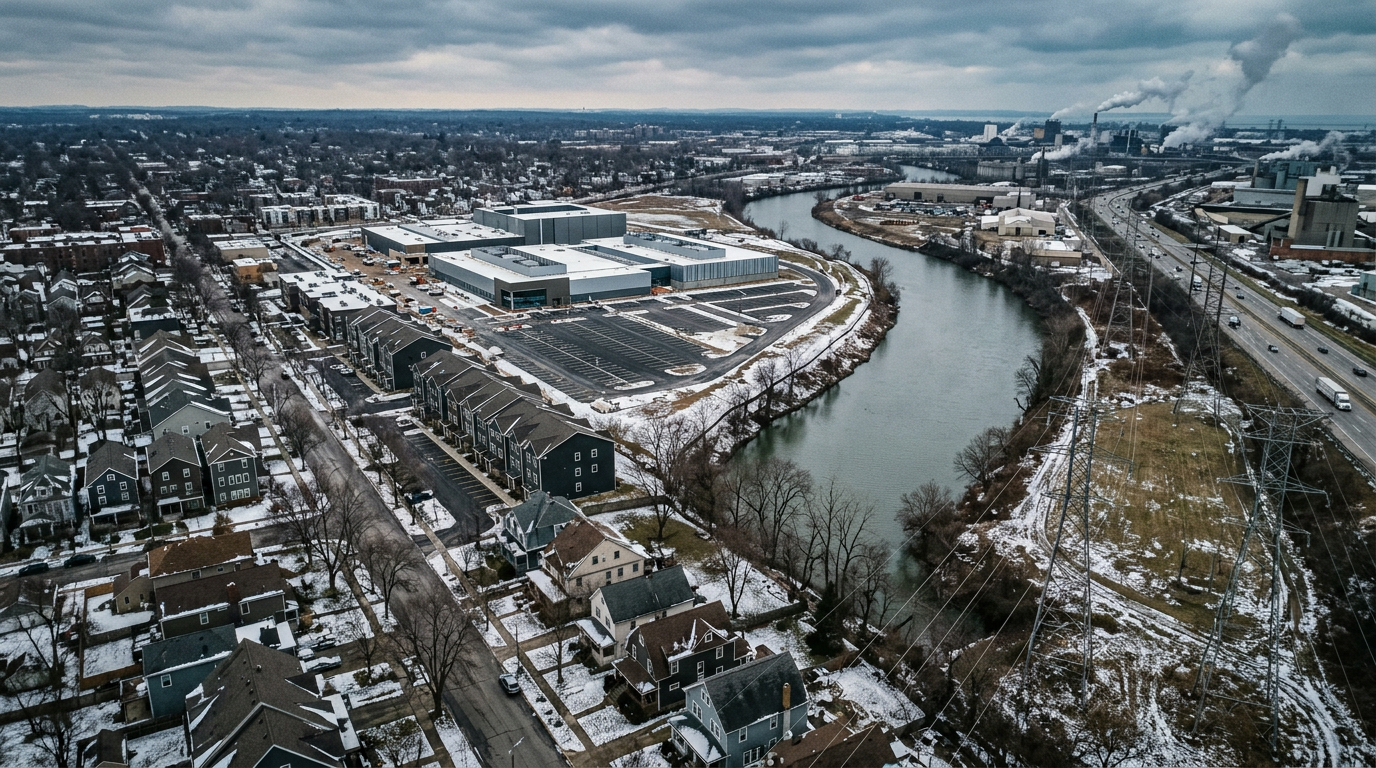
Cleveland is putting the brakes on new standalone data centers while city leaders decide how these massive computing facilities should fit into the city’s future.
The city has temporarily paused permits for new standalone data centers as officials consider regulations involving zoning, electricity demand, water use and the potential effects on nearby neighborhoods.
The issue has become increasingly important as artificial intelligence and cloud computing drive demand for enormous amounts of computing power. Data centers house thousands of servers and can require substantial electricity and cooling infrastructure.
One proposal brought the issue directly into Cleveland neighborhoods. Earlier this year, the city rejected a permit for a proposed $1.6 billion hyperscale data center in Slavic Village. The application projected that the facility could require approximately 150 megawatts of electricity.
Supporters of data-center development point to potential investment, construction activity, technology jobs and improvements to digital infrastructure. Residents and public officials have also raised questions about electricity capacity, water consumption, noise, land use and whether very large facilities belong near residential areas.
Now Cleveland residents are getting an opportunity to weigh in. City Council has scheduled public hearings as it considers what permanent rules should govern future data-center development.
The debate illustrates how the rapid growth of artificial intelligence is becoming more than a technology story. The infrastructure needed to power AI is increasingly becoming an urban planning, energy and neighborhood issue as well.
Have you heard? Cleveland’s decision could help determine how one of America’s major cities balances the growth of AI infrastructure with the needs of the communities surrounding it.
Sources: Cleveland City Council reporting, Axios Cleveland and Ideastream Public Media.
Leave a Reply