Tag: Electric Vehicles

  • Untitled post 1591

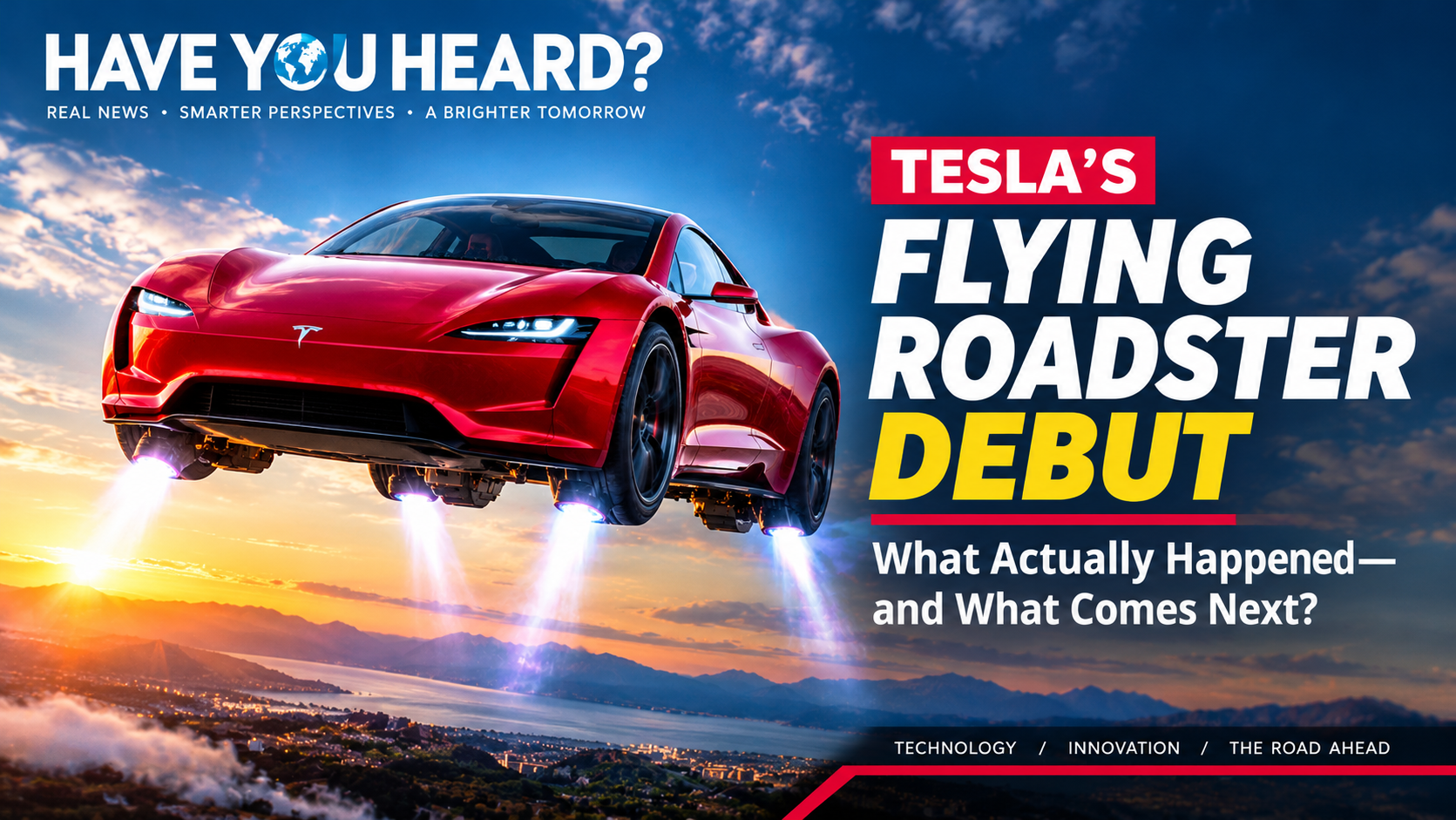
    Tesla’s Flying Roadster Debut: What Actually Happened—and What Comes Next?

    Published October 17, 2026

    The idea of a car that can leave the road and take to the sky has fascinated people for generations. On October 15, Tesla demonstrated its long-awaited next-generation Roadster at a SpaceX testing facility in Texas.

    The demonstration was extraordinary. But beneath the excitement is a more important question: Did Tesla unveil a practical flying car, or demonstrate a high-performance electric sports car capable of brief, rocket-assisted airborne maneuvers?

    What Happened at Tesla’s Roadster Debut?

    Tesla CEO Elon Musk presented the new Roadster during a demonstration livestreamed to the public. The vehicle climbed a curved ramp, traveled upside down, launched into the air, performed a midair maneuver, and landed on its wheels. It also demonstrated a jump over a line of parked Tesla vehicles.

    According to Associated Press reporting, the Roadster uses cold-gas thrusters and a suction system to perform its unusual maneuvers.

    The event offered a glimpse of technology that would have seemed more at home in science fiction only a few decades ago. However, a dramatic demonstration is not the same as proving that a vehicle can safely fly between destinations.

    How Does the Flying Roadster Work?

    Unlike conventional electric vehicles, which depend on tires for movement and traction, the rocket-equipped Roadster is designed to use cold-gas thrusters to generate additional force.

    During the demonstration, the thrusters helped propel the vehicle through brief airborne maneuvers. A suction-based system also helped the car maintain contact with a specially designed curved surface.

    These technologies serve different purposes. Suction can help maintain contact with a surface, while thrusters can provide force to move the vehicle away from it.

    Although the demonstration was striking, it did not establish that the vehicle can sustain controlled flight over meaningful distances or operate like a conventional aircraft.

    Is It Really a Flying Car?

    The answer depends on what qualifies as flying.

    The demonstration showed the prototype becoming airborne and performing brief maneuvers. That is not the same as demonstrating a vehicle that can take off, travel through the air, navigate obstacles, and land safely at an intended destination.

    A practical flying vehicle would need to address challenges including stability, energy or propellant requirements, emergency procedures, airspace rules, and the safety of people on the ground. It would also need to meet applicable regulatory requirements before being operated in public.

    For now, the fairest conclusion is that Tesla has demonstrated a prototype capable of brief airborne maneuvers—not a proven replacement for conventional transportation.

    When Could Consumers Get One?

    Musk has indicated that Tesla is targeting production in 2028. That remains a future target rather than a completed milestone.

    The rocket-equipped version has been presented as an exclusive offering. Its eventual availability, final specifications, pricing, and regulatory status remain important considerations for potential buyers.

    The production timeline is worth watching, particularly because the next-generation Roadster program has experienced years of delays since it was originally announced.

    Until production vehicles are delivered and independently evaluated, consumers should distinguish between the capabilities shown in a demonstration and the specifications of a finished product.

    What This Debut Could Mean for the Future of Transportation

    Tesla’s demonstration raises a larger question about how far electric vehicles and aerospace technology might eventually converge.

    Advances in propulsion, materials, vehicle control, and energy storage could contribute to new forms of transportation. Companies developing electric vertical takeoff and landing aircraft are also pursuing ways to move people through the air without relying on traditional runways.

    But combining a road vehicle and an aircraft creates difficult engineering trade-offs. A car must withstand road impacts and protect passengers, while an aircraft must meet demanding requirements for lift, stability, and efficient flight.

    The Roadster demonstration is a reason to pay attention to the technology. It is not, by itself, proof that everyday flying cars are ready for consumers.

    The HYH Perspective: The Spectacle Is Only the Beginning

    Tesla’s Roadster debut delivered the kind of demonstration that captures public attention. The more consequential test, however, comes after the cameras stop rolling.

    Can the technology be produced reliably? Can the vehicle perform safely outside a controlled demonstration? Will regulators permit the intended uses? And will the final product deliver the capabilities being promoted at a price consumers can justify?

    Those questions will determine whether this is a turning point in transportation or an ambitious engineering showcase.

    For now, Tesla has given the public a dramatic preview of what rocket-assisted automotive technology might achieve. Whether that preview becomes a practical transportation option remains to be seen.

    Have You Heard? The next major milestone will not simply be another airborne stunt. It will be evidence that the technology can move from demonstration to a safe, usable, and commercially available vehicle.

    Sources and Further Reading

    Have You Heard? reports on the latest developments in technology, business, science, and the stories shaping everyday life.
  • Chinese Cars Are Taking Over Global Markets — Could America Be Next?

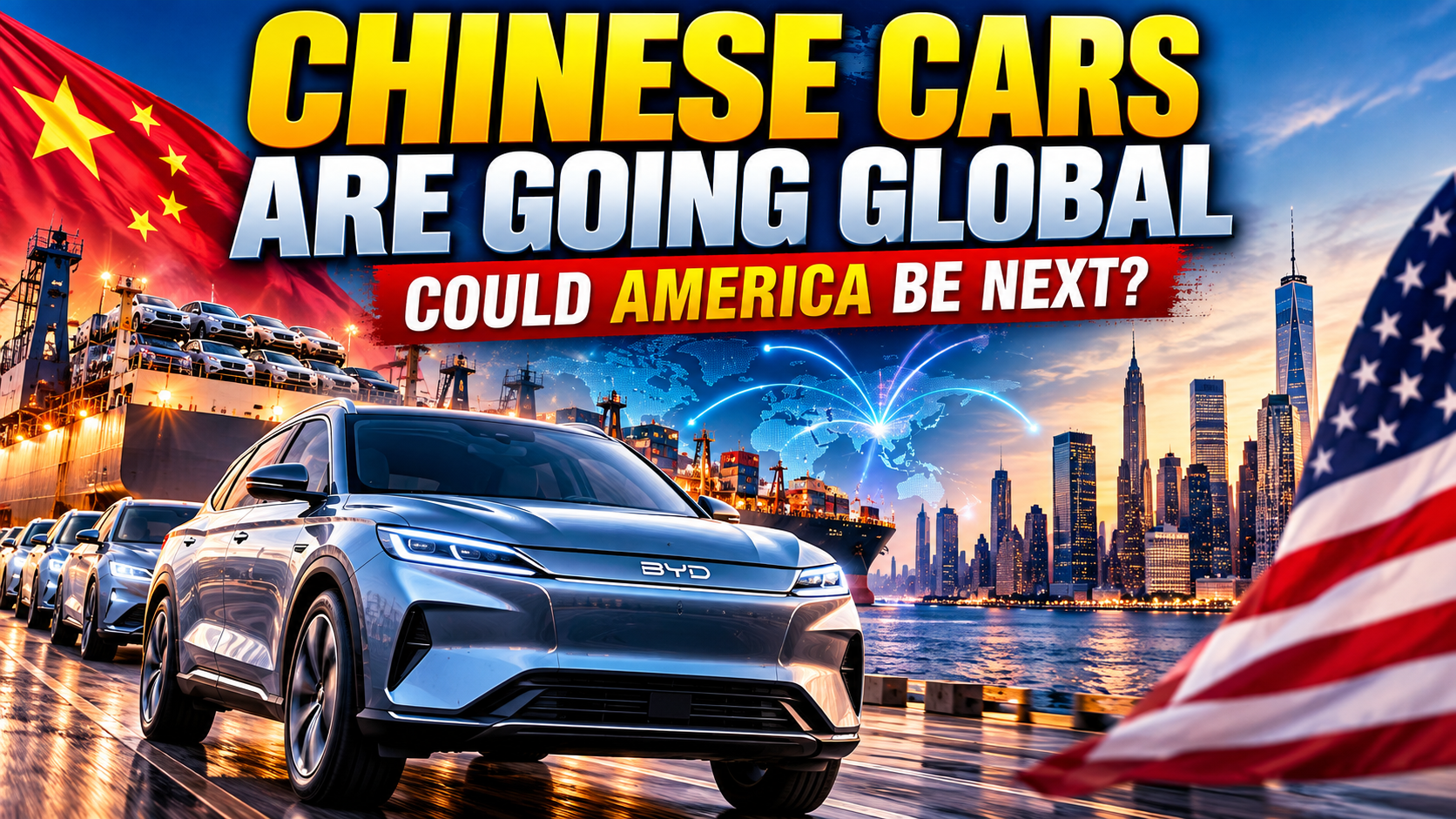
    Chinese Cars Are Taking Over Global Markets — Could America Be Next?

    Chinese automakers were once easy for many American drivers to overlook. Most of their vehicles were sold thousands of miles away, and familiar names such as Ford, General Motors and Toyota continued to dominate the roads closer to home.

    That picture is changing fast.

    China has become the center of the global electric-vehicle industry, producing cars at enormous scale while its homegrown brands expand into markets across Europe, Southeast Asia, Latin America and beyond.

    The question is no longer whether Chinese automakers can build competitive vehicles.

    The bigger question may be: What happens if they eventually compete for American drivers?

    China Has Become an EV Manufacturing Powerhouse

    The scale of China’s electric-car industry is difficult to ignore.

    According to the International Energy Agency’s Global EV Outlook 2026, nearly 22 million electric cars were produced worldwide in 2025. China accounted for nearly three-quarters of that production.

    Chinese automakers also supplied about 60% of global electric-car sales in 2025. More than 13 million electric cars were sold inside China alone, where EVs represented nearly 55% of new-car sales.

    That enormous domestic market has given Chinese manufacturers something extremely valuable: scale.

    Companies can manufacture huge numbers of vehicles, introduce new models rapidly and compete aggressively on price, technology and features.

    Chinese Cars Are Moving Beyond China

    China’s automotive ambitions are no longer confined to its home market.

    The IEA reports that Chinese electric-car exports doubled in 2025 to more than 2.5 million vehicles. In the first quarter of 2026, exports more than doubled again compared with the same period a year earlier.

    Chinese brands are increasingly visible in markets that were traditionally dominated by European, Japanese, Korean and American manufacturers.

    BYD, Geely, Chery, SAIC and other Chinese automakers have expanded internationally, while some are also investing in factories outside China rather than relying entirely on exports.

    That strategy could make their global presence much harder to dismiss as a temporary trend.

    Batteries Are a Major Part of China’s Advantage

    The competition goes deeper than the vehicles themselves.

    China accounted for more than 80% of global battery-cell production in 2025, according to the IEA. It also held an even larger share of production for some of the active materials used inside EV batteries.

    That matters because the battery is one of the most important and expensive components in an electric vehicle.

    A massive domestic supply chain — stretching from battery materials and cells to vehicle assembly — can help manufacturers reduce costs, accelerate production and bring new technology to market quickly.

    It is one reason the rise of China’s auto industry is not simply a story about inexpensive cars. It is also a story about manufacturing capacity and control of critical parts of the EV supply chain.

    Why Aren’t These Cars Everywhere in America?

    Despite their rapid expansion elsewhere, Chinese automotive brands remain largely absent from U.S. showrooms.

    Trade barriers, tariffs and U.S. restrictions involving connected-vehicle technology create substantial obstacles to direct entry into the American market.

    Those barriers mean the competition Americans see today is very different from what consumers are experiencing in parts of Europe, Asia and Latin America.

    But American automakers are watching closely.

    Ford CEO Jim Farley has repeatedly warned about the competitive strength of China’s automotive industry. In September 2026, he again urged caution over allowing Chinese automakers into the U.S. market, pointing to the pressure they have already placed on manufacturers elsewhere.

    Could Chinese Cars Eventually Compete in America?

    There is no guarantee that today’s restrictions will disappear, and predicting exactly when — or whether — Chinese brands will enter the United States in large numbers would be speculation.

    But their international growth makes the question increasingly relevant.

    If Chinese manufacturers eventually gain broader access to the U.S. market, they would enter one of the world’s most competitive automotive arenas.

    They would face Ford and General Motors, Japanese and Korean manufacturers with decades of American brand recognition, European luxury brands and Tesla’s established position in electric vehicles.

    Chinese manufacturers would also need to earn something that cannot simply be shipped overseas: American consumer trust.

    Drivers would judge them on safety, reliability, service networks, resale value, technology and price — the same factors that have determined which foreign automotive brands succeeded in America before them.

    A Global Auto Industry Is Being Rewritten

    Whatever happens in the United States, one thing is already clear: China’s automotive industry has become a global force.

    Its manufacturers are producing electric vehicles at extraordinary scale, controlling a large portion of the battery supply chain and expanding into markets around the world.

    The companies that dominated the automobile business for generations now have another group of competitors to watch.

    And if Chinese cars eventually begin arriving in American showrooms in significant numbers, the biggest question won’t simply be whether they can compete with Ford, GM and Tesla.

    It will be whether American drivers are willing to buy them.

    Sources

  • Geely’s New EV Charging Technology Hits 70% in Just 4½ Minutes

    Geely’s New EV Charging Technology Hits 70% in Just 4½ Minutes

    Waiting half an hour to charge an electric vehicle could eventually become a thing of the past.

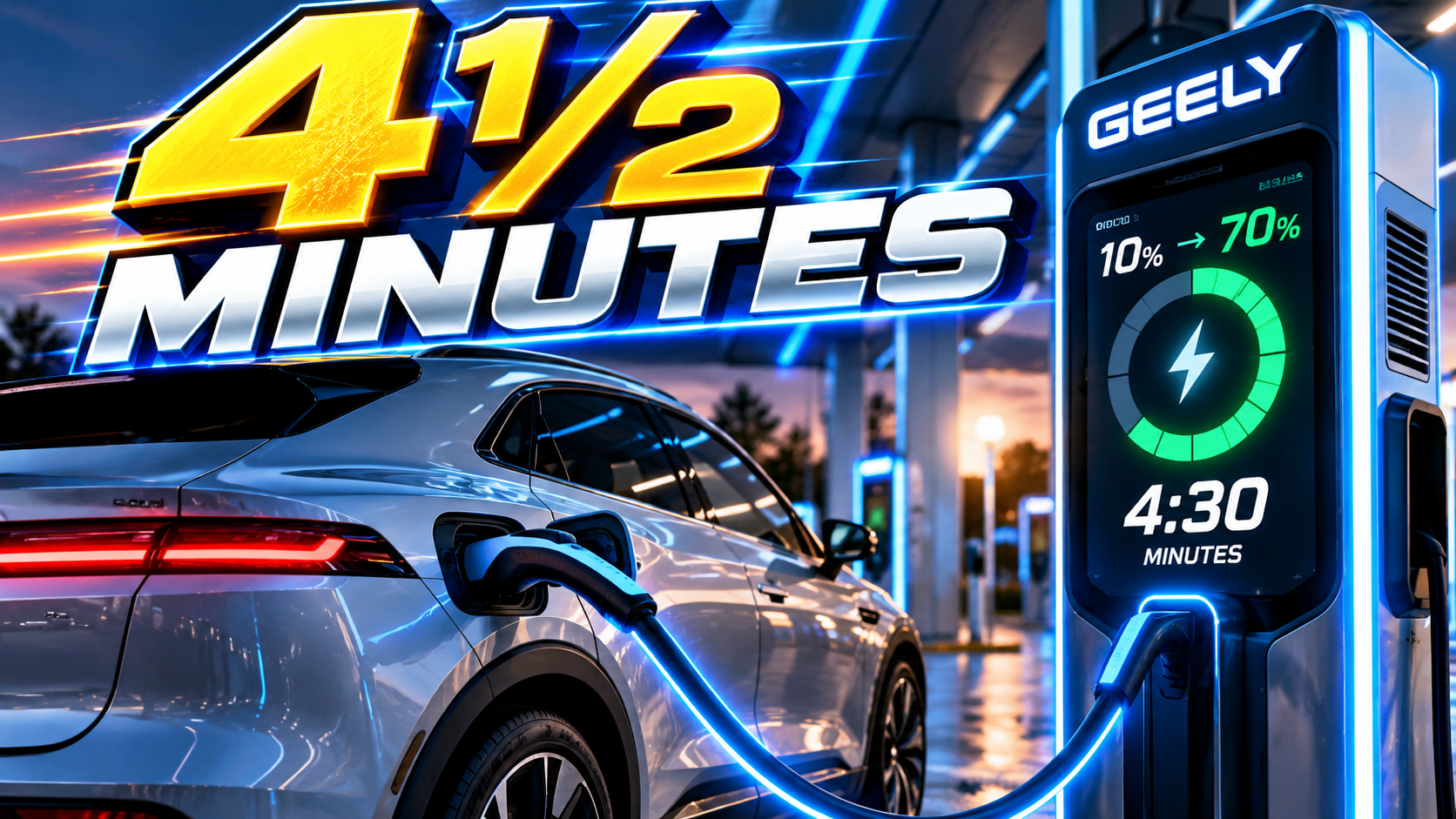
    Chinese automaker Geely has unveiled a new ultra-fast charging system capable of taking a compatible electric vehicle battery from 10% to 70% in just 4 minutes and 30 seconds.

    And it doesn’t stop there.

    Geely says its real-world testing achieved a charge from 10% to 97% in only 8 minutes and 40 seconds — bringing EV charging remarkably close to the amount of time drivers typically spend stopping for fuel.

    The system combines a new generation of high-powered charging hardware with advanced batteries and artificial intelligence designed to manage the enormous amount of energy flowing into the vehicle.

    Geely’s fifth-generation Smart Charging Station can deliver peak charging power of up to 2,250 kilowatts.

    But pushing that much electricity into a battery so quickly creates another major challenge: heat.

    Geely says its AI-powered system predicts battery temperatures before they rise and automatically adjusts charging power. A liquid-cooling system also manages heat throughout the charging process.

    The company says the technology is designed not only to increase charging speed, but also to protect battery safety and long-term battery life.

    Geely isn’t alone in the race.

    Chinese EV companies including BYD and battery giant CATL have also introduced charging technologies capable of replenishing batteries in roughly five minutes or less, intensifying the competition to make charging an electric vehicle almost as quick as filling a gasoline tank.

    There are still major questions about how widely chargers capable of supplying this much power can be deployed and what infrastructure will be required to support them.

    But the direction of the technology is becoming clear.

    The era of the five-minute EV charge may be getting closer.

    Have you heard?

    Sources:

    Geely Auto Group — Official announcement

    Associated Press — Reporting on ultra-fast

    EV charging technology