HYH ORIGINAL | November 9, 2026
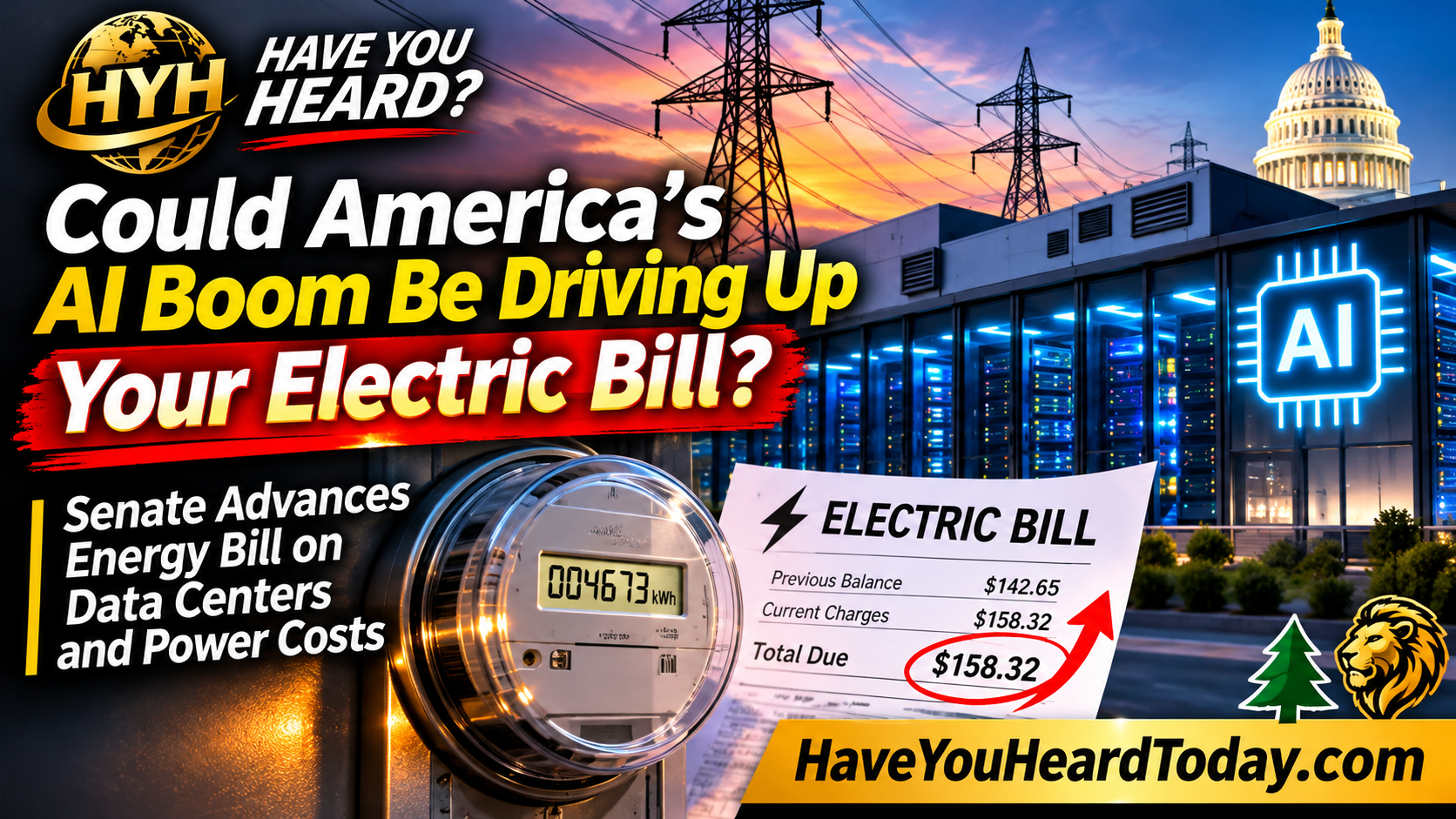
Have you heard? America’s artificial intelligence boom is creating a new question for households already watching their monthly expenses: Could the enormous electricity demands of AI data centers eventually show up on your electric bill?
On November 9, 2026, the U.S. Senate voted 73–25 to advance debate on the bipartisan American Affordability and Jobs Act, legislation designed to accelerate energy infrastructure projects while addressing who pays for the power-grid upgrades needed by large data centers.
The vote does not mean the legislation has become law. But it places an increasingly urgent issue before Congress: As technology companies expand their computing infrastructure, how can the country prevent ordinary electricity customers from paying for costs created by major new industrial users?
Why Artificial Intelligence Requires So Much Electricity
Artificial intelligence depends on powerful computing systems operating inside large facilities known as data centers. These buildings house servers, networking equipment, cooling systems and electrical infrastructure that can operate around the clock.
Training sophisticated AI models and responding to millions of digital requests can require substantial computing capacity. The electricity needed to power and cool that equipment adds to demand on local and regional power systems.
Not every data center is an AI facility, and electricity demand varies considerably by location, technology and operating conditions. Nevertheless, rapid data-center expansion is becoming an important consideration in utility planning.
How Data Centers Could Affect Your Electric Bill
Electric utilities must maintain enough generation, transmission and distribution capacity to serve their customers reliably. When a very large electricity user connects to the system, additional power lines, substations or other infrastructure may be needed.
Those investments can be expensive. The central question is whether the new customer pays the costs attributable to its demand or whether some expenses are distributed across the utility’s broader customer base.
If costs are shared widely, households and small businesses could face higher rates even though they did not create the new demand. On the other hand, a major new customer may also provide revenue that helps support the electricity system, depending on how rates and contracts are structured.
That distinction matters. Data-center growth does not automatically mean every household’s electric bill will increase. The actual outcome depends on local power supply, infrastructure needs, utility regulation, cost allocation and other factors.
Congress Takes Up the Question
The American Affordability and Jobs Act is backed by lawmakers from both major political parties. Its sponsors include Democratic Senators Martin Heinrich and Sheldon Whitehouse and Republican Senators Shelley Moore Capito and Mike Lee.
Beyond data centers, the proposal would change federal permitting procedures affecting power plants, transmission lines, mines and other infrastructure. Supporters argue that faster approvals could help expand energy supplies and modernize the electrical grid.
One provision would direct the Federal Energy Regulatory Commission to establish requirements intended to ensure large data centers pay for the electricity service and grid upgrades associated with their operations.
According to a November 5 fact sheet from Senator Heinrich’s office, the legislation also seeks additional reporting on electricity sales to data centers and includes mechanisms intended to protect existing utility customers from certain infrastructure costs.
These are proposed protections, not guarantees of lower household bills. Their ultimate effects would depend on the final legislation, implementation by regulators and individual utility systems.
Why the Proposal Is Controversial
Supporters see the bill as an opportunity to build power infrastructure more quickly while placing greater responsibility on large electricity consumers. They argue that modernizing the grid can benefit businesses, workers and households.
Critics raise a different concern: The same legislation would also change environmental review and permitting rules. Environmental organizations and Native American groups have warned that parts of the proposal could weaken safeguards, limit public participation or threaten tribal interests.
Revisions have been introduced to address some objections, but disagreements remain. The Senate’s procedural vote allows debate to advance; it does not resolve those disputes or ensure final passage.
What Should Consumers Watch?
For consumers, the most important developments may occur both in Washington and closer to home.
- Utility rate proposals: Are electricity providers requesting higher rates to finance new infrastructure?
- Data-center agreements: Are large customers paying the costs of connecting to and expanding the grid?
- State regulatory decisions: What protections are being established for residential and small-business customers?
- Project transparency: Are communities receiving clear information about anticipated electricity demand, water use and construction impacts?
- Congressional action: Will lawmakers preserve consumer cost protections as the broader permitting bill changes?
The HYH Perspective: Who Benefits, and Who Pays?
Artificial intelligence may bring new tools, businesses and economic opportunities. But the financial responsibilities associated with building that technology deserve just as much attention as the technology itself.
When a major company requires new electrical infrastructure, it is reasonable for the public to ask how those costs are calculated, who pays them and what happens if the project changes or fails.
The goal should not simply be to build more infrastructure. It should be to build infrastructure with transparent costs, reliable service and appropriate protections for the people already connected to the grid.
For now, the November 9 Senate vote marks the beginning of another stage in that debate. Whether Congress ultimately delivers meaningful consumer protections remains an open question.
Have You Heard? The next chapter of America’s AI revolution may not unfold on a computer screen. It may unfold in the decisions that determine what families pay to keep their lights on.
Sources and Further Reading
- Reuters — Senate advances energy permitting bill, November 9, 2026
- Axios — Senate advances bipartisan permitting bill, November 9, 2026
- U.S. Senate Energy and Natural Resources Committee — Data center cost protections fact sheet, November 5, 2026
- Reuters — Data centers and permitting legislation, November 9, 2026
HYH Original: Independent analysis based on public legislative information and published reporting. This article distinguishes proposed legislation from enacted law and does not claim that data centers are the sole cause of rising electricity costs.
Leave a Reply